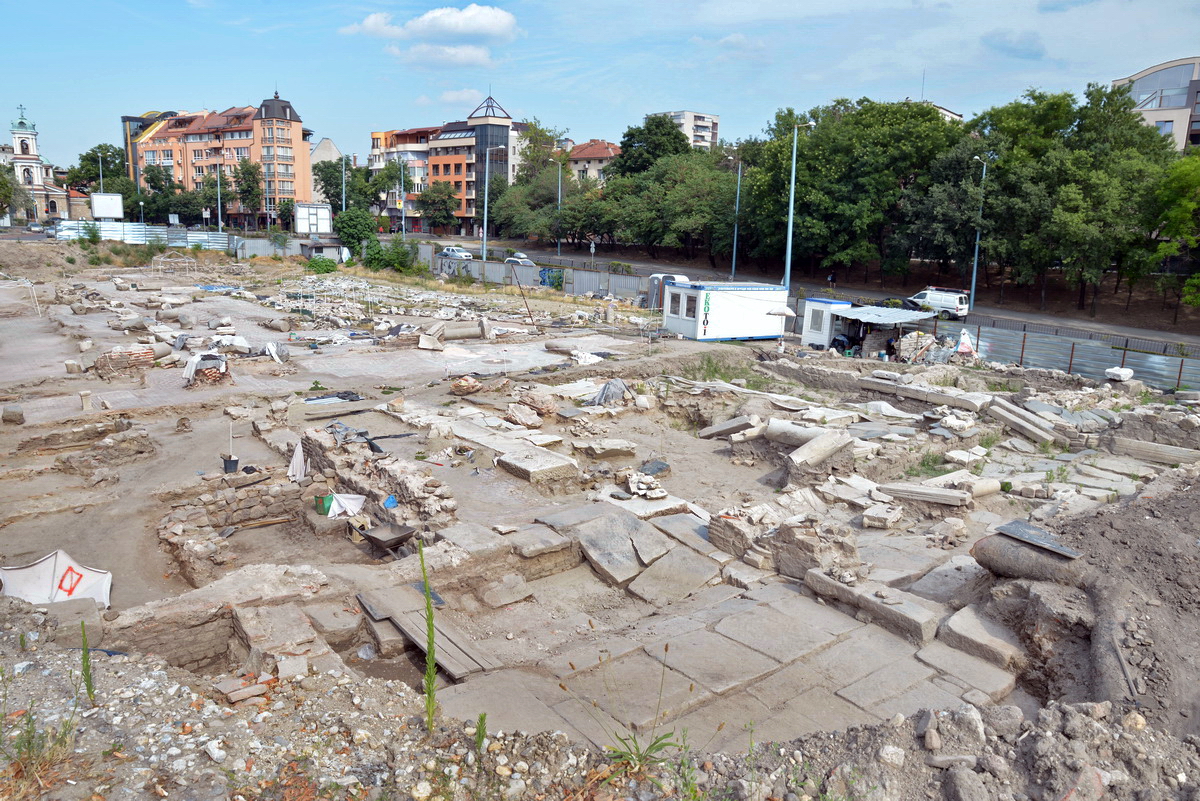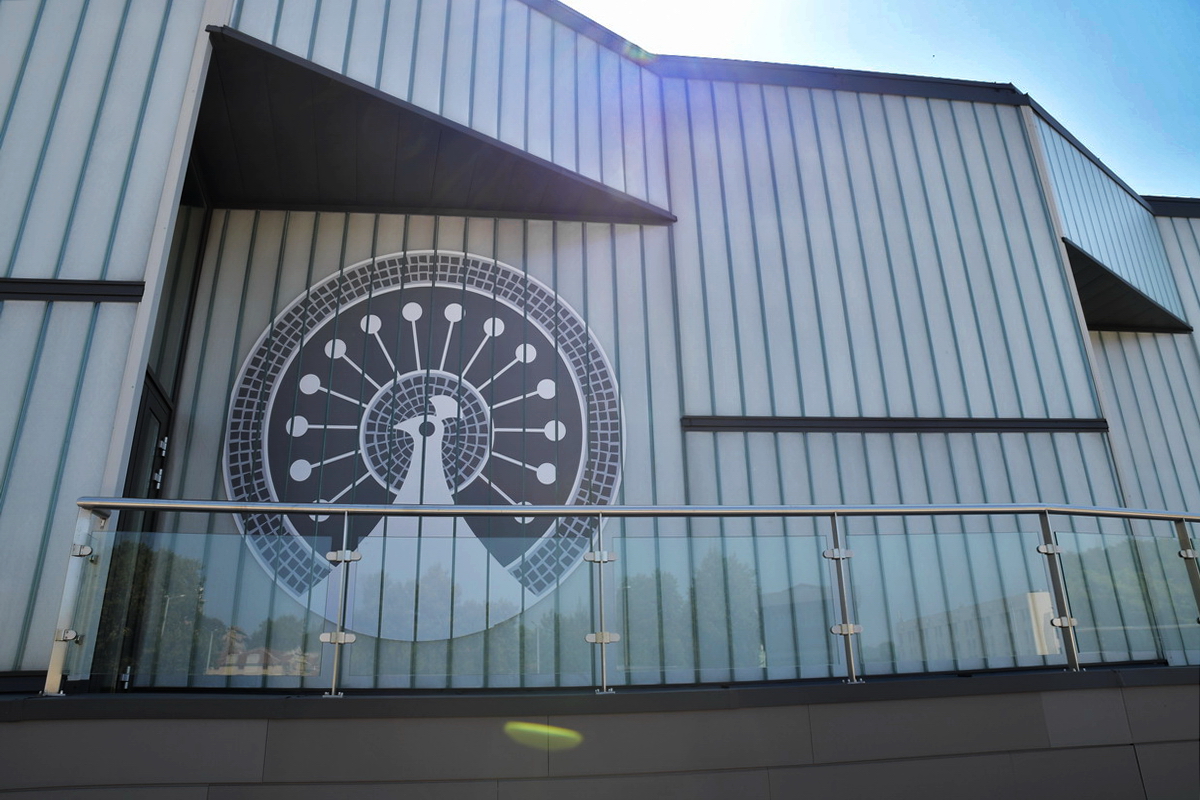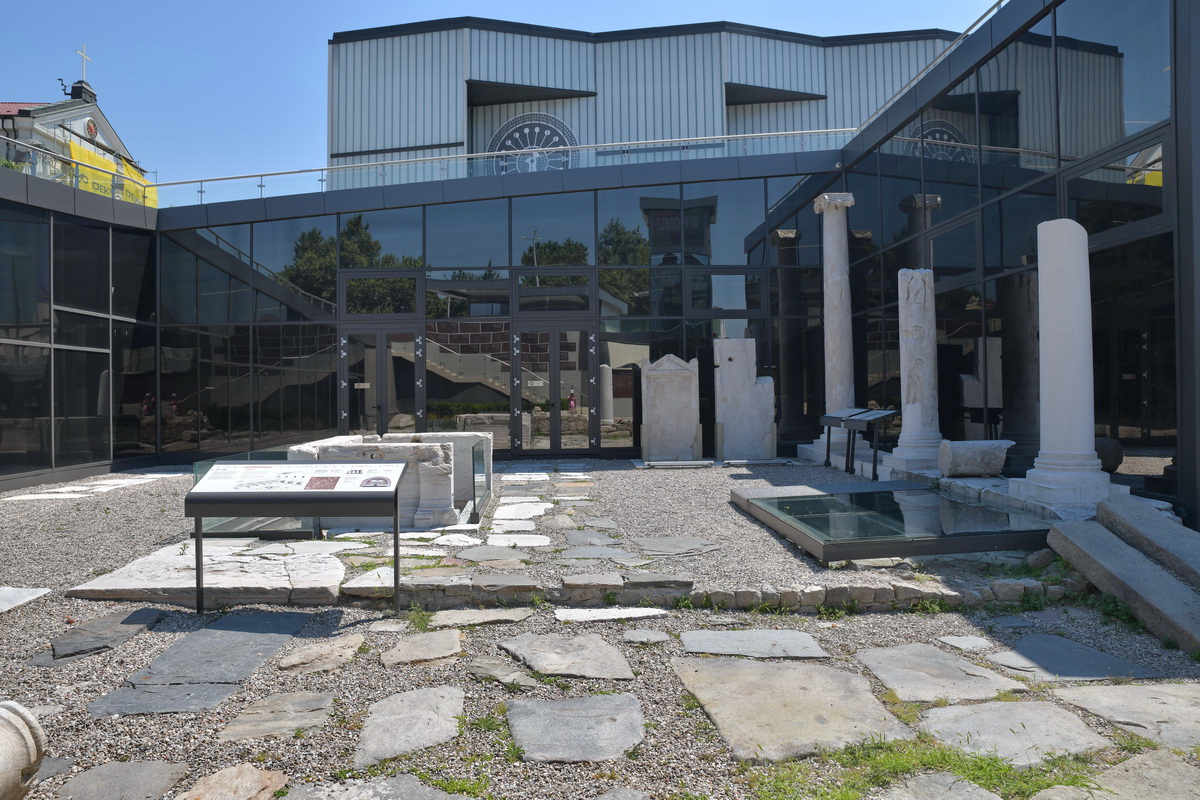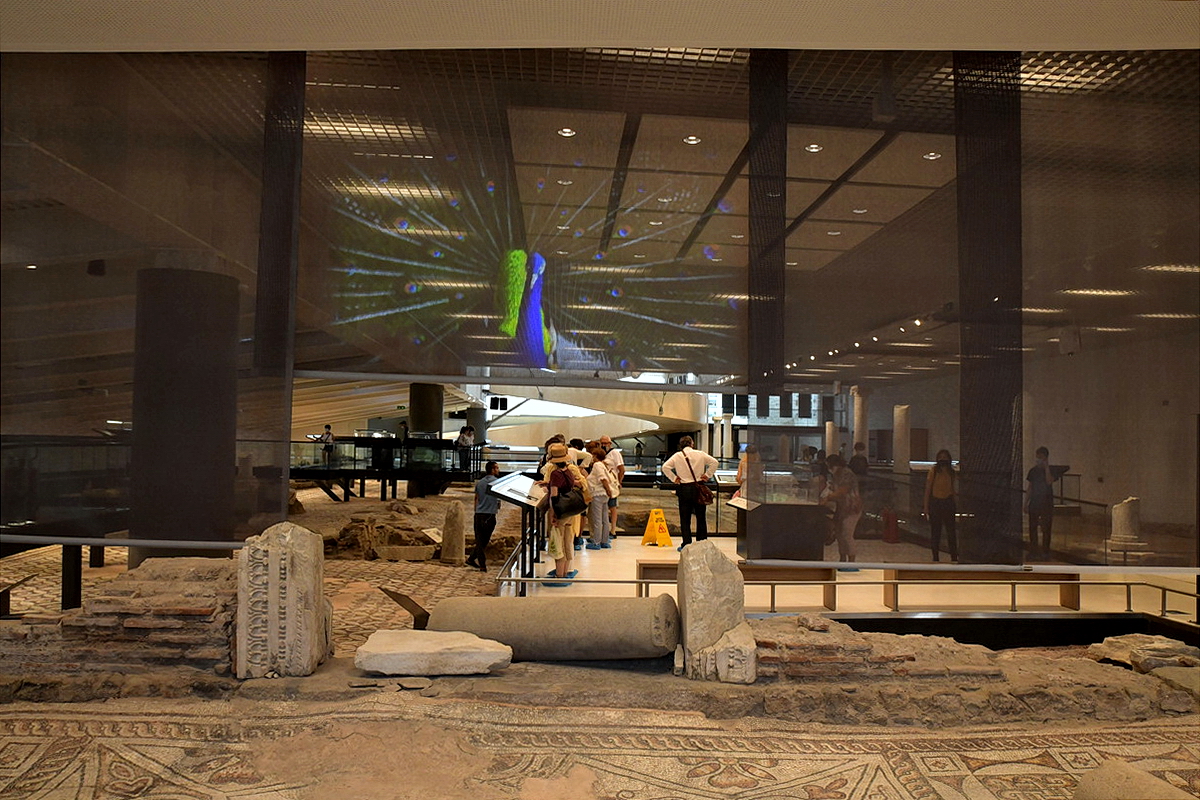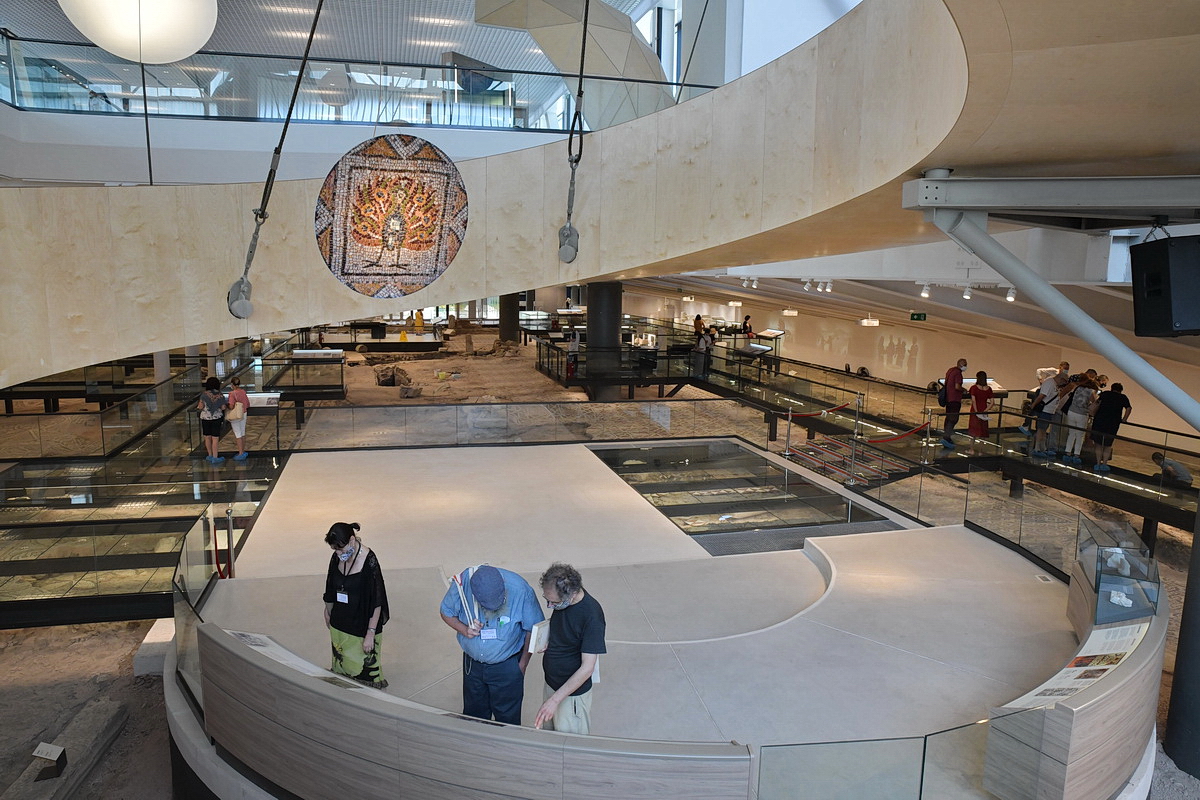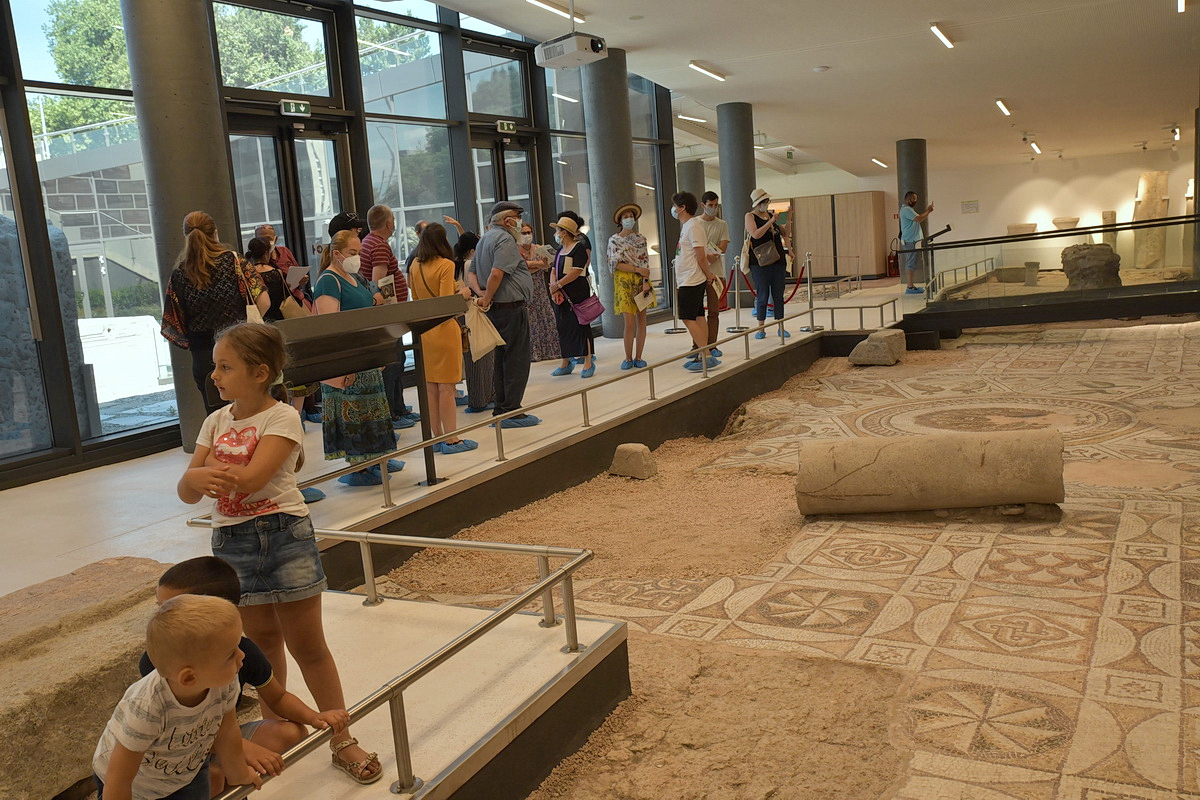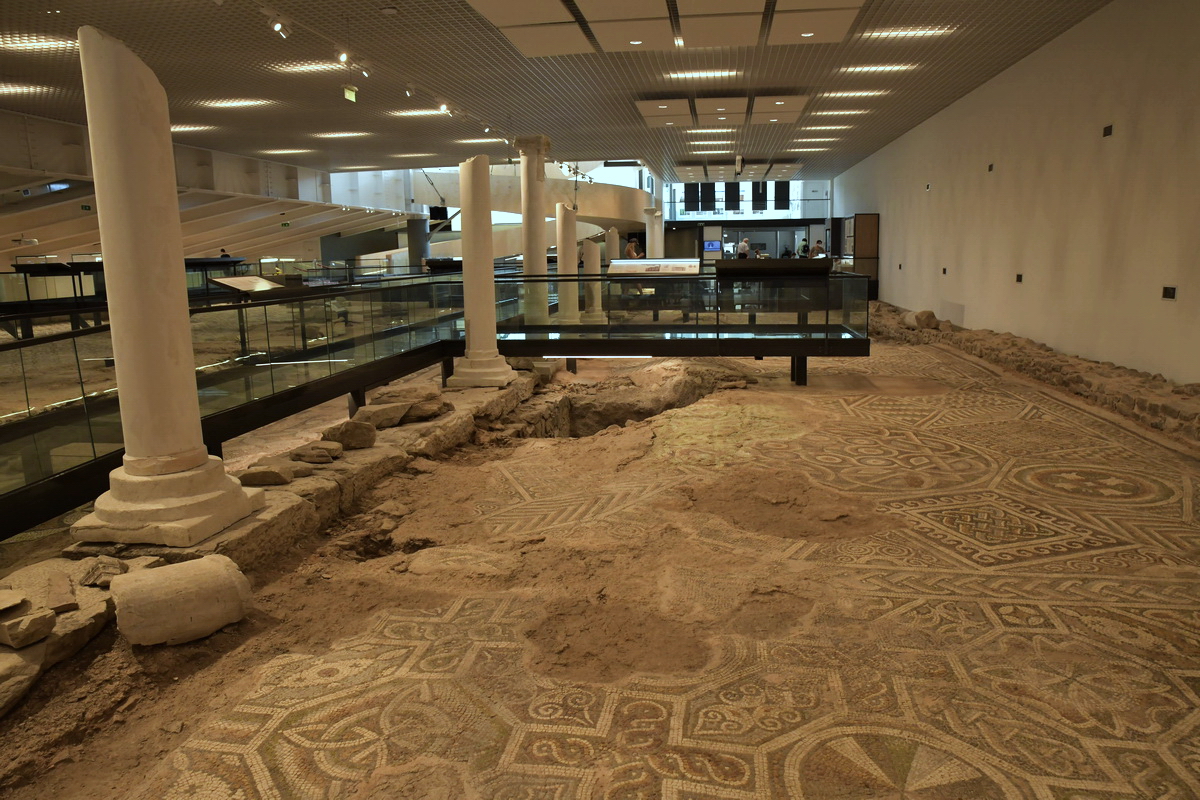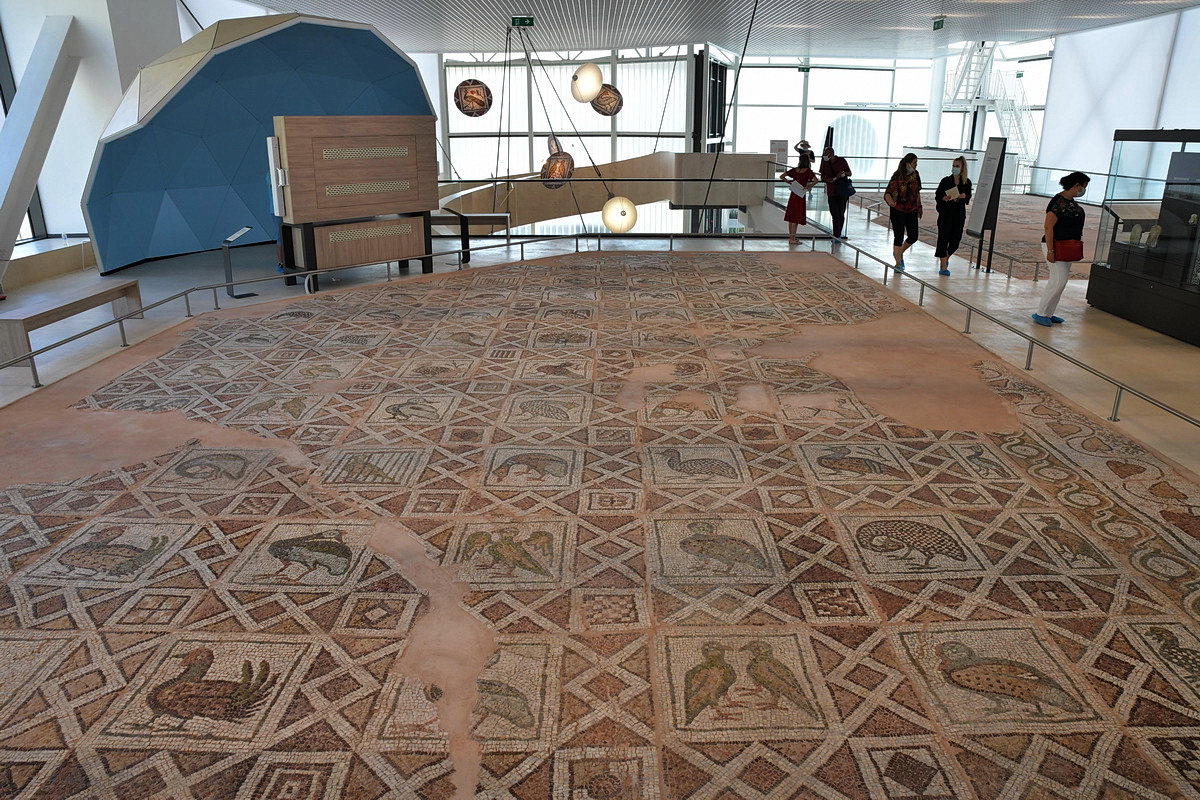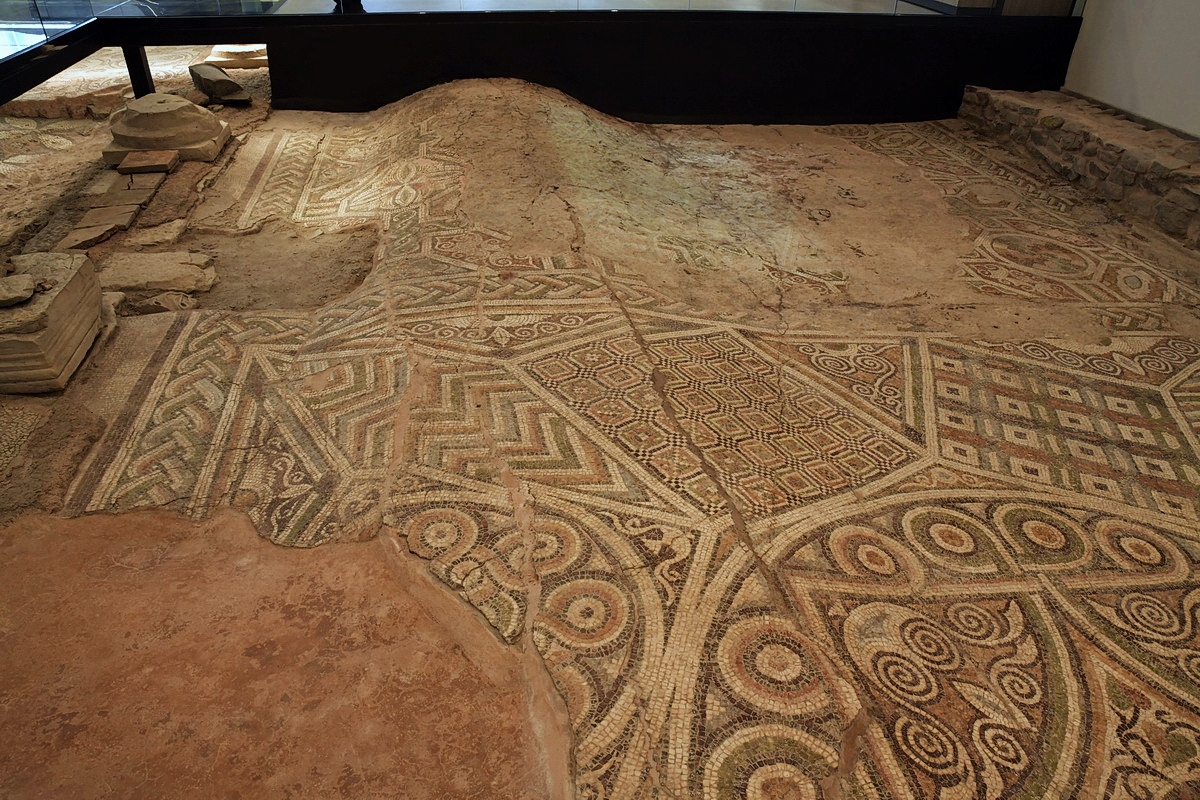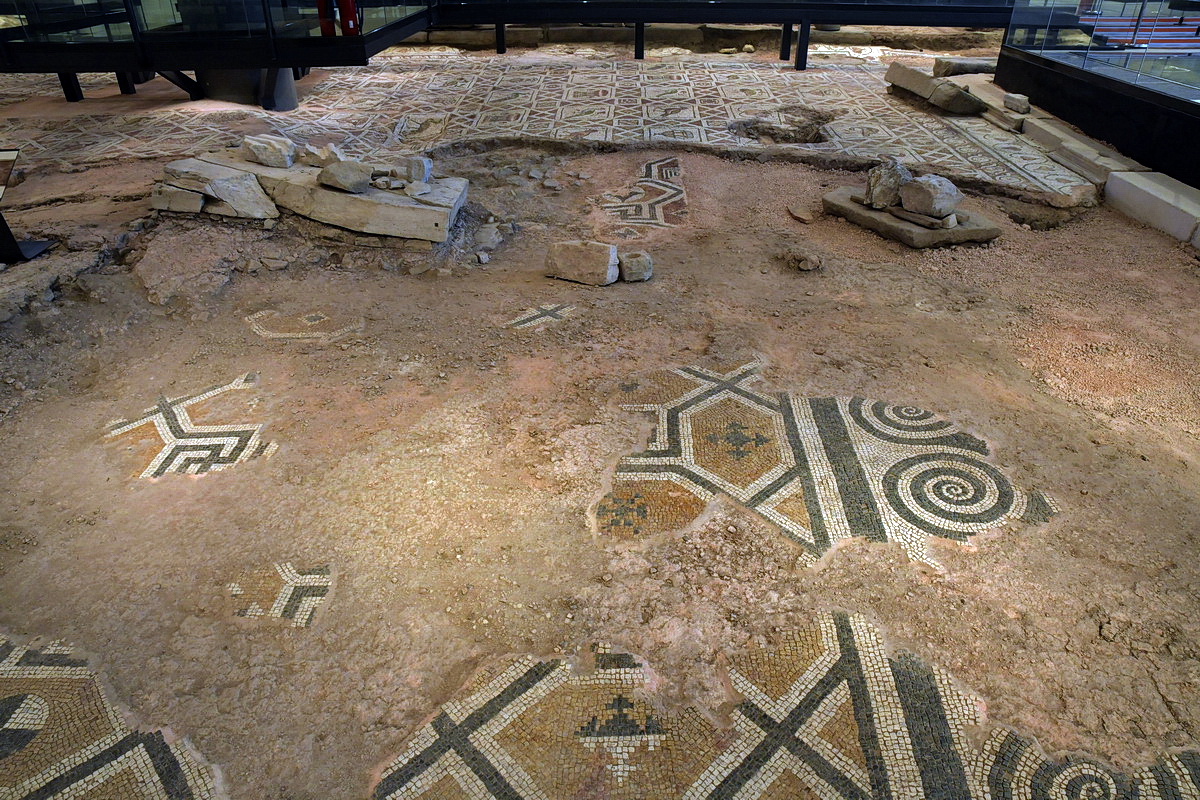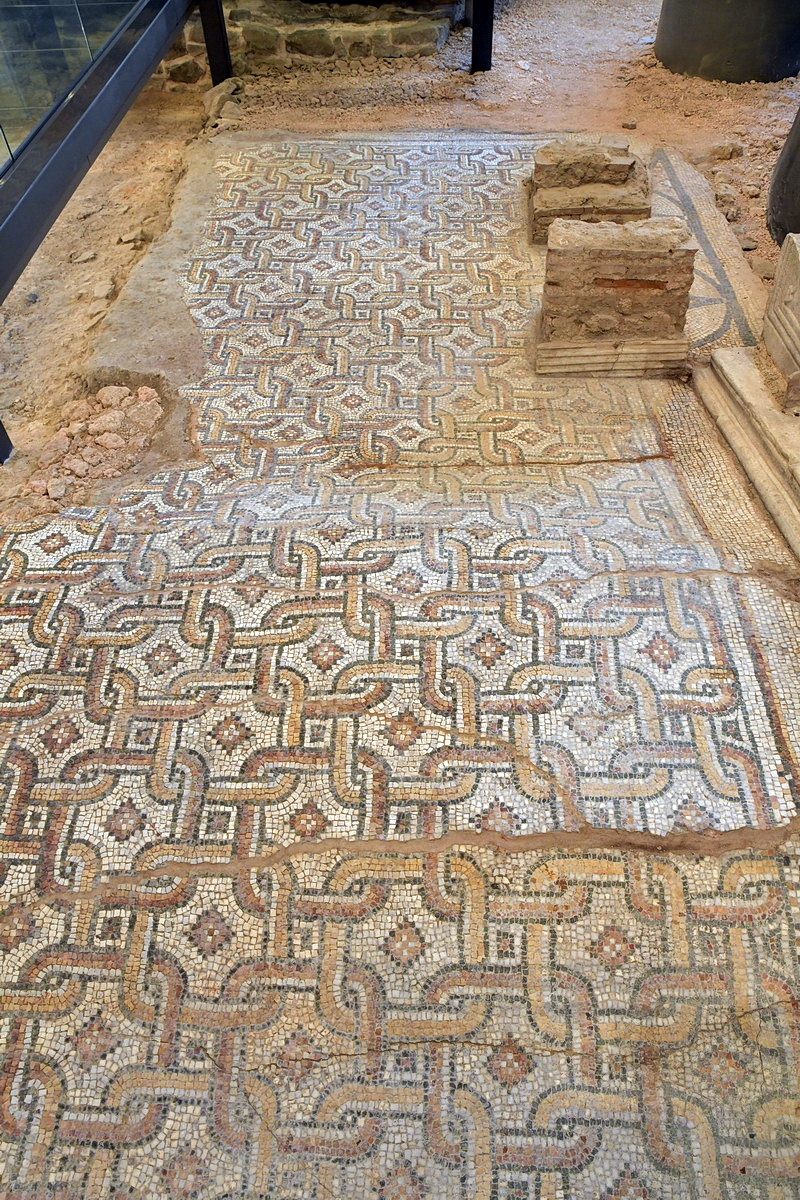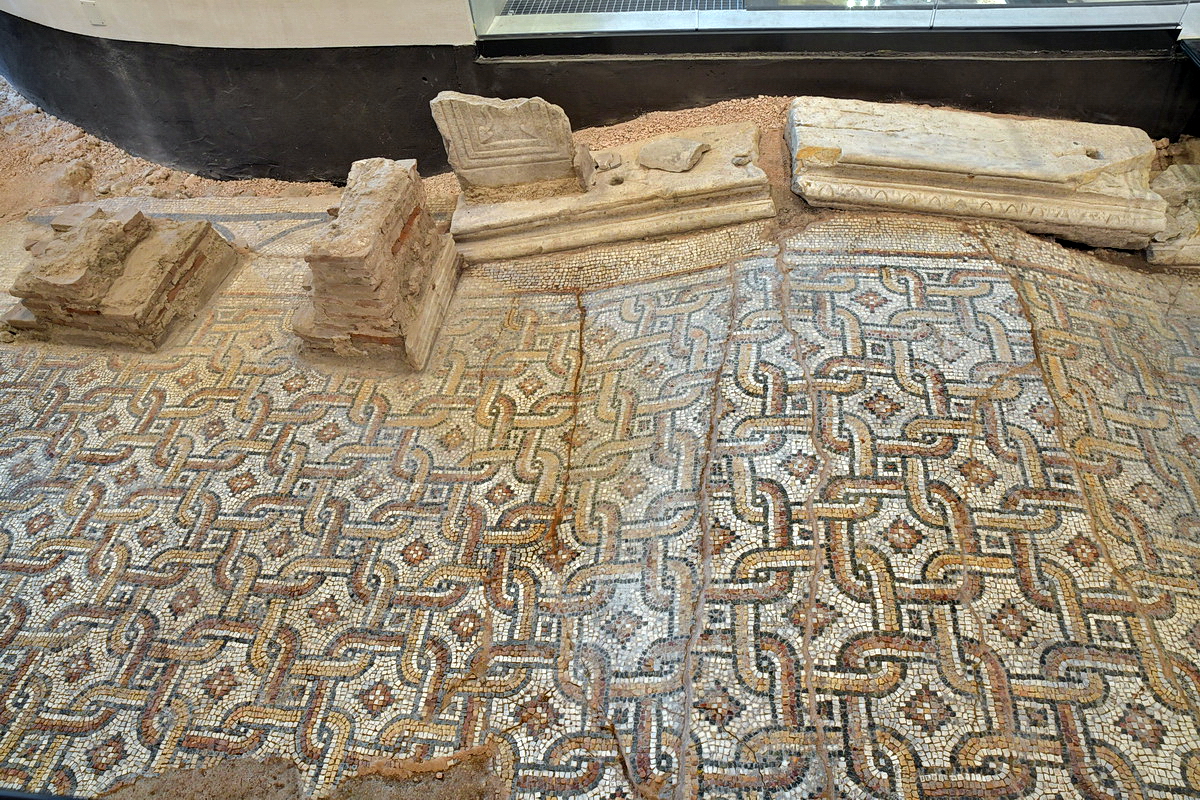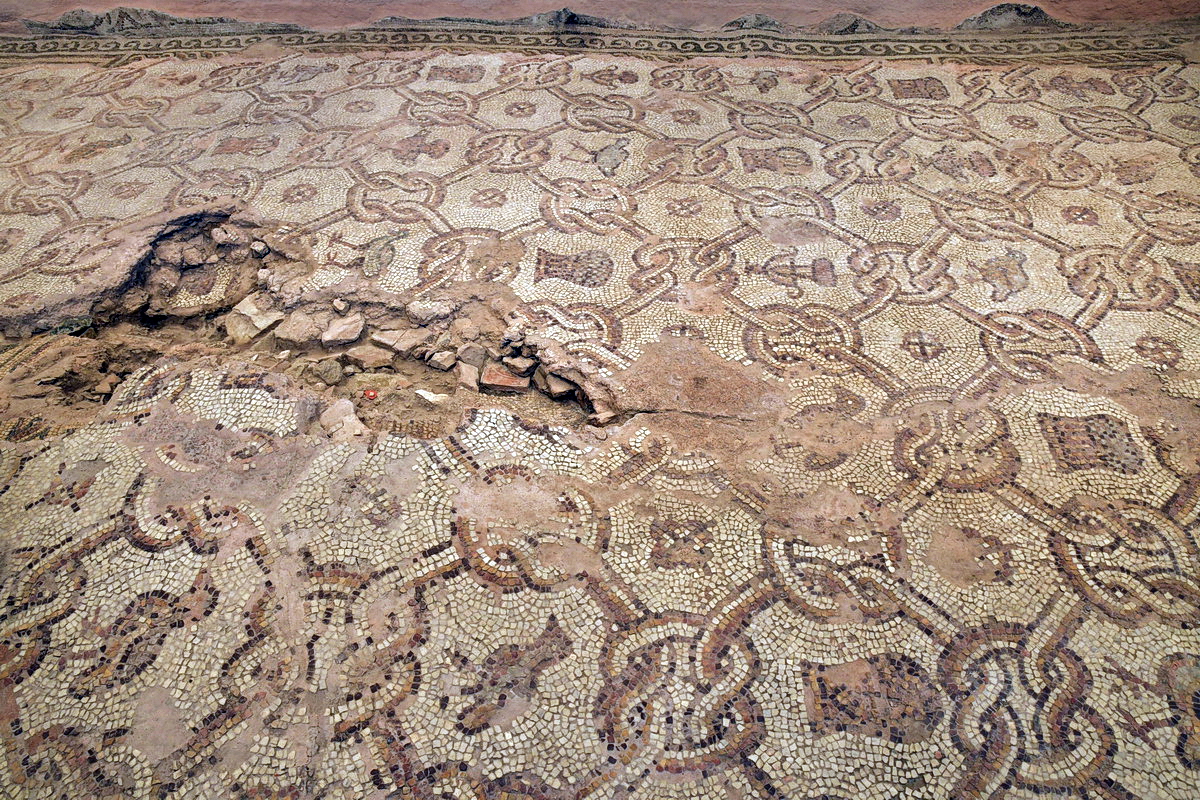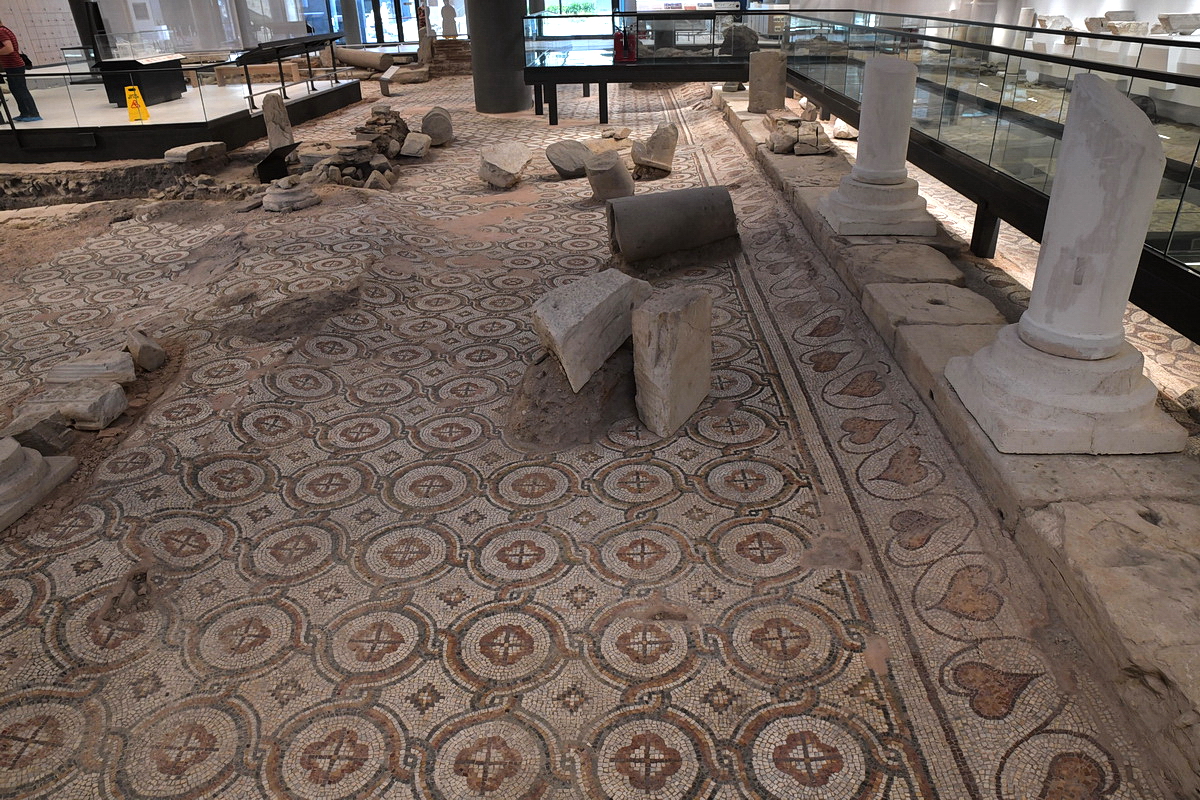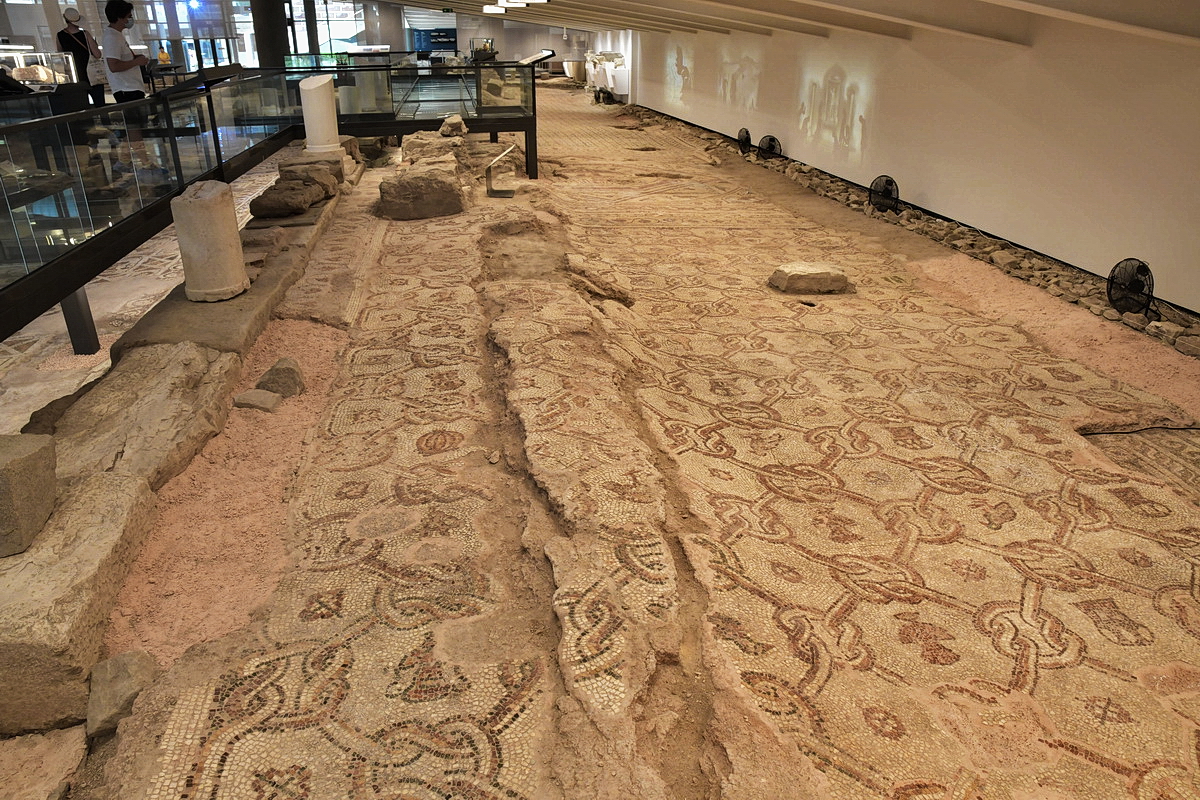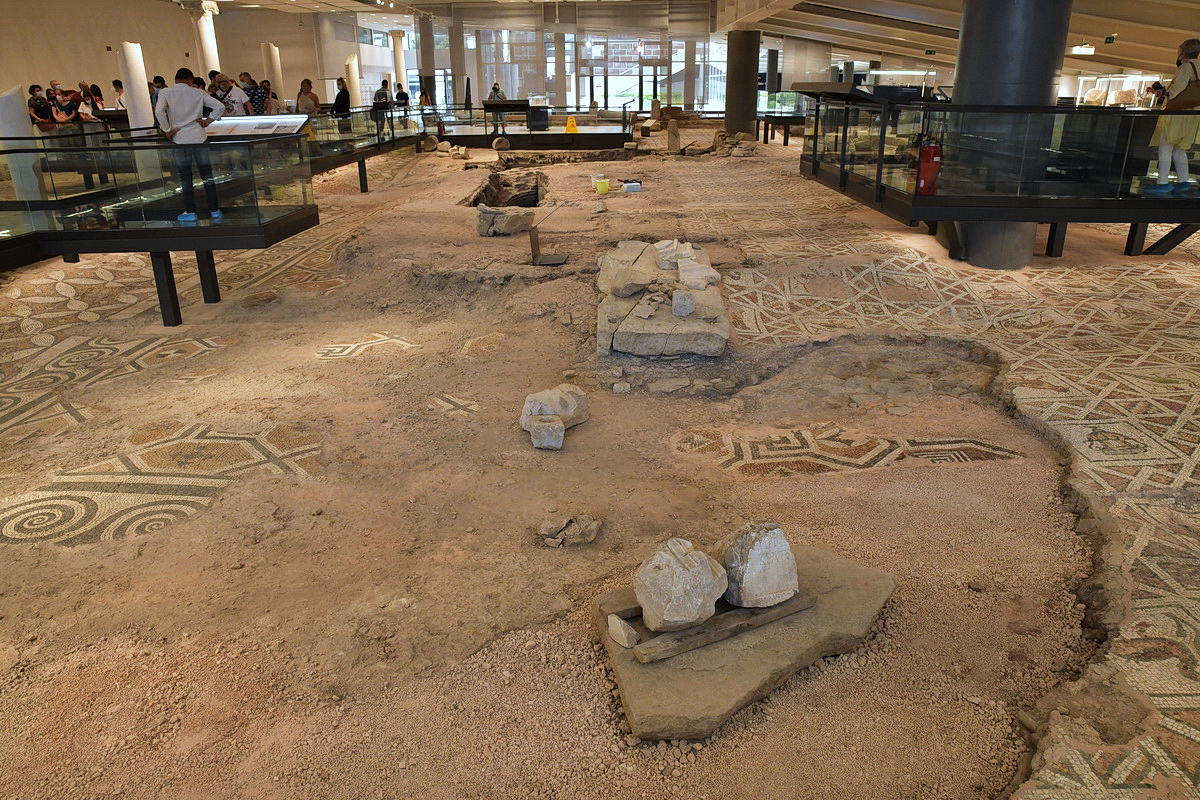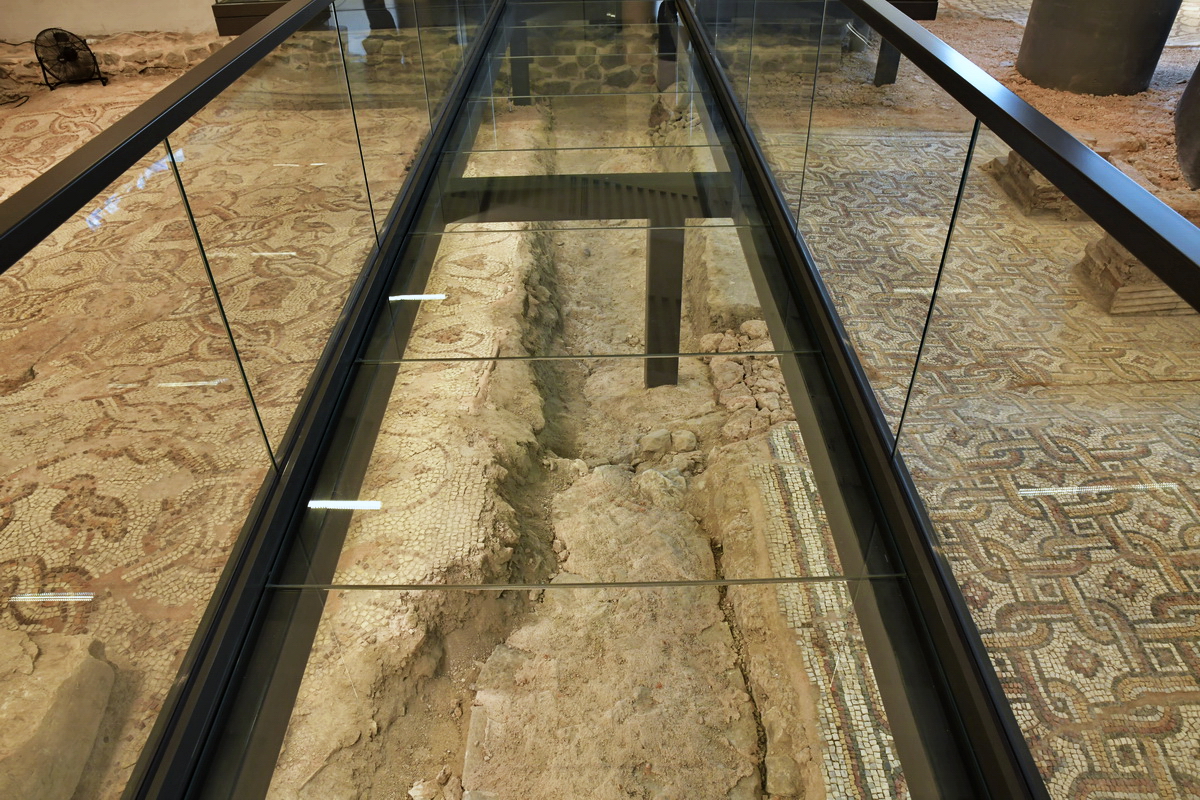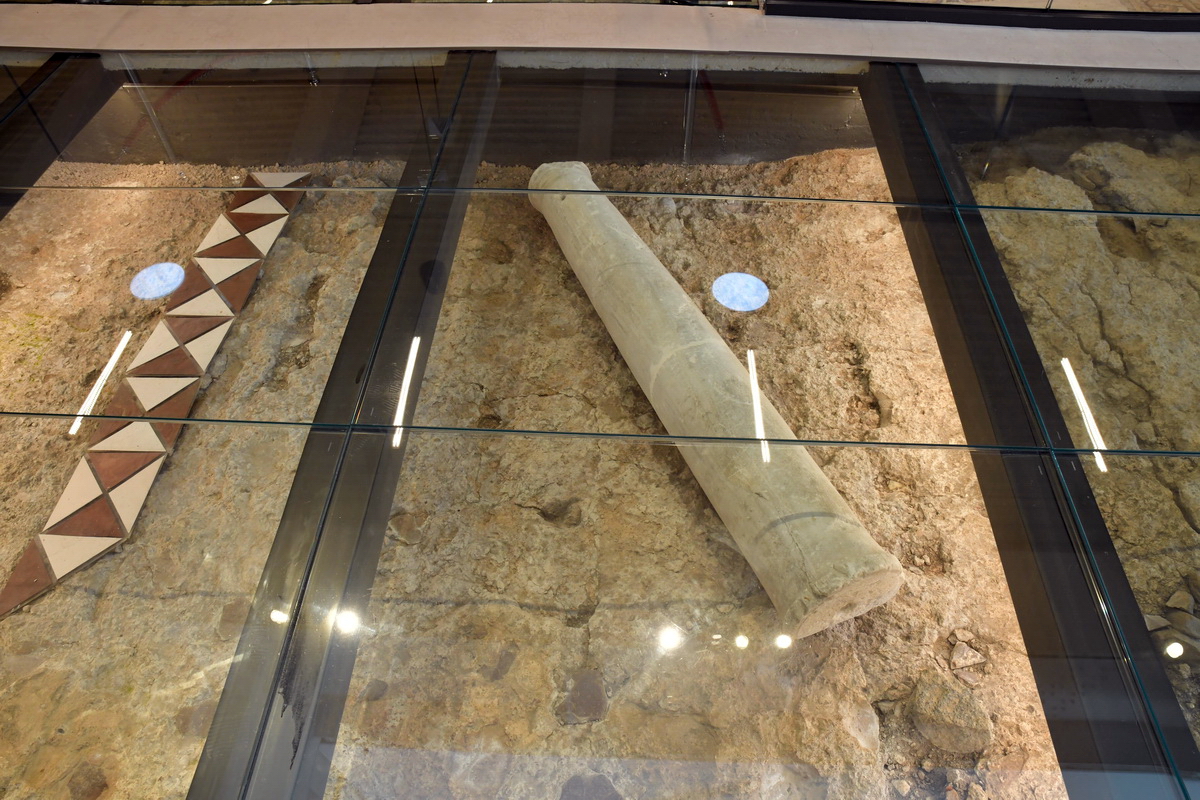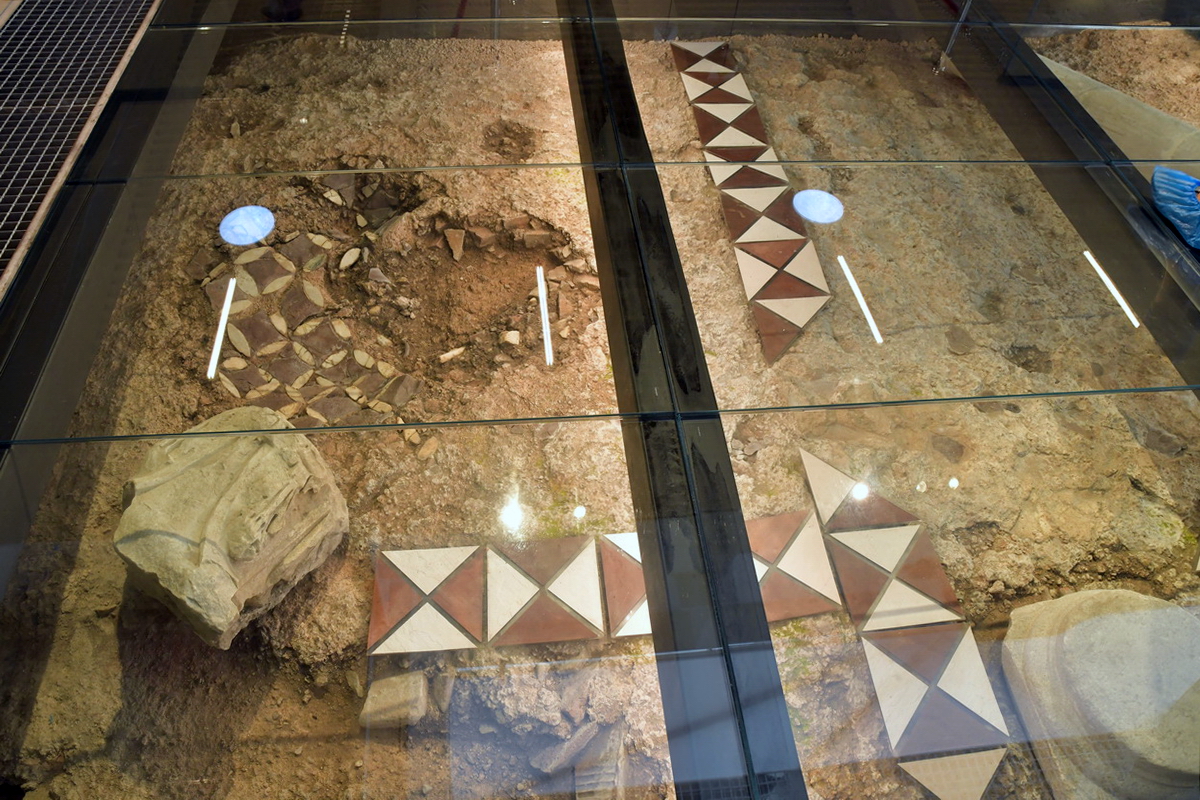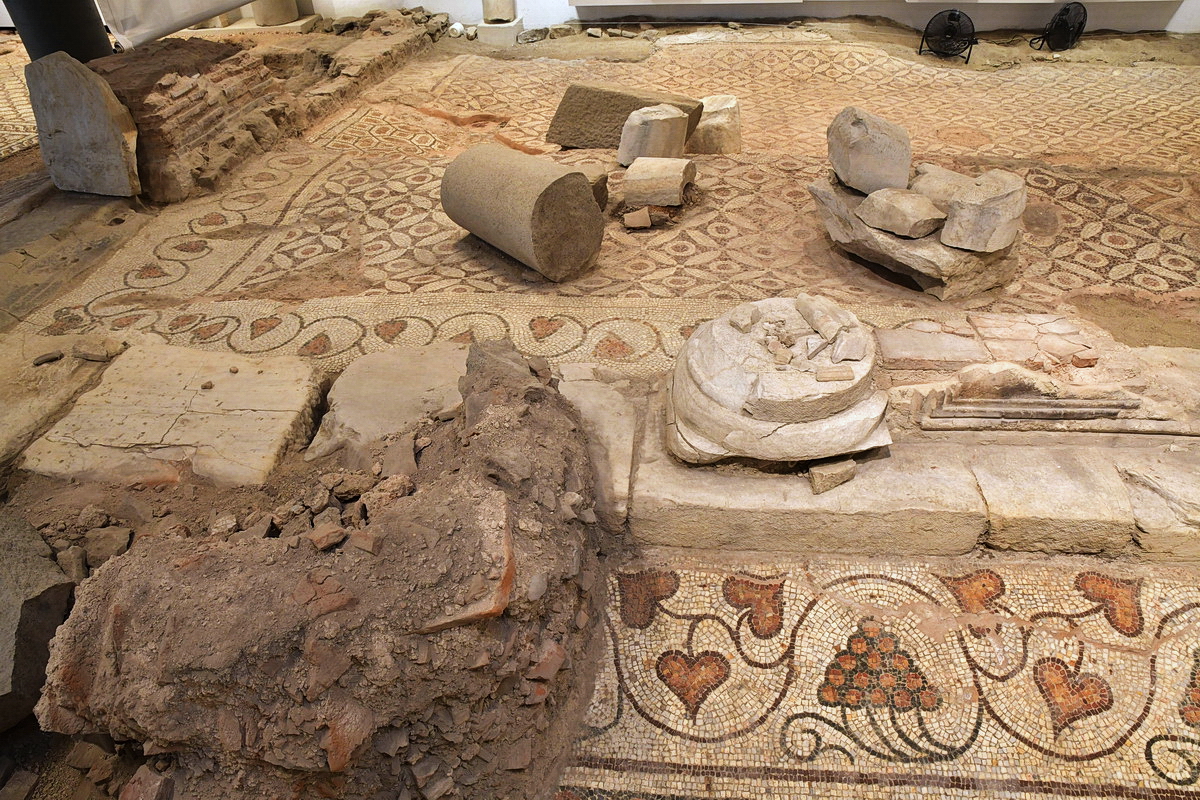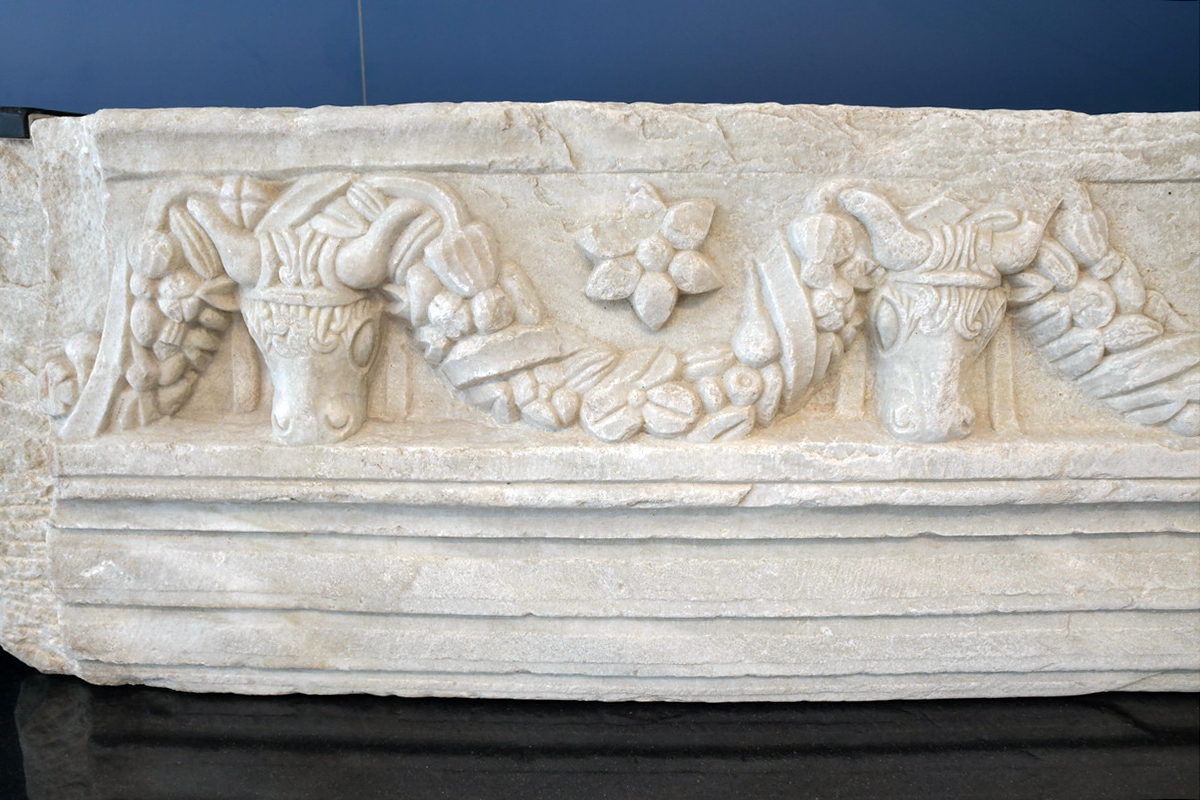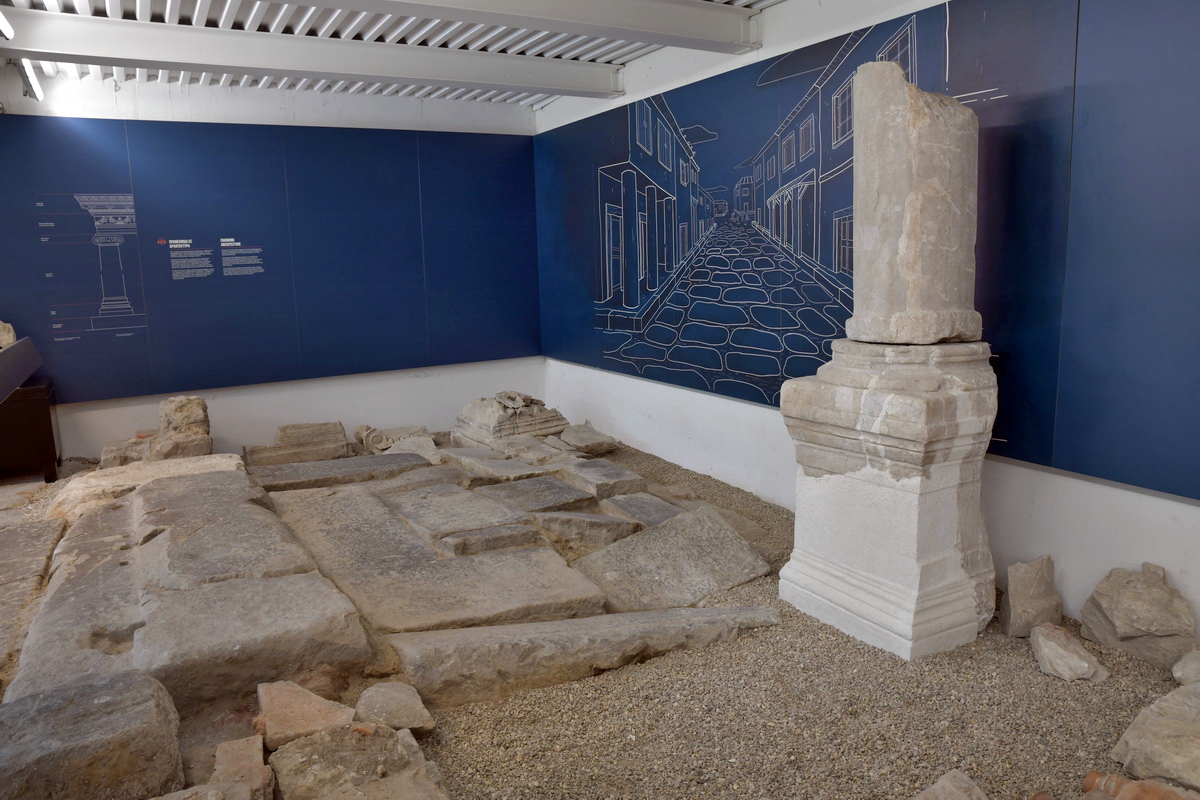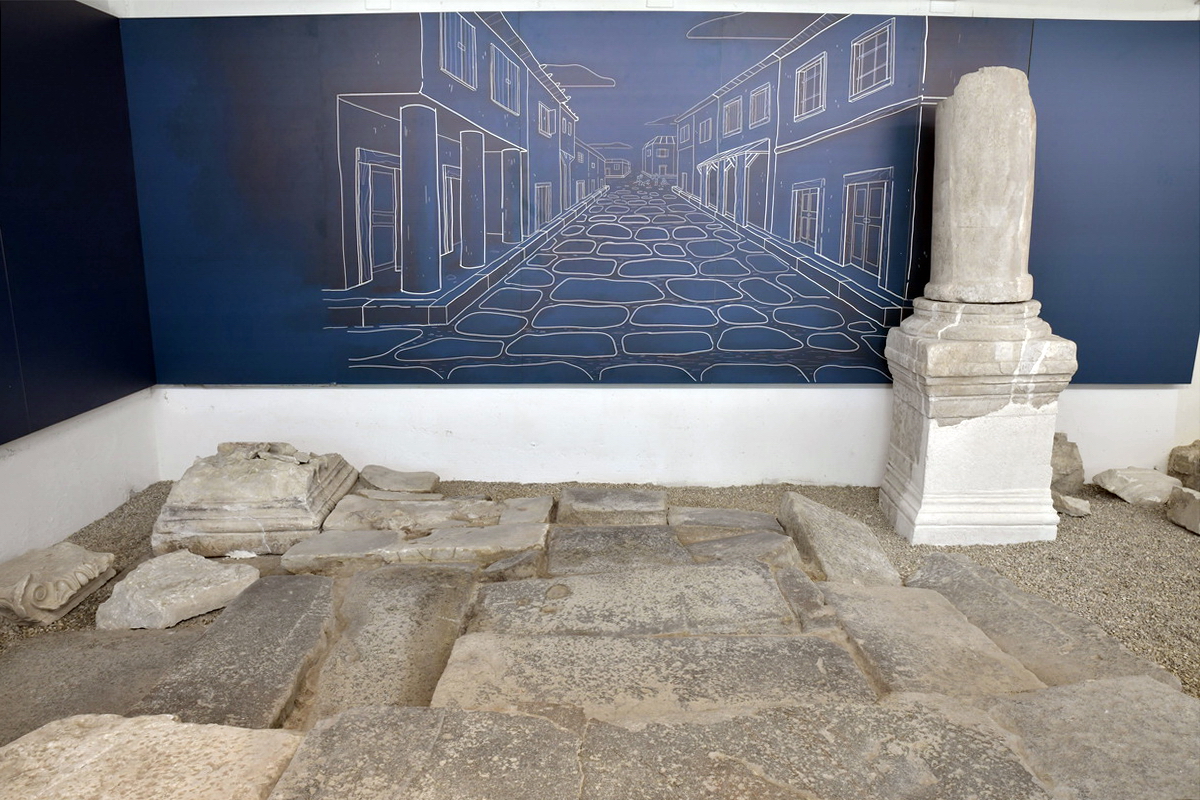
When I first came to Plovdiv in 2017, the site that is now open to visitors as the Bishop’s Basilica of Philippopolis was still an archaeological excavation. I photographed the exposed walls, architectural fragments and mosaic floors in the middle of the city. Four years later, in 2021, I returned to the same place and entered a completed museum and visitor centre built around the remains. The first photograph in this series belongs to that 2017 encounter; the others are from my return in 2021.
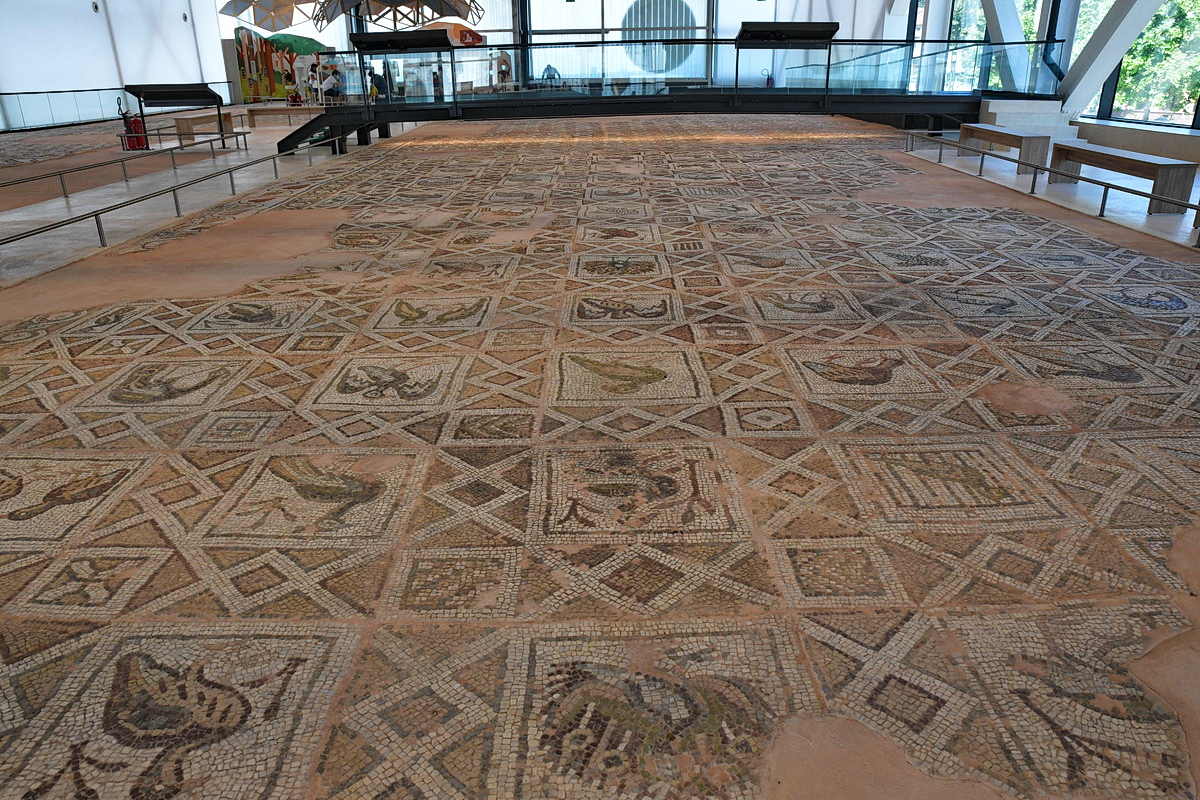
The building was the great early Christian basilica of ancient Philippopolis. It functioned from the middle of the 4th century until the end of the 6th century. About 83 metres long and 36 metres wide, it is the largest known basilica of this period in Bulgaria and one of the largest in the Balkans. Its floors preserve more than 2,000 square metres of mosaics arranged in successive layers. The basilica was fully uncovered during the 2016–2017 excavations, and the mosaics were subsequently conserved and presented in the new visitor centre.
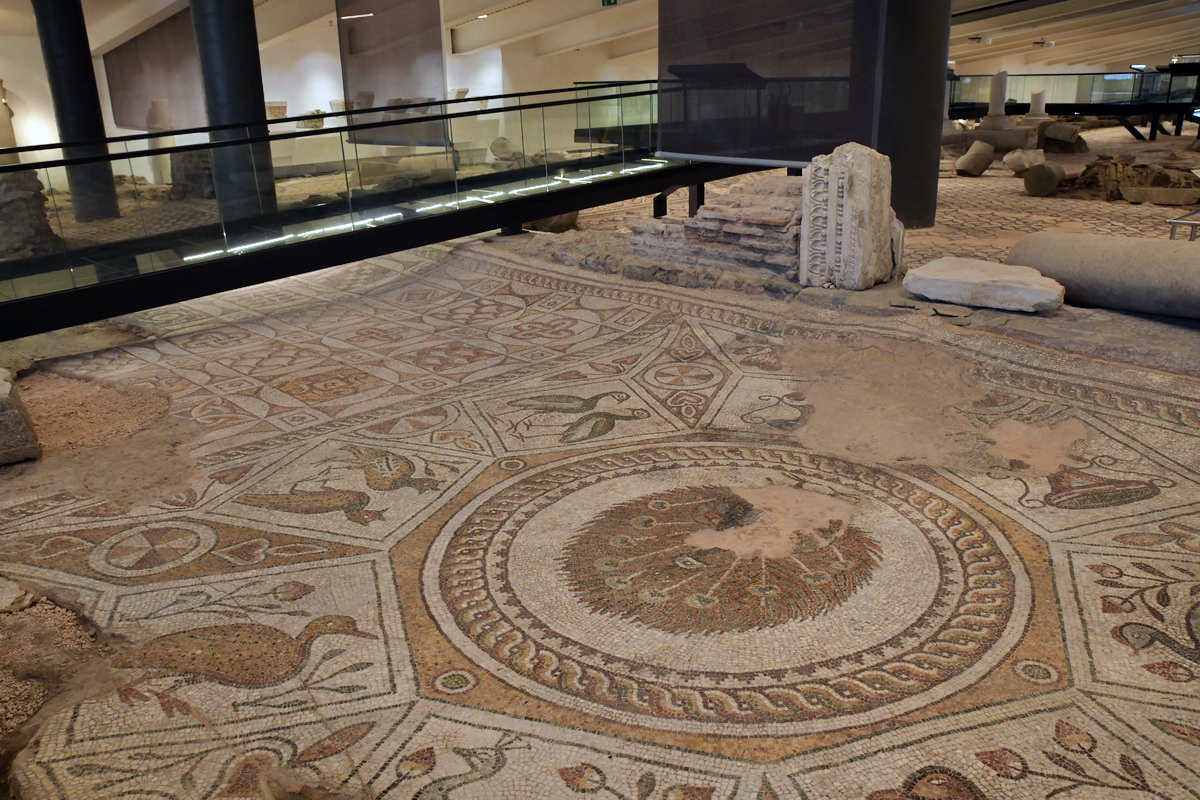
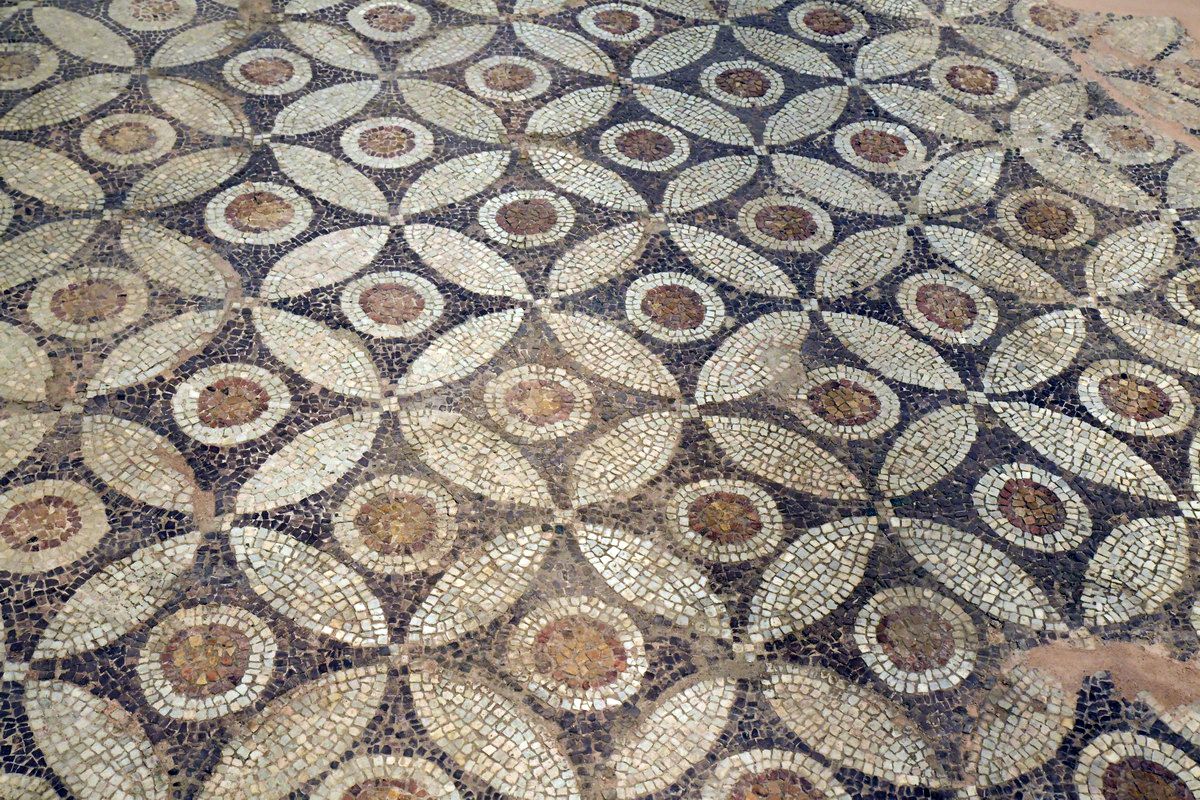
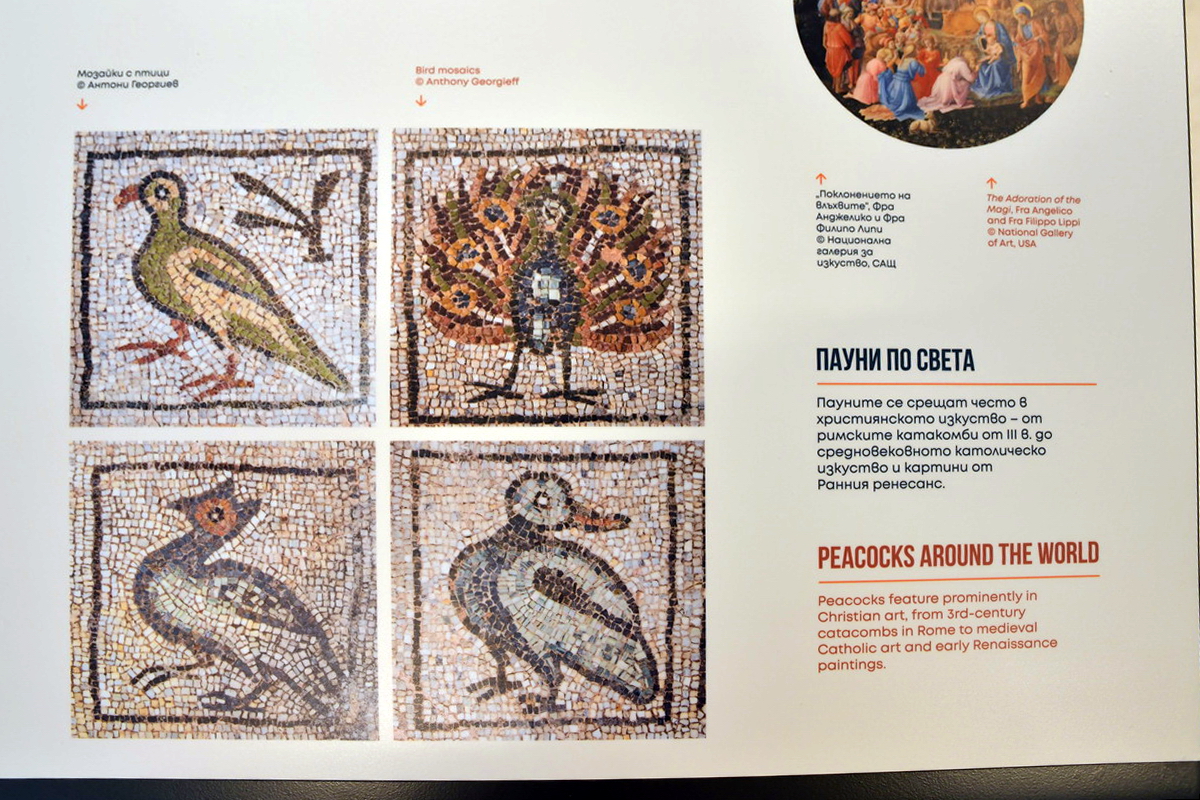
What interested me most was not only the scale of the building but the visual language under my feet. Geometric compositions, rosettes, plants and birds fill the floors. Although they belong to an early Christian basilica, many of these forms continue much older Roman and Mediterranean decorative traditions. A new religious world had emerged, but the imagery of earlier cultures had not simply disappeared. Old symbols survived and acquired new meanings.
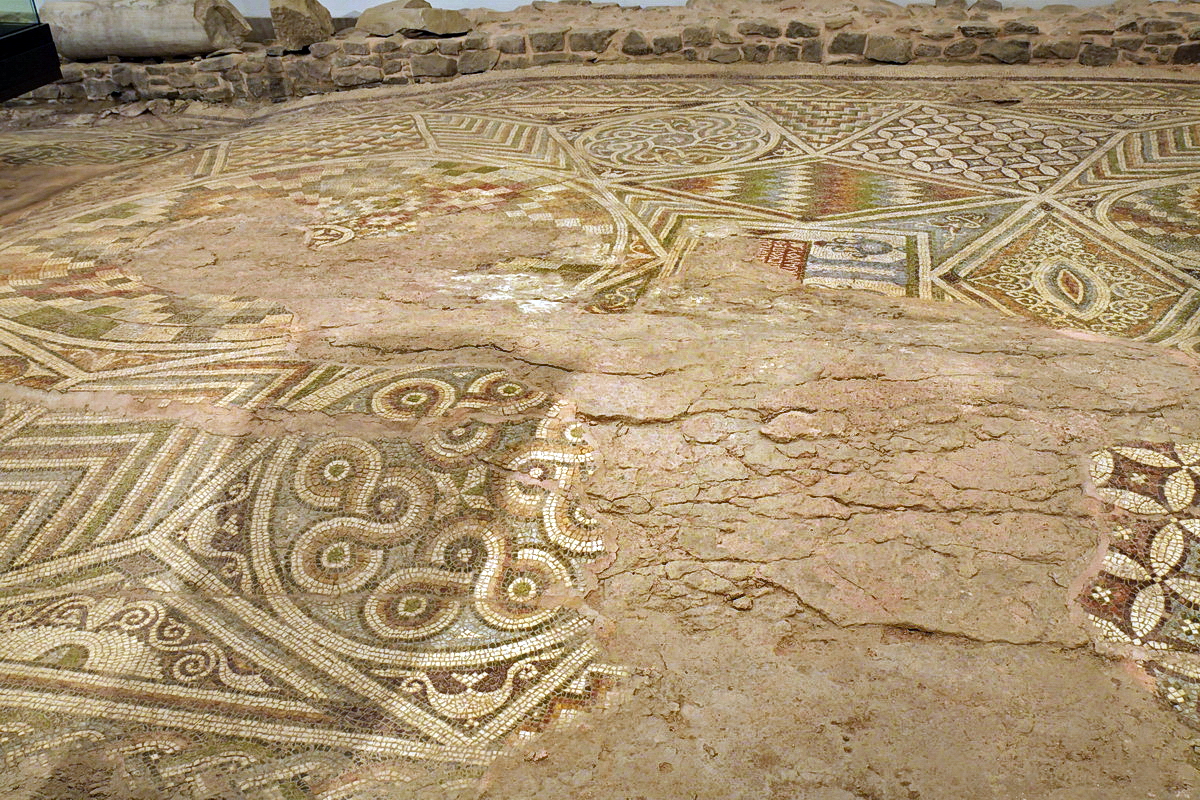
The floor itself also carries another kind of history. In several places the mosaics no longer lie flat; they rise and fall in broad waves, and the carefully ordered patterns visibly bend with the ground beneath them. The basilica is thought to have been destroyed and abandoned, probably after an earthquake. Looking at these deformations, I felt that the earth had written its own layer into the architecture. Human beings had arranged thousands of small stones into precise patterns; centuries of movement had folded that order without completely erasing it.
Among the many birds, the peacock stopped me. It was not an unfamiliar symbol. I had spent, at intervals, almost two months in Ezidi refugee camps, photographing people and listening to their accounts of their own faith and identity. Adiba, one of the women I photographed, wore a small peacock pendant around her neck. For her, as for the Ezidis I met, the peacock represented Tawûsê Melek — the Peacock Angel.
“We are not the children of Adam and Eve. God first created Tawûsê Melek, and he created his own people. We are his children. Our people and our religion are Ezidi.”
These are not words with which I try to define Ezidi theology from outside. They are words I recorded during my conversations in the camps. The people I met also spoke to me about the continuity of the world and of nature. They believed that God, having created the world, would never destroy it.
The symbolic life of the peacock is much older than either of the religious contexts in which I encountered it. In the ancient Mediterranean world it was associated with splendour, renewal and immortality. Early Christian art inherited the image and used the peacock as a sign of eternal life. In Ezidi belief, in a very different religious setting, the same bird became the visible emblem of Tawûsê Melek. I would not claim a direct historical line between these two meanings. What interests me is their persistence: the same image surviving across centuries, places and belief systems, each time carrying another layer of meaning.
In 2017 I photographed a basilica being brought back out of the earth. In 2021, standing above its conserved mosaics, I found myself looking at a peacock made from small coloured stones and remembering people I had photographed years before in refugee camps. For me, that unexpected connection became the strongest memory of the museum.
Buildings collapse, the ground moves, civilizations and belief systems change. Yet some images continue to live. The peacock is one of them.