
The Dancing Giants of San Miguel de Allende: Mojigangas Oct-Nov.2025
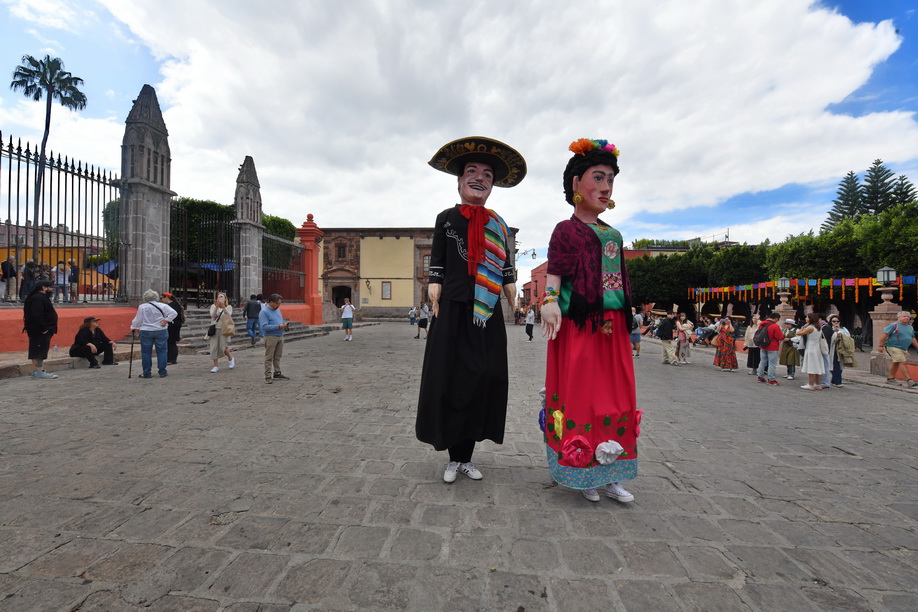
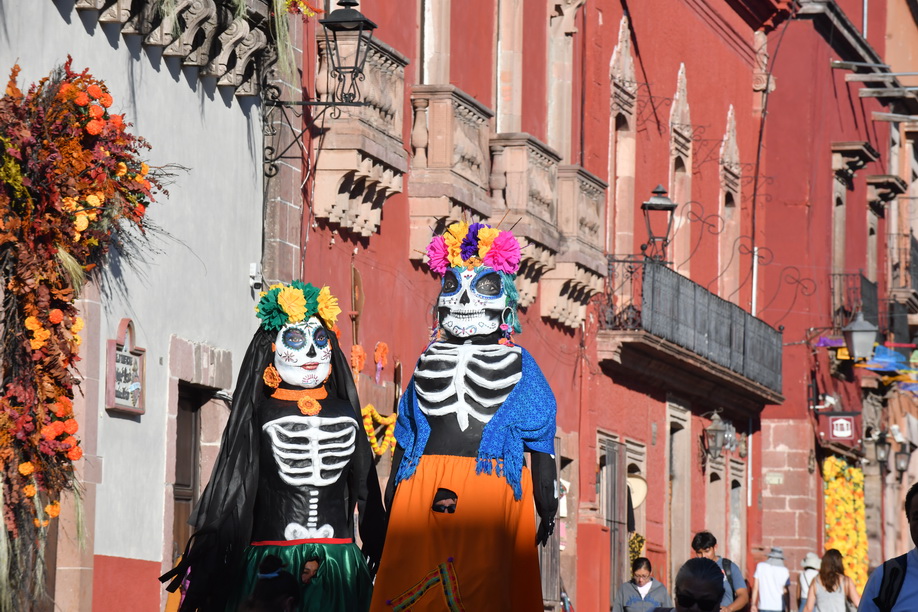
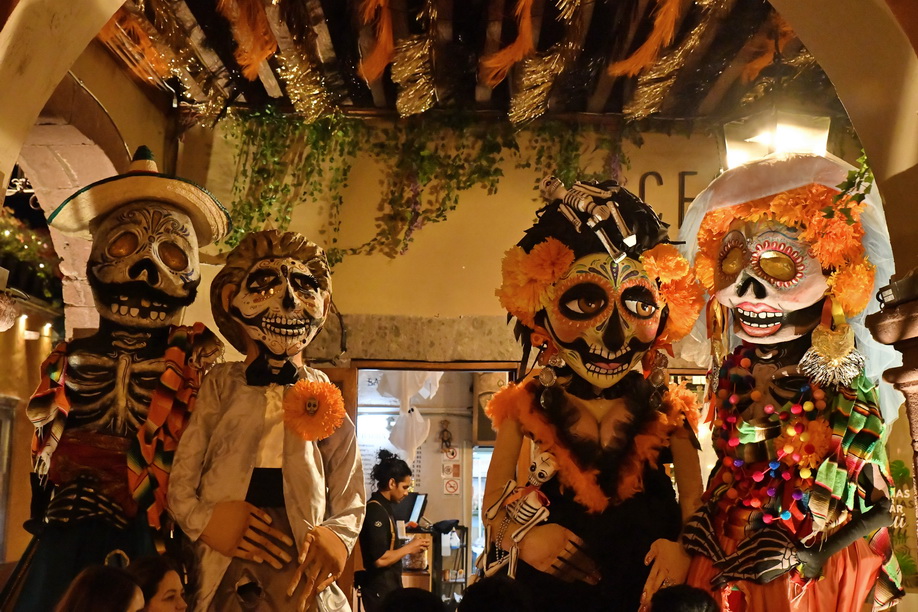
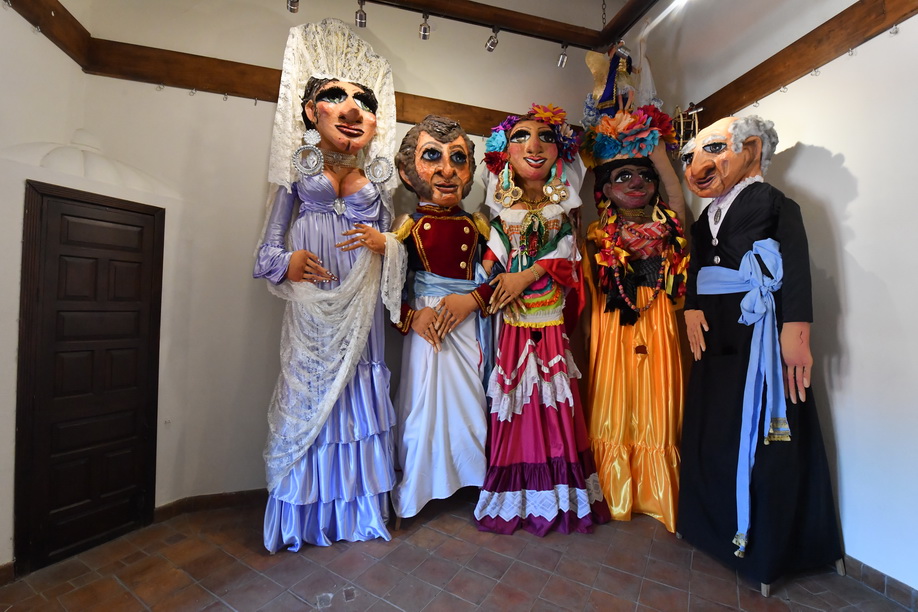
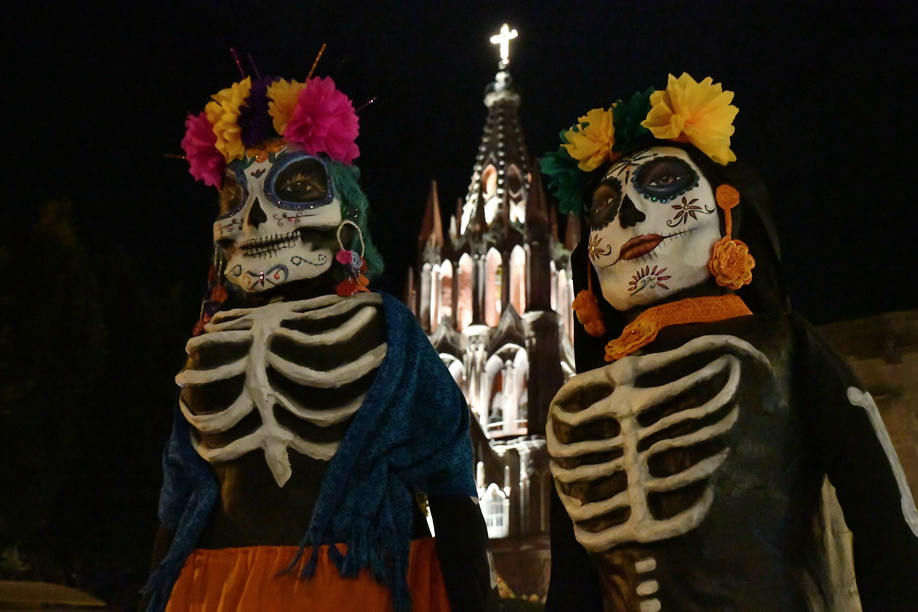
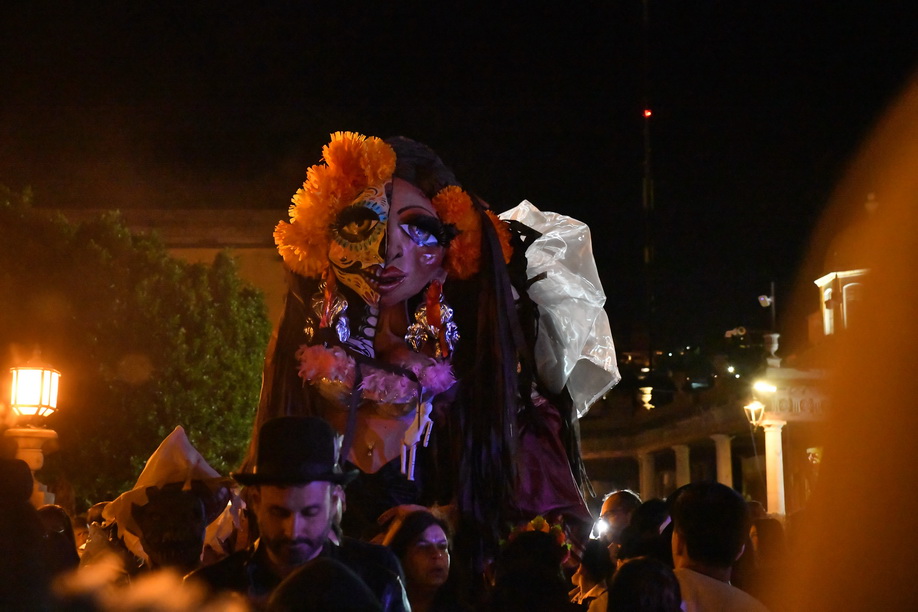
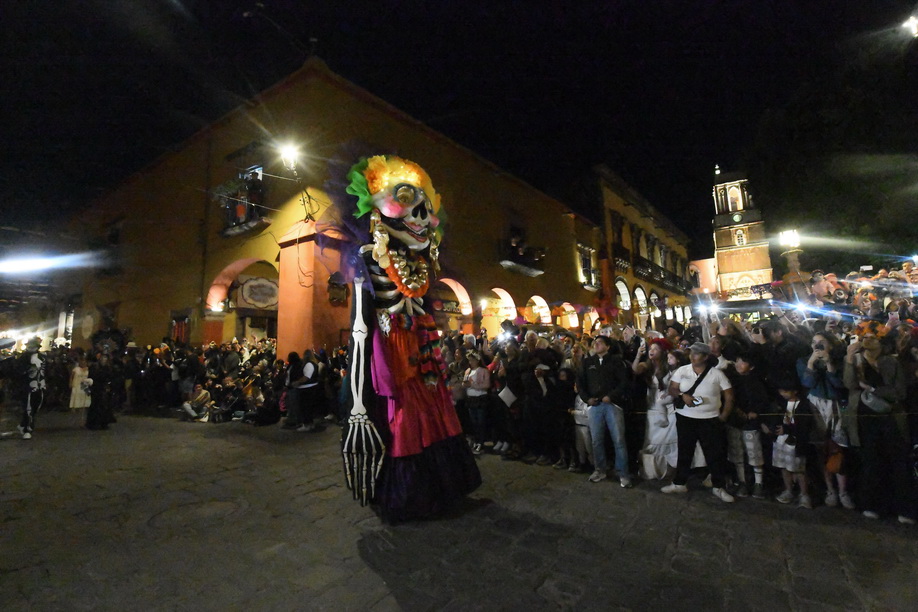
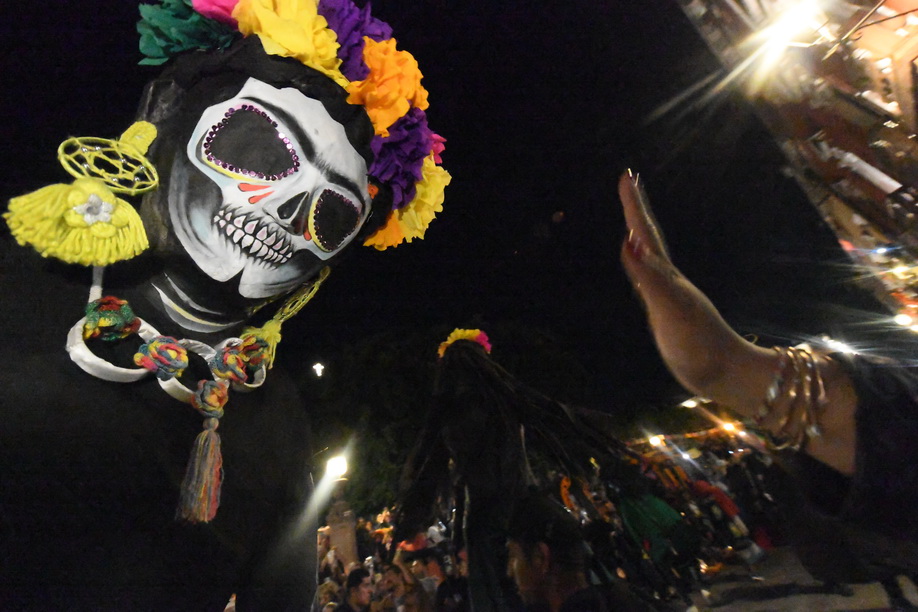
The first time I encountered a mojiganga in San Miguel de Allende, it was impossible simply to walk past without stopping. A giant human figure, several metres tall, was moving through the street, passing among the crowd and swaying from side to side with the rhythm of the music. From a distance, it seemed to be moving on its own. Only when I came closer did I realize that beneath the long costume was a person carrying the figure on their shoulders and, at the same time, making it dance. Because I was in San Miguel during the Dia de Muertos celebrations, many of the mojigangas I encountered took the form of skeletons and Catrina-like characters. Heads decorated with flowers, painted skulls, long dresses, sombreros and exaggerated faces appeared everywhere. During the day, these figures moved through streets lined with San Miguel's red and ochre facades. At night they took on an entirely different appearance. Two skeleton figures I photographed in front of the illuminated Parroquia de San Miguel Arcangel seemed less like human creations than imaginary characters towering over the city. But mojigangas were not created specifically for Dia de Muertos. When I began looking into their history, I discovered a much older and broader tradition. Their origins can be traced to Spain, where the word mojiganga was associated with comic, carnival-like street performances and theatrical farces. The tradition crossed the Atlantic during the colonial period and developed in New Spain. Over time, large masks and theatrical figures evolved into giant human forms constructed on lightweight frames, becoming part of religious festivals, neighbourhood celebrations and public processions. Their construction interested me as much as their appearance. Despite their enormous size, mojigangas are not heavy, solid sculptures. Traditionally they are made using carrizo, a type of reed, together with wire, cloth and cartoneria-the Mexican craft of shaping paper and cardboard into sculptural forms. The large head and upper body are built around a lightweight framework, while the long fabric costume forms the rest of the body and conceals the person inside. In fact, a mojiganga is completed not only by the artisan who makes it but also by the person who carries and dances with it. The structure rests on the carrier's shoulders, and the performer can see through an opening beneath the costume. When the dancer turns, the long skirt swings around; when the body moves, the enormous head begins to sway. A mojiganga is therefore more than a giant puppet being carried through the street. Once it begins to move, the body of the performer inside gives it a personality of its own. One of my photographs shows two giant figures standing together in the square. The male figure, with his sombrero, moustache and sarape, evokes a familiar traditional Mexican character, while the woman, with flowers in her hair and a long colourful dress, recalls another recognizable image of Mexico. In another photograph, taken indoors, five mojigangas stand side by side: different faces, different clothes and completely different characters. That photograph makes something important clear. A mojiganga does not have to be a skeleton or a Catrina. A bride, a groom, a historical personality or an entirely imaginary character can also become one of these giants. One of the most important contemporary figures in San Miguel's mojiganga tradition is the local artisan Hermes Arroyo, who has been making them for more than three decades. Cartoneria itself has a much longer history in the city, and giant figures were already part of San Miguel's popular celebrations before the tradition acquired the international visibility it has today. Artisans such as Arroyo have helped preserve the craft while allowing it to evolve and acquire new characters. One of the most surprising places where mojigangas appear in present-day San Miguel is at weddings. Giant versions of the bride and groom can be commissioned, sometimes with facial features modelled on the couple themselves. Accompanied by mariachi or other musicians, the mojigangas dance at the front of wedding processions as people make their way through the streets. In San Miguel's callejoneadas, music, walking, dancing and these enormous figures merge into a single moving street celebration. But the tradition is not limited to weddings. Mojigangas continue to appear in San Miguel's religious and traditional festivities as well. During important celebrations connected with San Miguel Arcangel, including La Alborada, neighbourhood groups, musicians and other traditional participants make their way towards the Parroquia, with mojigangas among them. Behind the colourful giants now photographed by visitors lies a much older culture of neighbourhood festivities and communal celebrations. In my photographs, however, another aspect of the mojiganga comes to the foreground. During Dia de Muertos, it was almost as though death itself had grown enormous and walked into the streets. Yet there was nothing frightening about this death. The skeletons wore crowns of brightly coloured flowers. Their faces smiled. Their long dresses moved as they turned. Instead of moving away from them, people approached them, photographed them, and children watched them with curiosity. In one of my photographs, a single giant skeleton moves through a packed square while hundreds of people stand around watching. In one of my final photographs taken at night, the distance between us disappeared altogether. A mojiganga with a skull face surrounded by colourful flowers leaned down towards me. At the edge of the frame, a hand reaches up towards it. The figure is no longer part of a performance I am observing from a distance; it almost enters the camera itself. For me, this photograph captures something essential about the way mojigangas inhabit the street. Despite their enormous size, they do not remain apart from the people around them. On the contrary, they enter the crowd, play with people and draw them into the performance. While photographing the mariachis in San Miguel, I had become aware of the sound of the square. Watching the mojigangas, I became aware of something different: the scale of the square changed. A few moments earlier, the Parroquia, the stone buildings and the people had defined the dimensions of the space. Then a mojiganga appeared and suddenly everyone became small. The giant began to turn, sway and move through the crowd. Perhaps that is why mojigangas have survived for so long. They are made from remarkably simple materials-reeds, paper, cardboard and cloth. Yet the moment a person steps inside one, the figure comes alive. A tradition inherited from the past becomes, for a few minutes, a living character in the present. This is how I remember them in the streets of San Miguel: Giants walking among the people, dancing with them and, for a while, changing the scale of the city around them.