
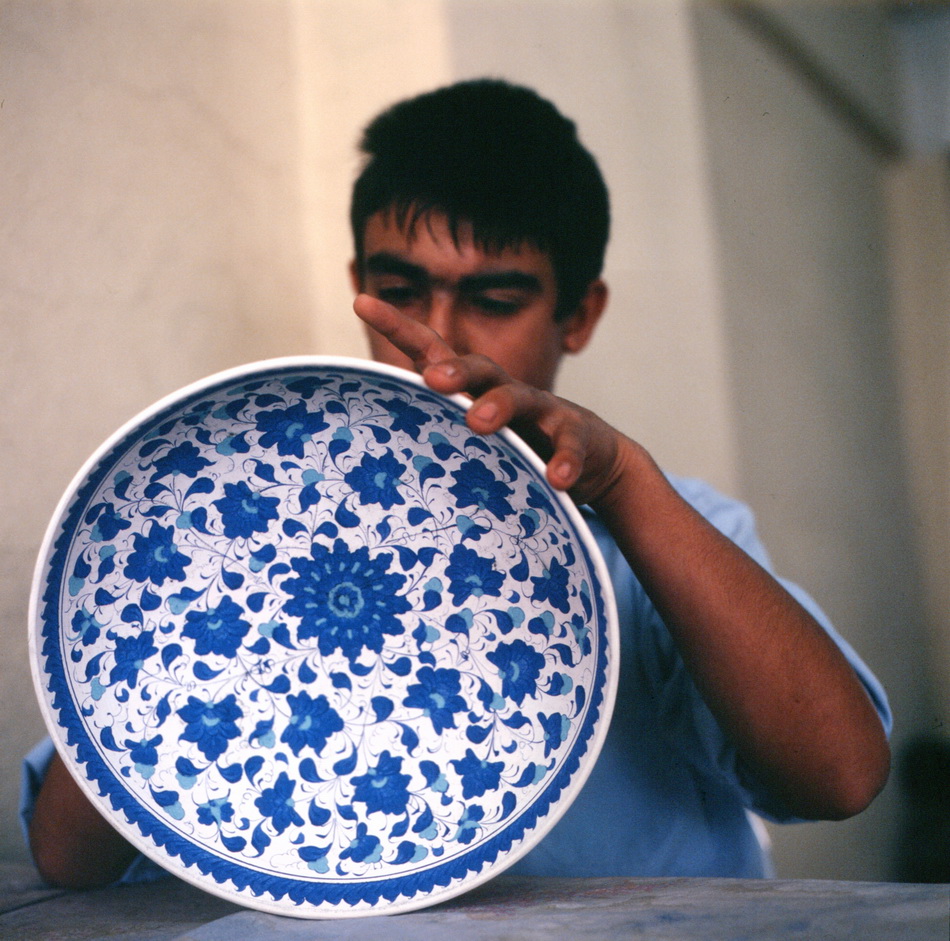
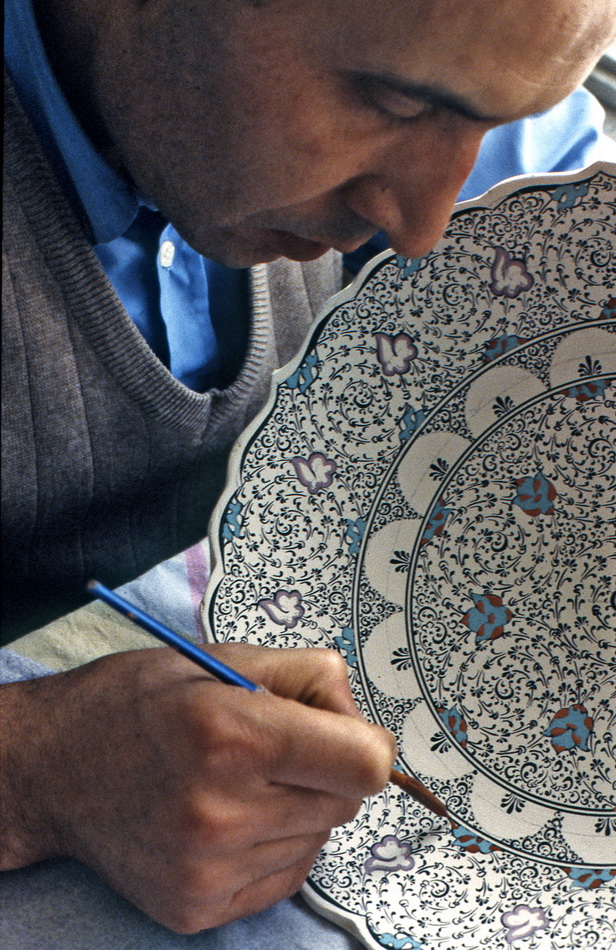
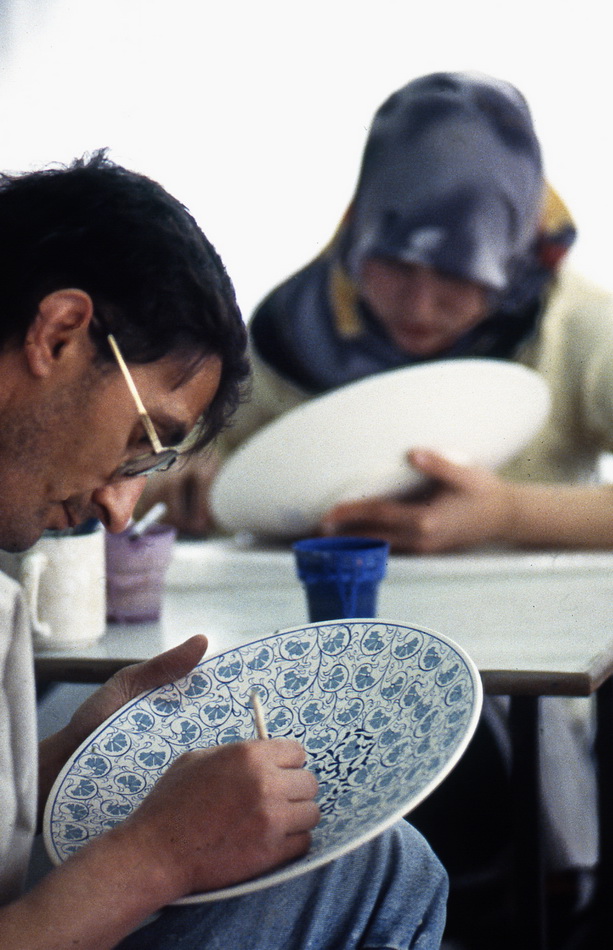
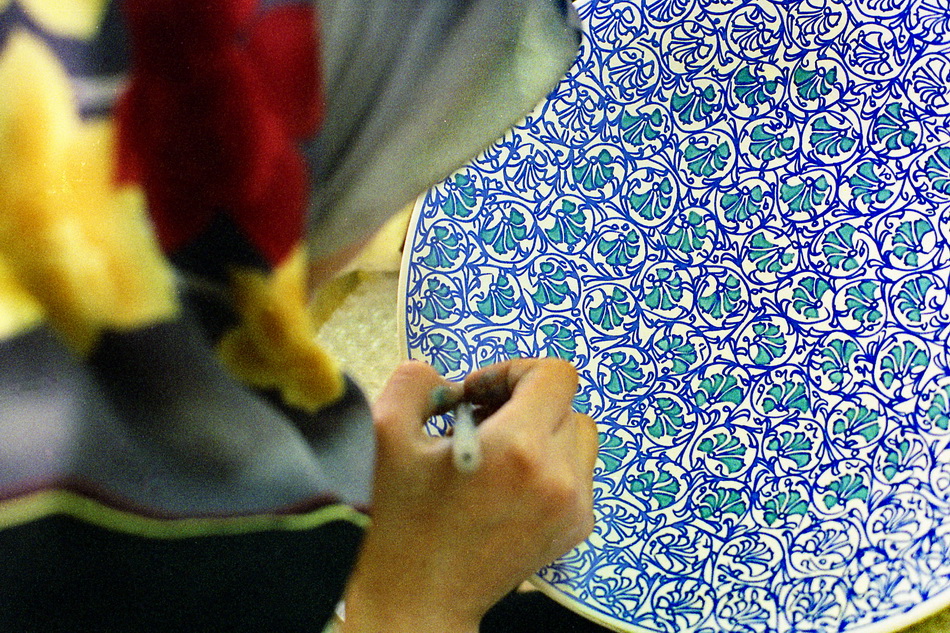
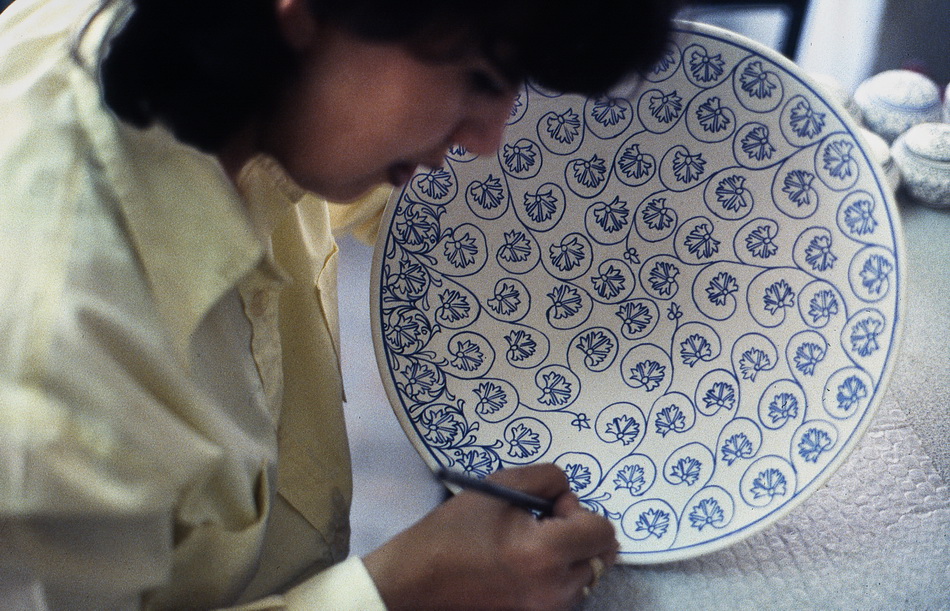
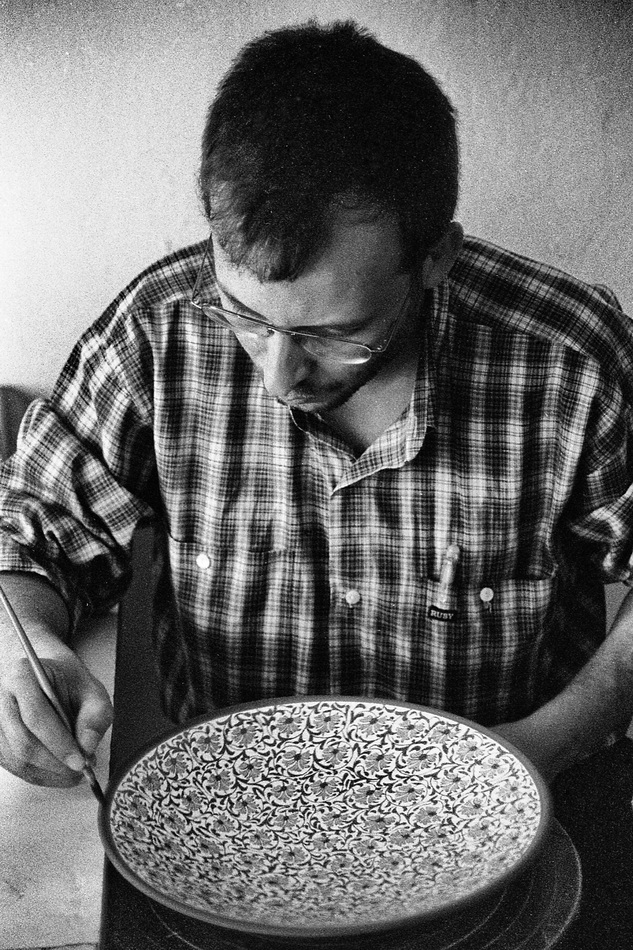
In 2001, I visited a ceramic workshop in Kütahya and photographed several stages of traditional tile and pottery decoration. I was particularly drawn to the concentration and patience of the women painting intricate patterns by hand. The plates before them were covered with flowers, leaves and flowing motifs, each line connecting with the next. These complex designs reflected both the artisans’ practiced skills and a long-established decorative tradition. My photographs sought to record not only the patterns themselves, but also the hands that created them and the everyday atmosphere of the workshop.
Kütahya has been one of Anatolia’s important centres of ceramic and tile production for centuries. Its workshops developed alongside the better-known Ottoman tradition of İznik, gradually establishing their own characteristic colours, motifs and forms. Cobalt blue, turquoise, green and red appear in combinations of flowers, branches, leaves and geometric arrangements. The tradition extends beyond architectural tiles to plates, vases, bowls and other ceramic objects used in daily life or made for display.
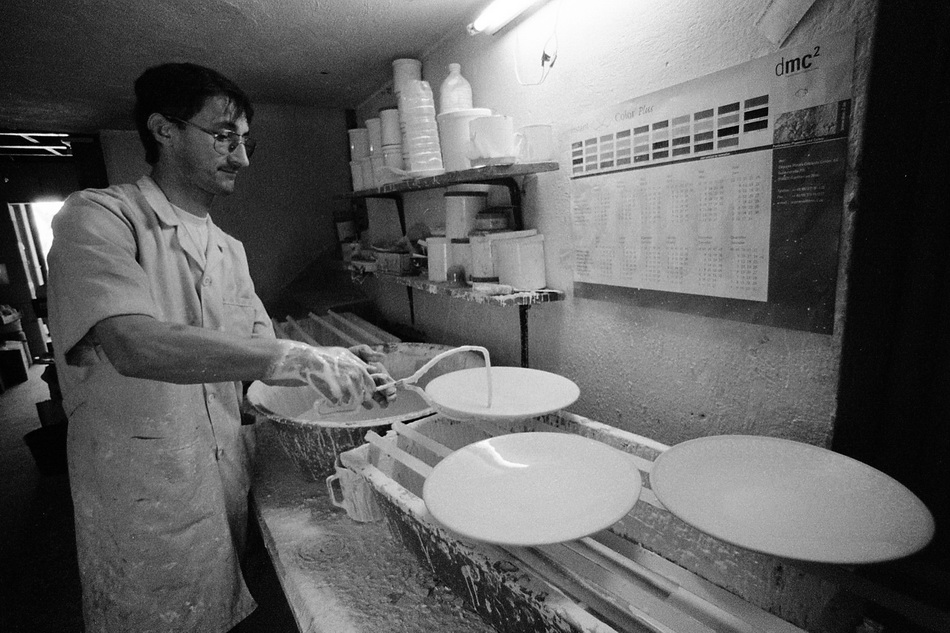
Traditional ceramic production involves a sequence of distinct stages. The prepared clay body is shaped, dried and fired for the first time. Designs are then transferred to the surface and painted with fine brushes. This demands precision: the balance of repeated motifs, the continuity of lines and the harmony of colours all depend on the painter’s control. Once the decoration is complete, the piece is coated with a transparent glaze and fired again. During firing, the glaze forms a glass-like surface that reveals the colours and gives the ceramic its characteristic shine.
The painting and glazing I photographed at the workshop represented only part of this longer process. Even these stages, however, made clear how much patient work goes into a single piece. A small motif might be repeated many times across a plate, each variation requiring the same steady hand. Glazing was another essential step on the way to the finished object. These actions seemed routine to the people performing them, yet they depended on experience acquired over years of practice.
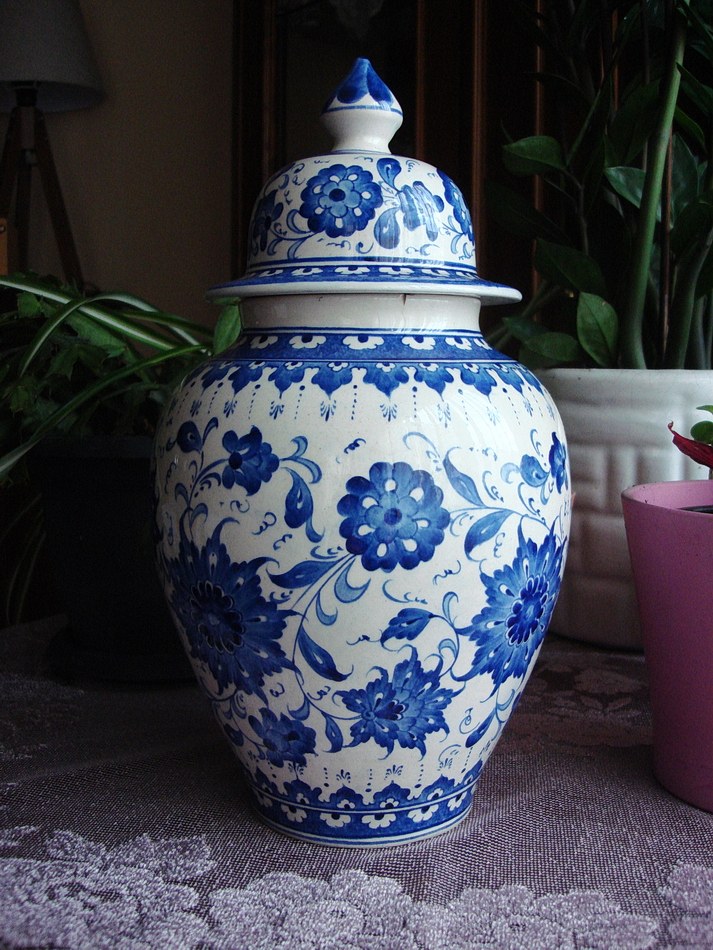
Kütahya ceramics are part of a cultural tradition sustained through the transmission of motifs and techniques between generations. Production methods have changed over time, and handwork now exists alongside faster manufacturing processes. For me, the value of this photographic study lies not only in the colourful finished objects but also in the people whose labour gives them form. These photographs preserve a small fragment of daily workshop life in Kütahya in 2001. The final image, a completed blue-and-white ceramic vase, shows the aesthetic result of that work.