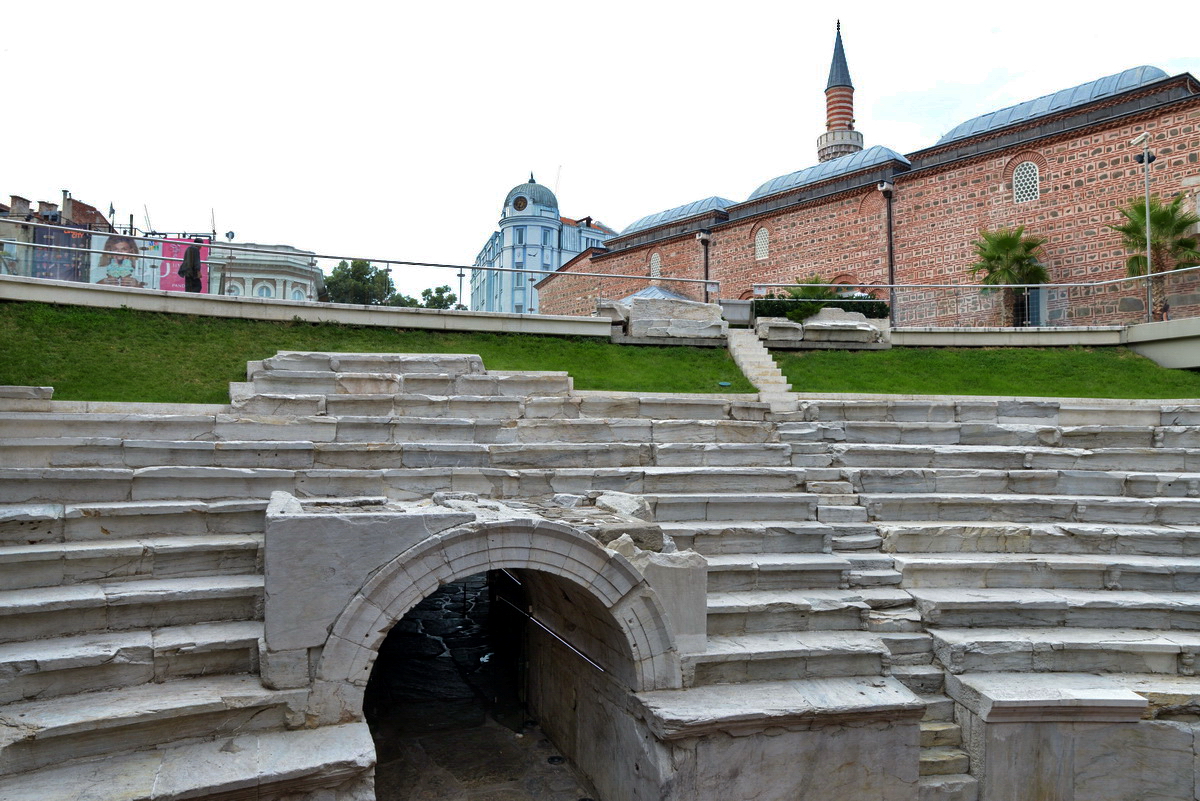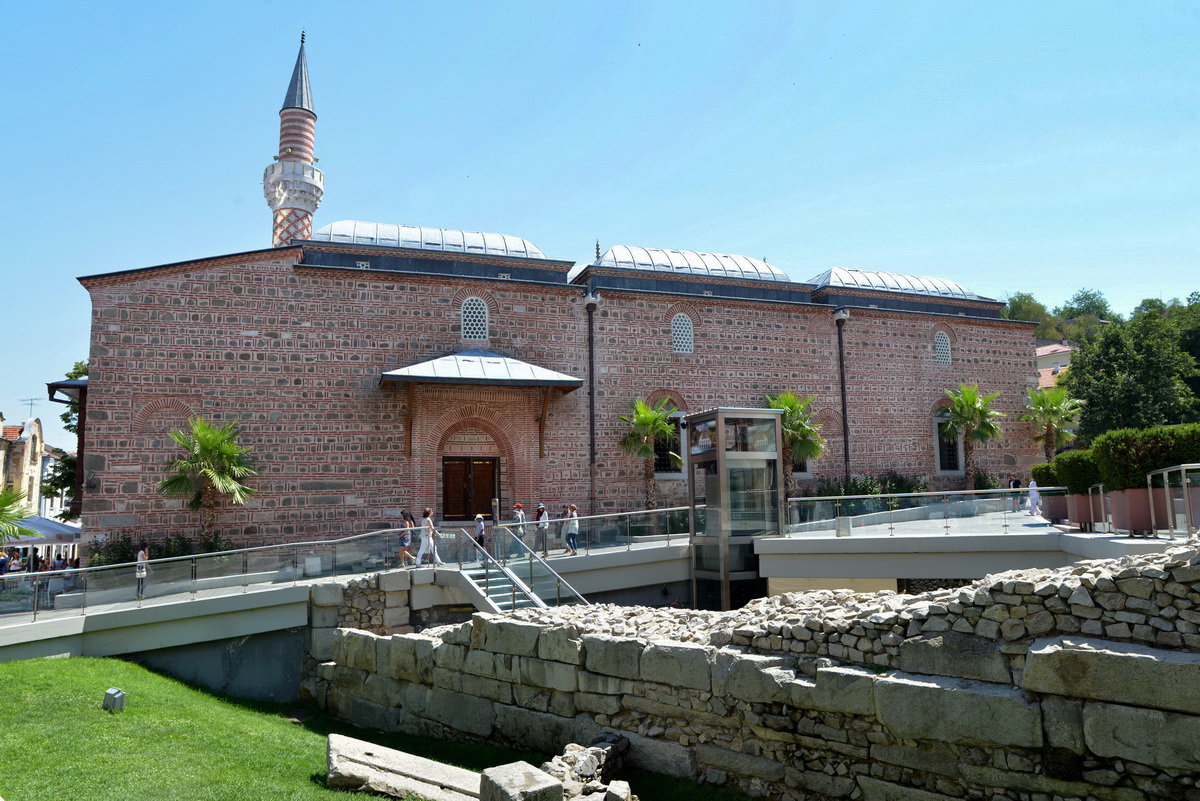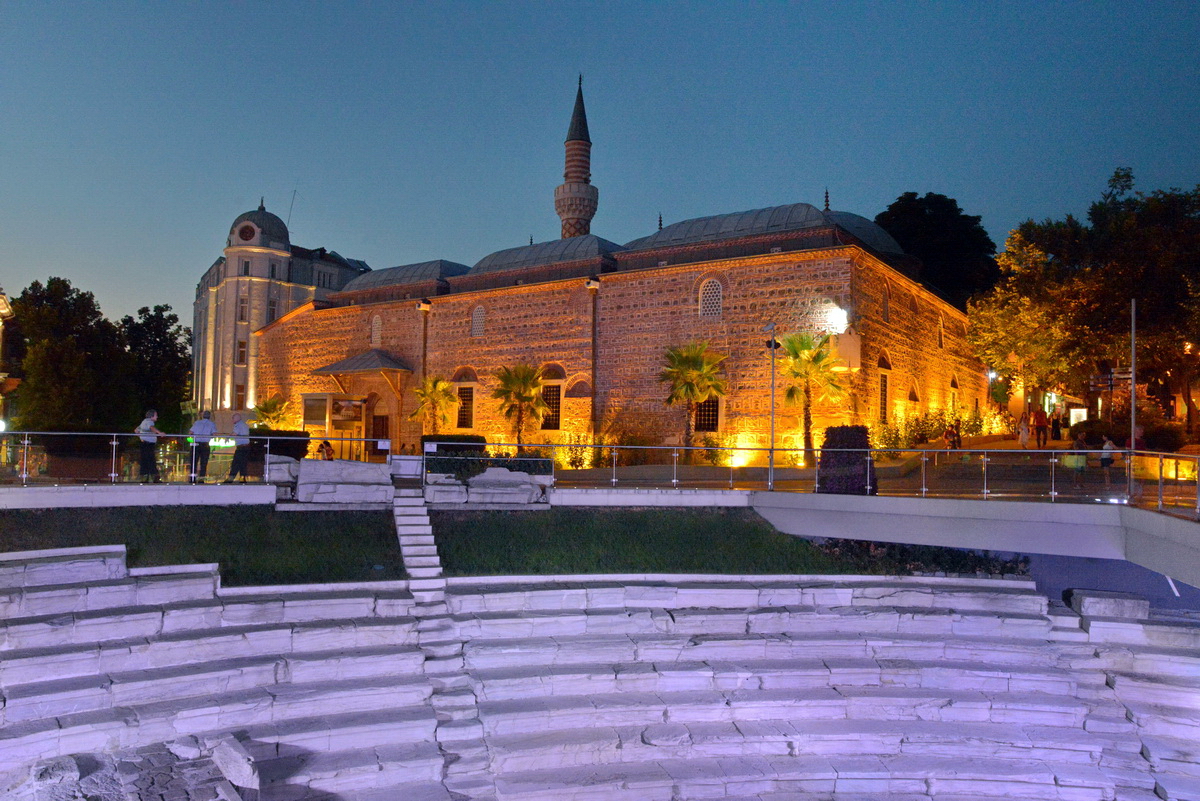
In 2021, while walking through Plovdiv during the Balkan Summer School, I photographed a place where different periods of the city seem to occupy the same frame. At Dzhumaya Square, the exposed northern end of the Roman Stadium lies below street level, while immediately beside it rises the Dzhumaya Mosque. Antiquity and the Ottoman city are not separated here by distance; they stand almost on top of one another.
The Dzhumaya Mosque, historically also known as the Muradiye or Ulu Dzhumaya Mosque, is Plovdiv’s principal Friday mosque. The present building is generally associated with the reign of Sultan Murad II in the first half of the fifteenth century. It replaced an earlier mosque erected after the Ottoman conquest of the city, on a site where historical accounts place the former cathedral church of St. Petka of Tarnovo. This succession of buildings makes the square itself a document of Plovdiv’s changing religious and political history.
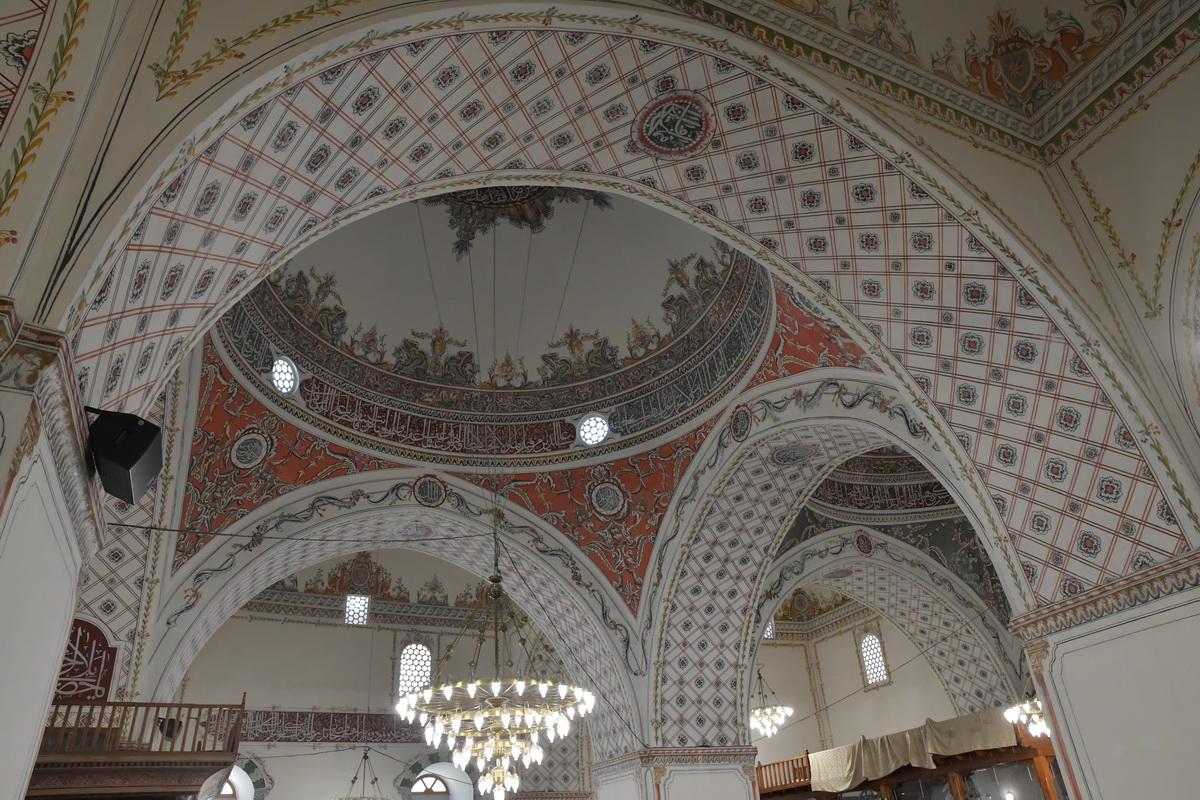
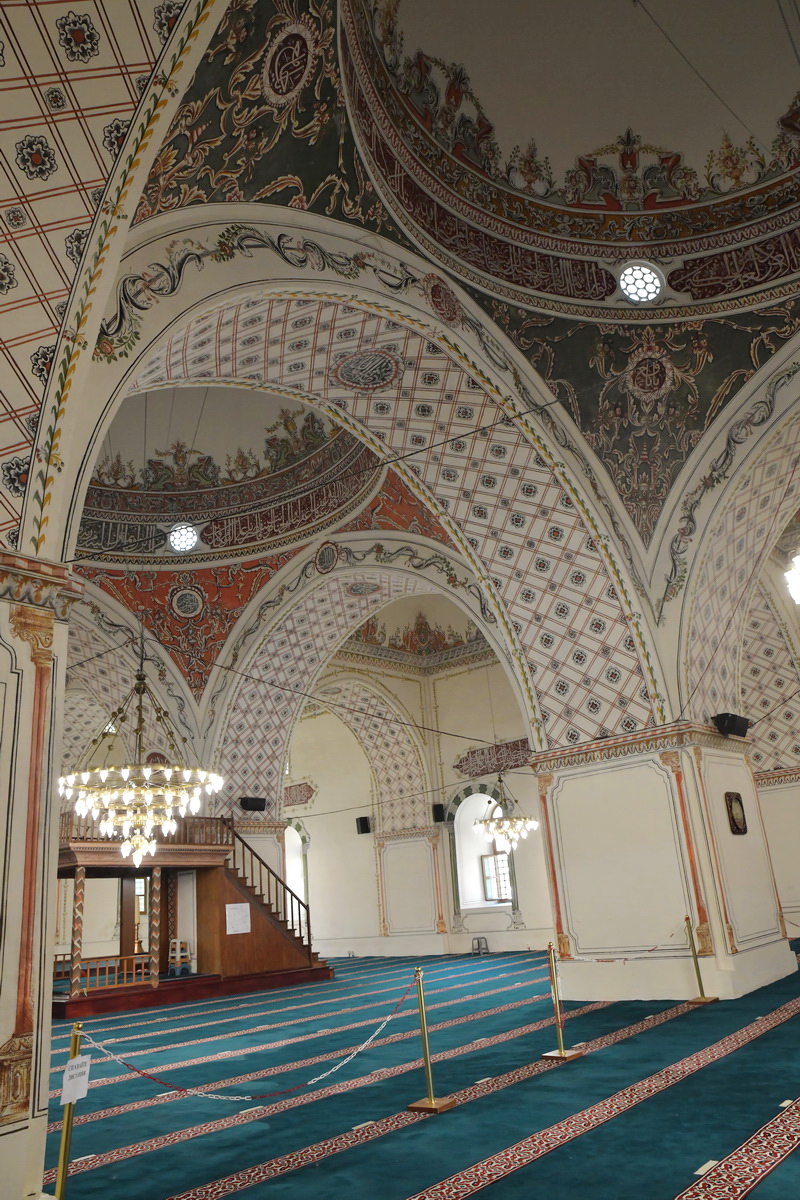
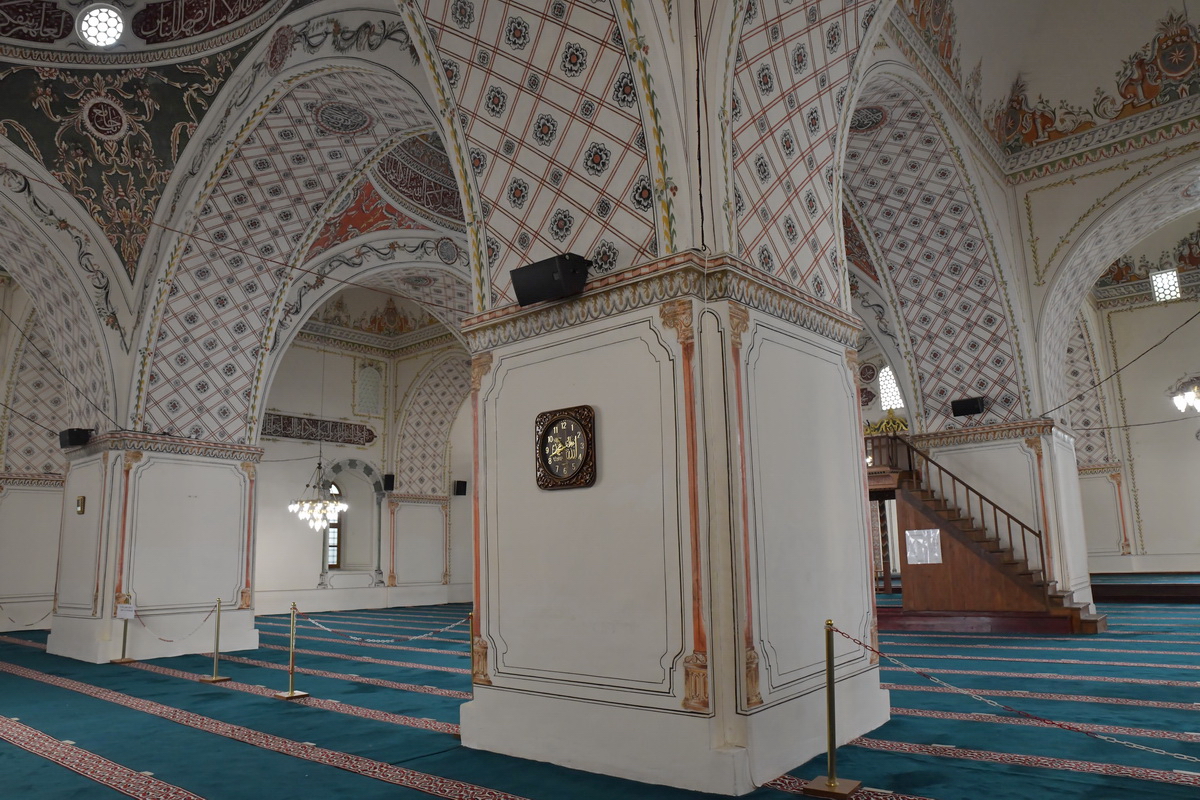
The mosque is striking for its scale and for a form quite different from the later, more familiar single-domed Ottoman mosque. Its broad rectangular prayer hall is divided into three aisles and covered by nine lead-clad domes. On the exterior, alternating courses of dressed stone and brick recall building traditions long present in Byzantine and medieval Balkan architecture. The minaret, with its patterned brick decoration, rises from the northeastern corner and gives the massive horizontal structure a strong vertical accent.
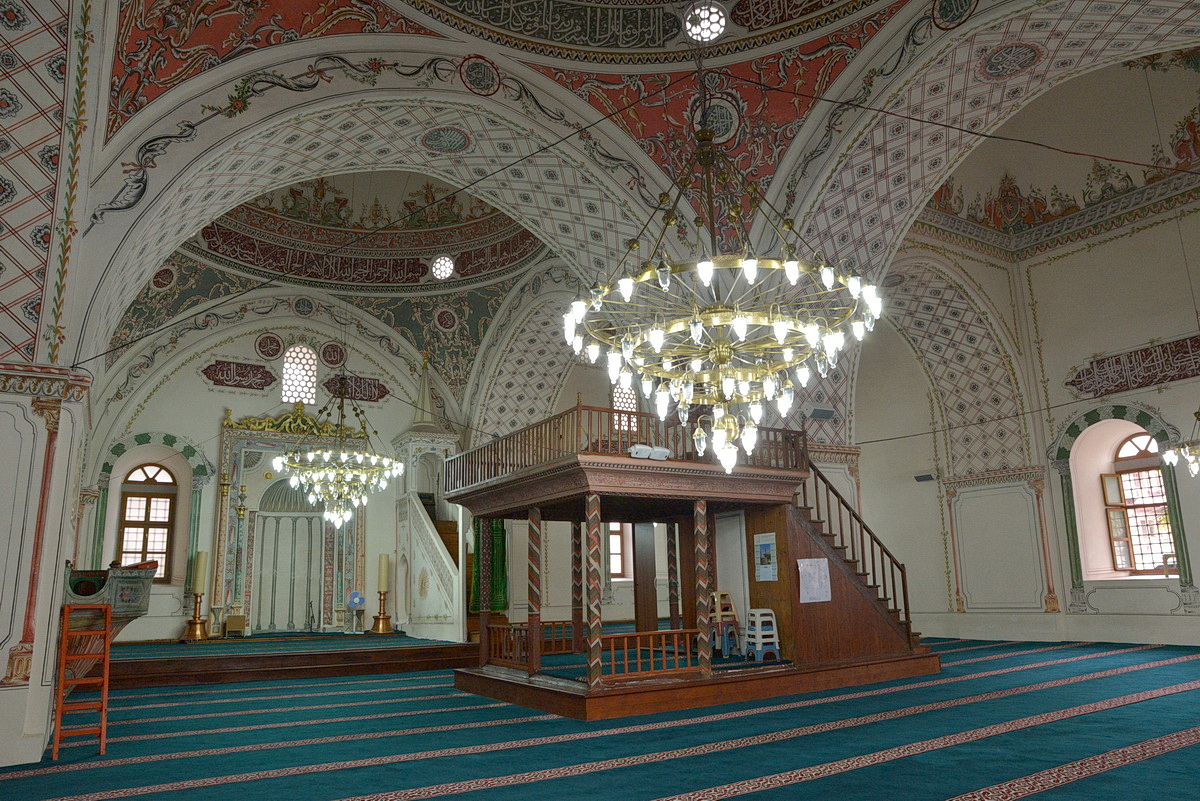
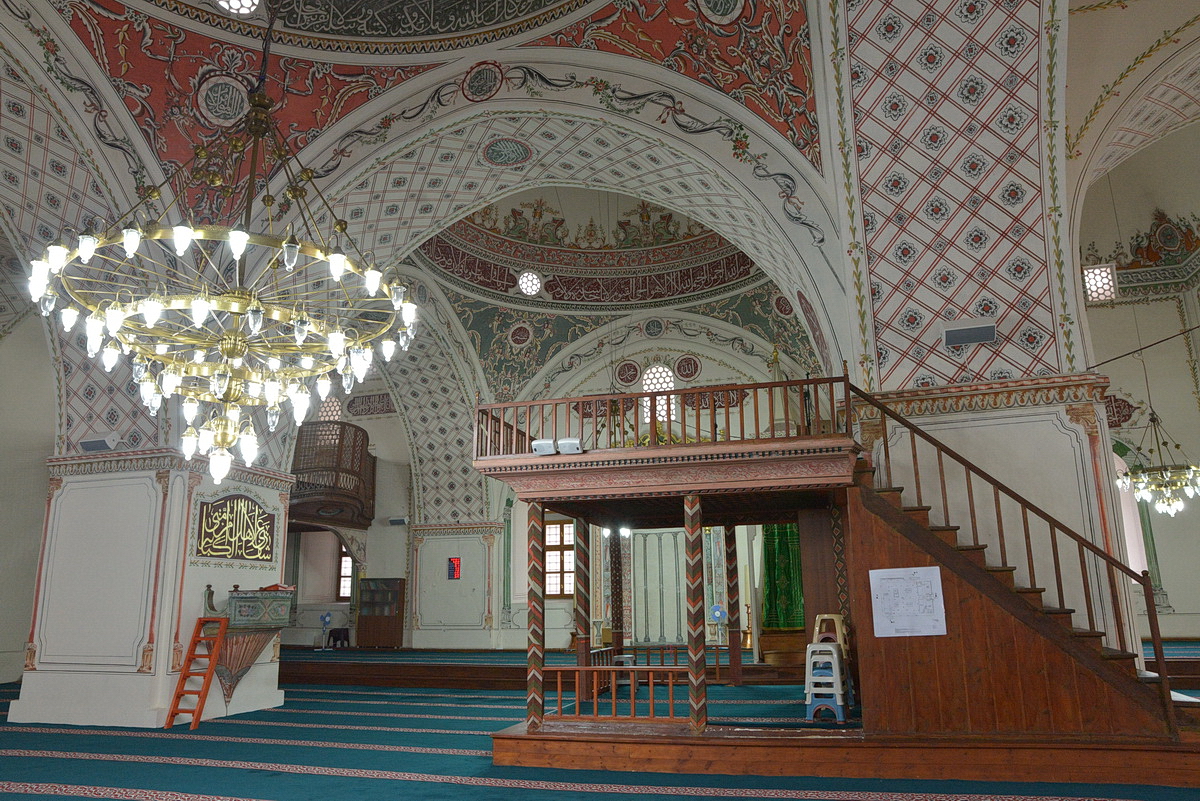
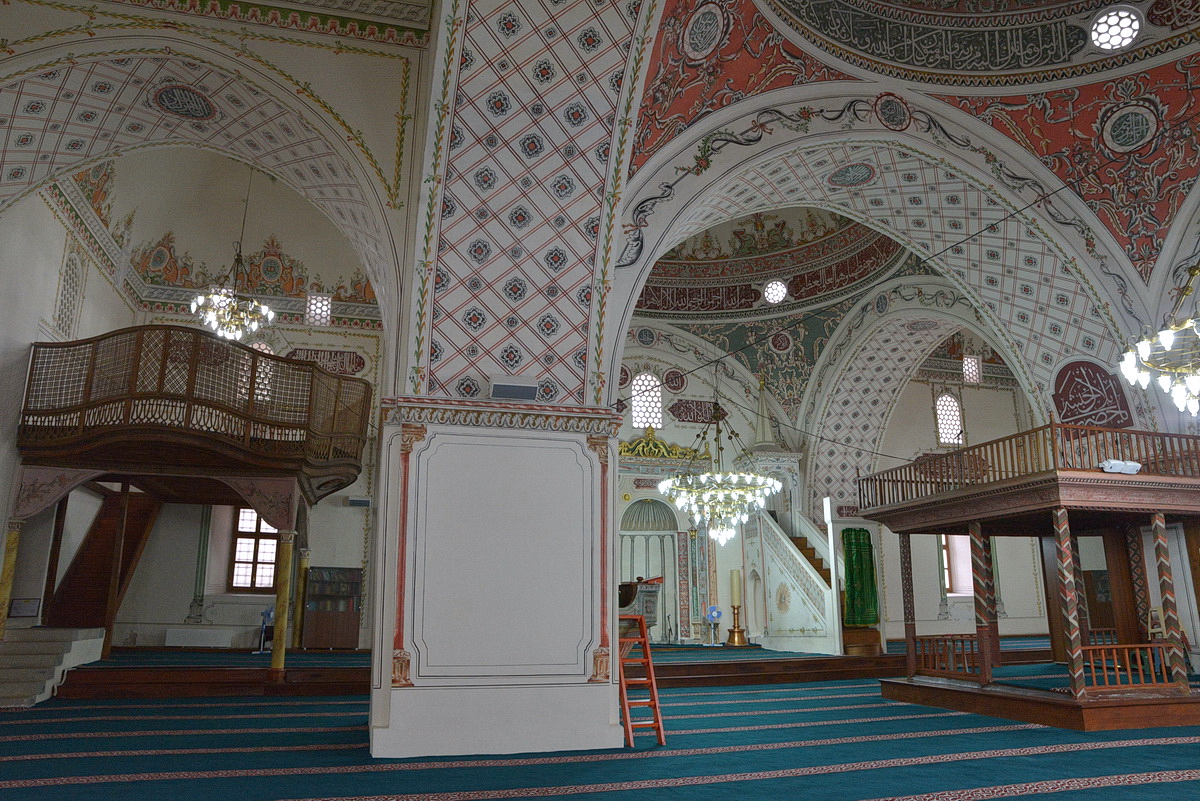
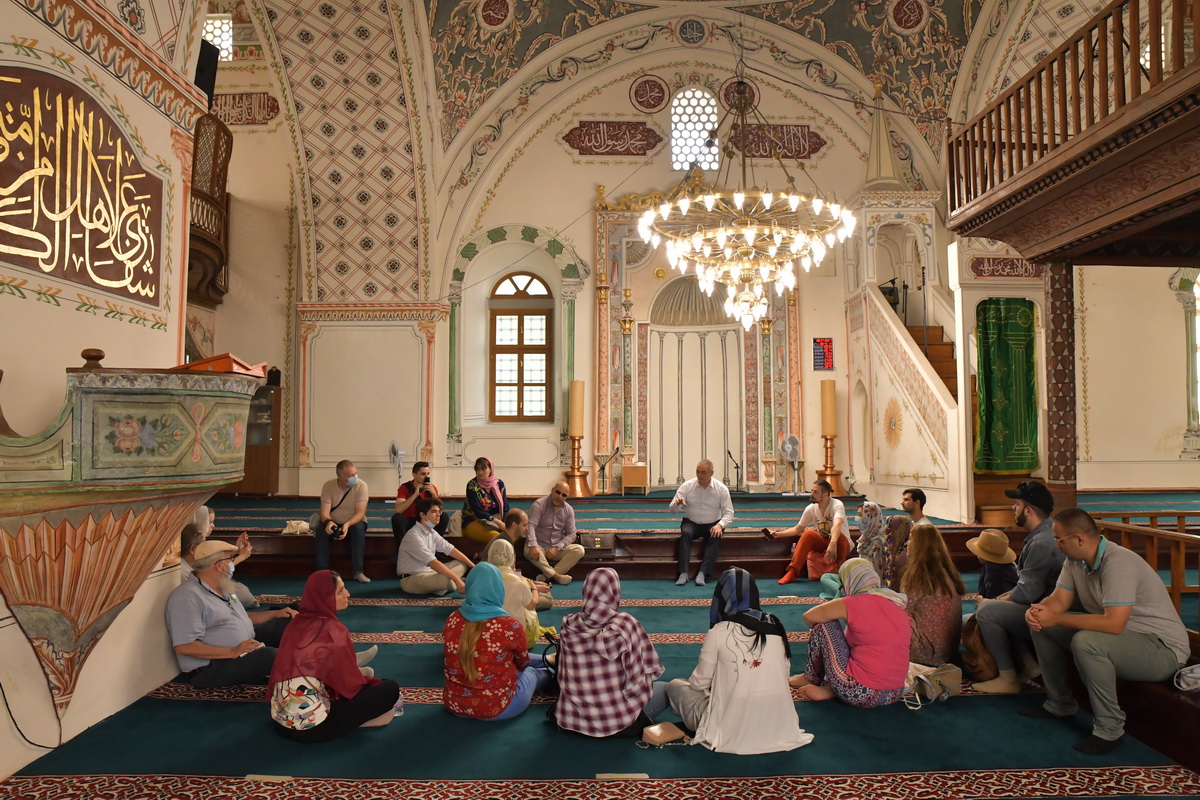
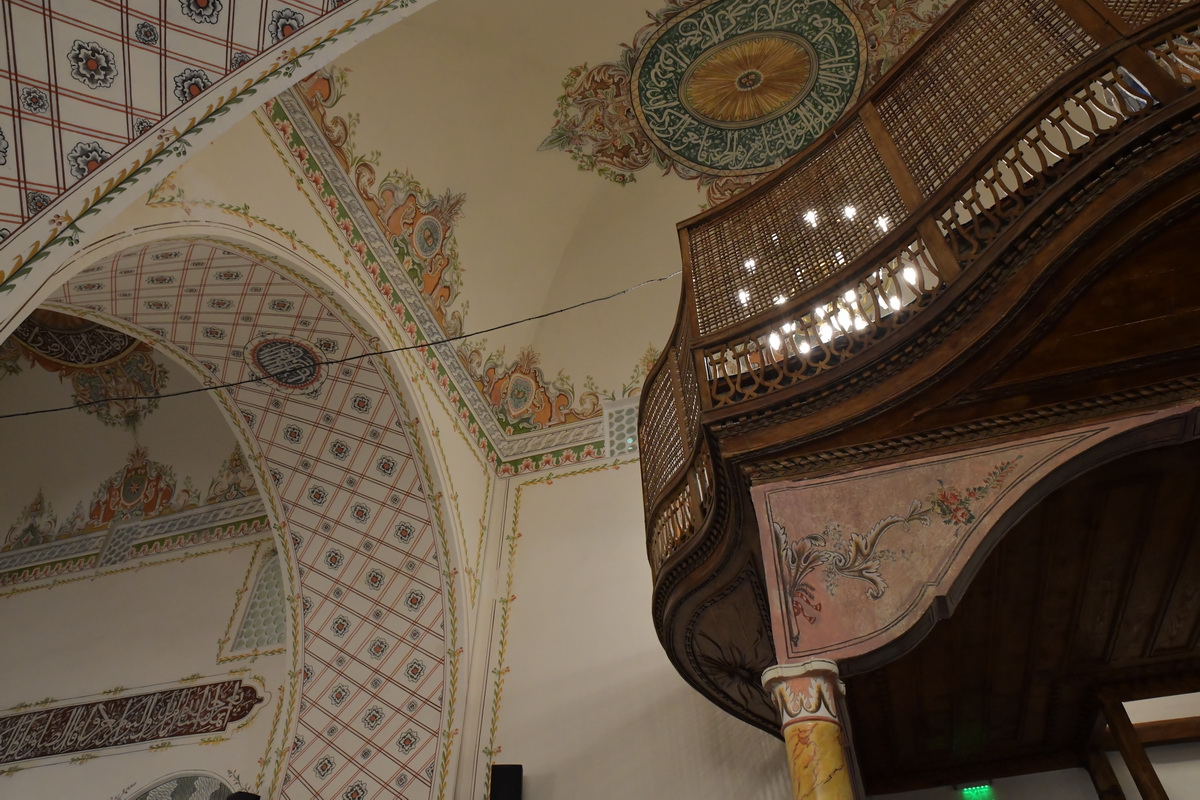
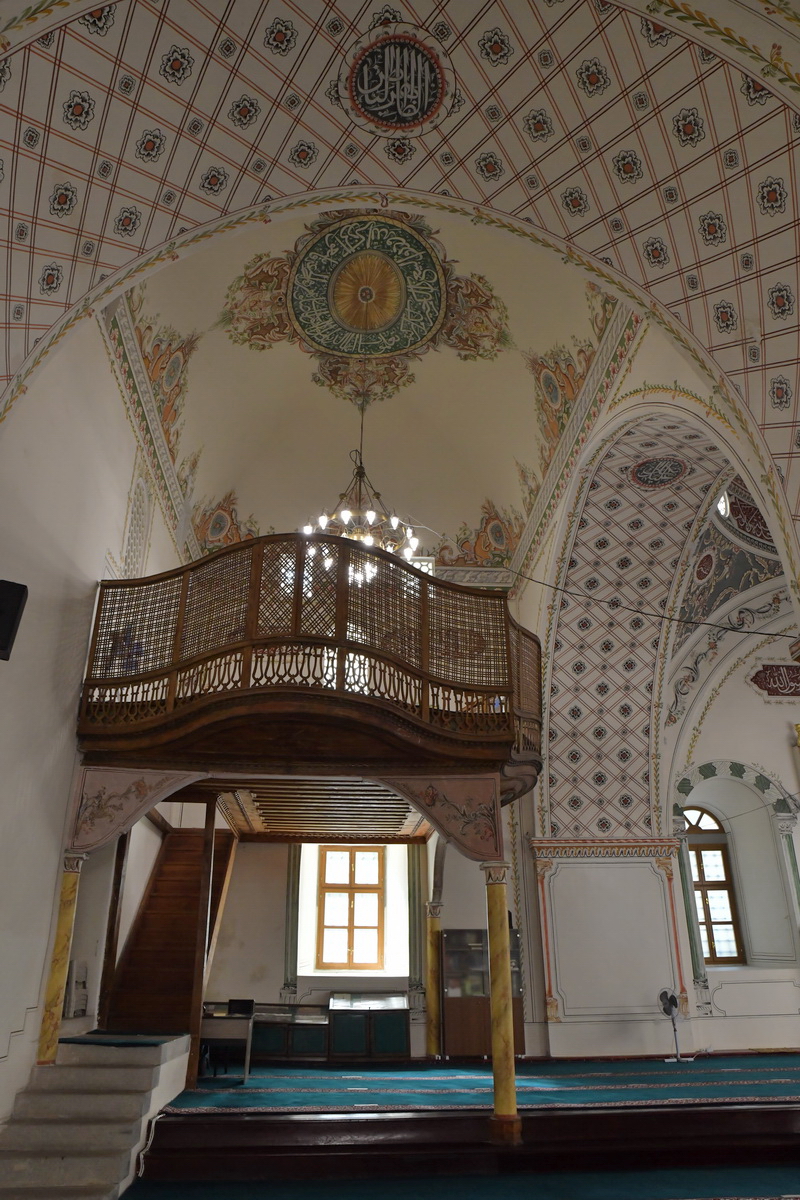
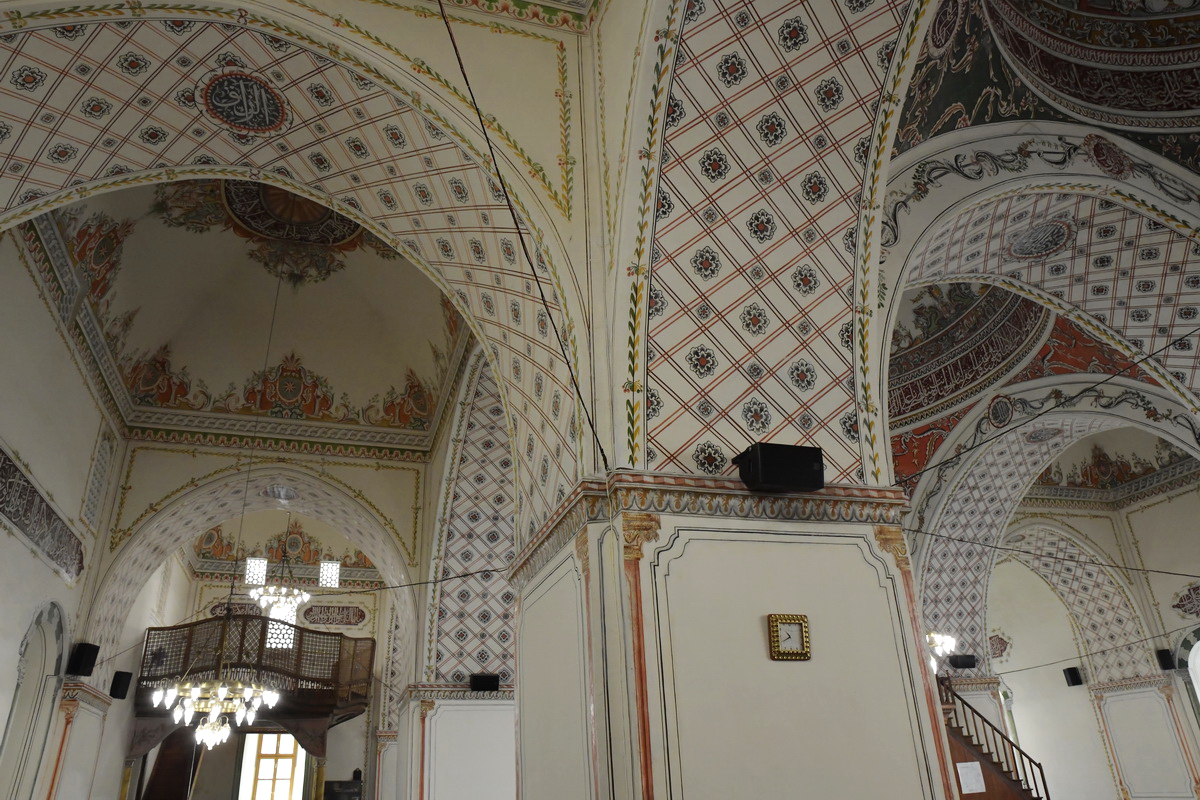
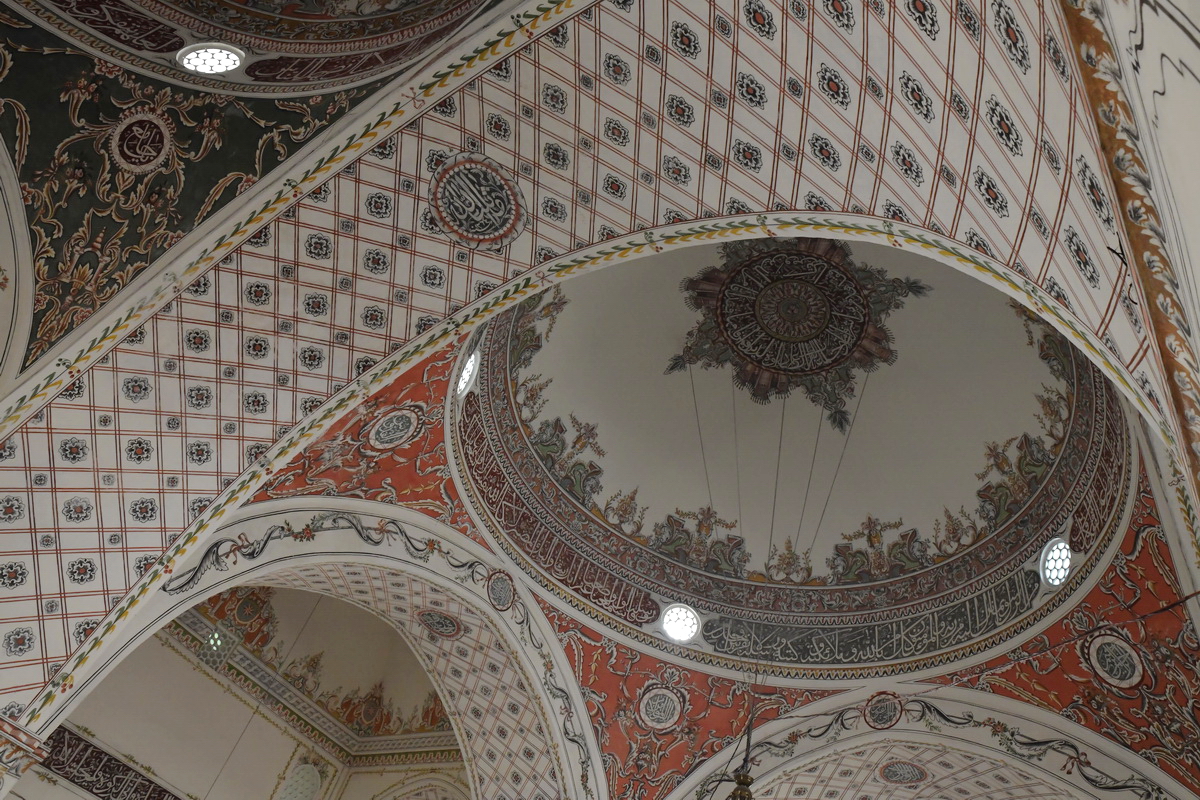
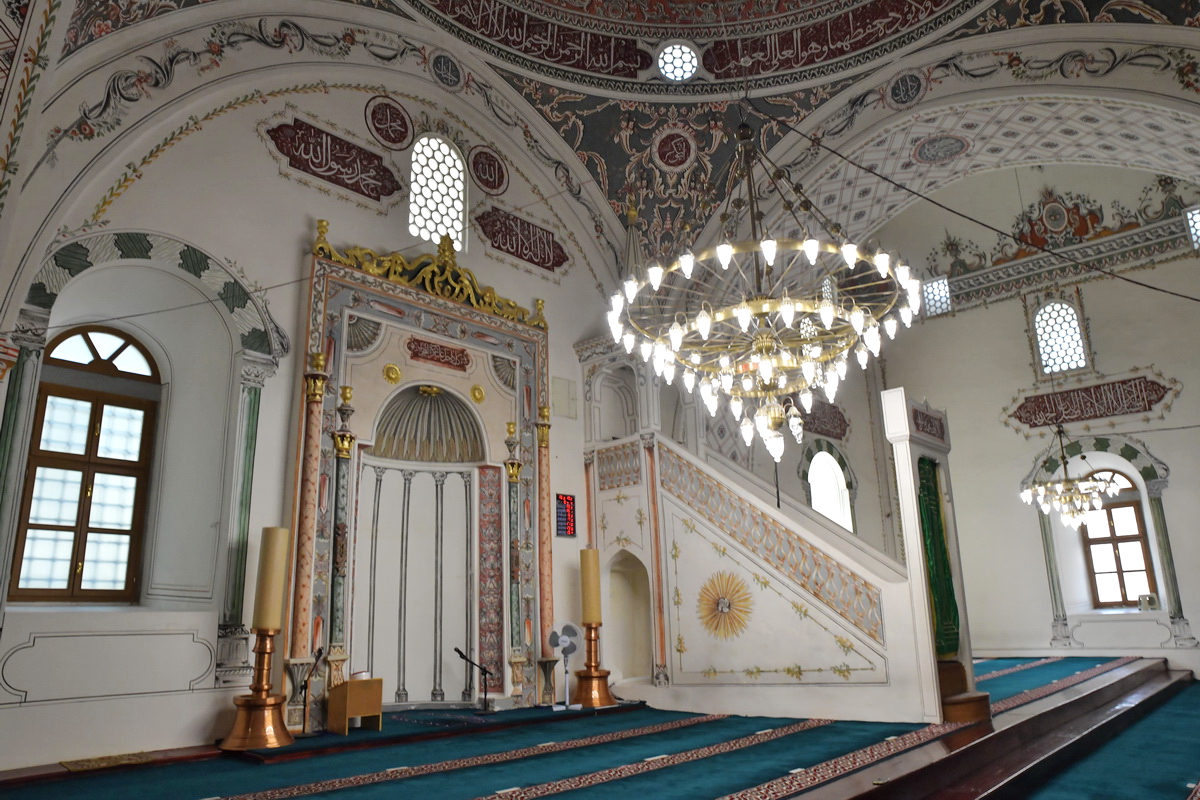
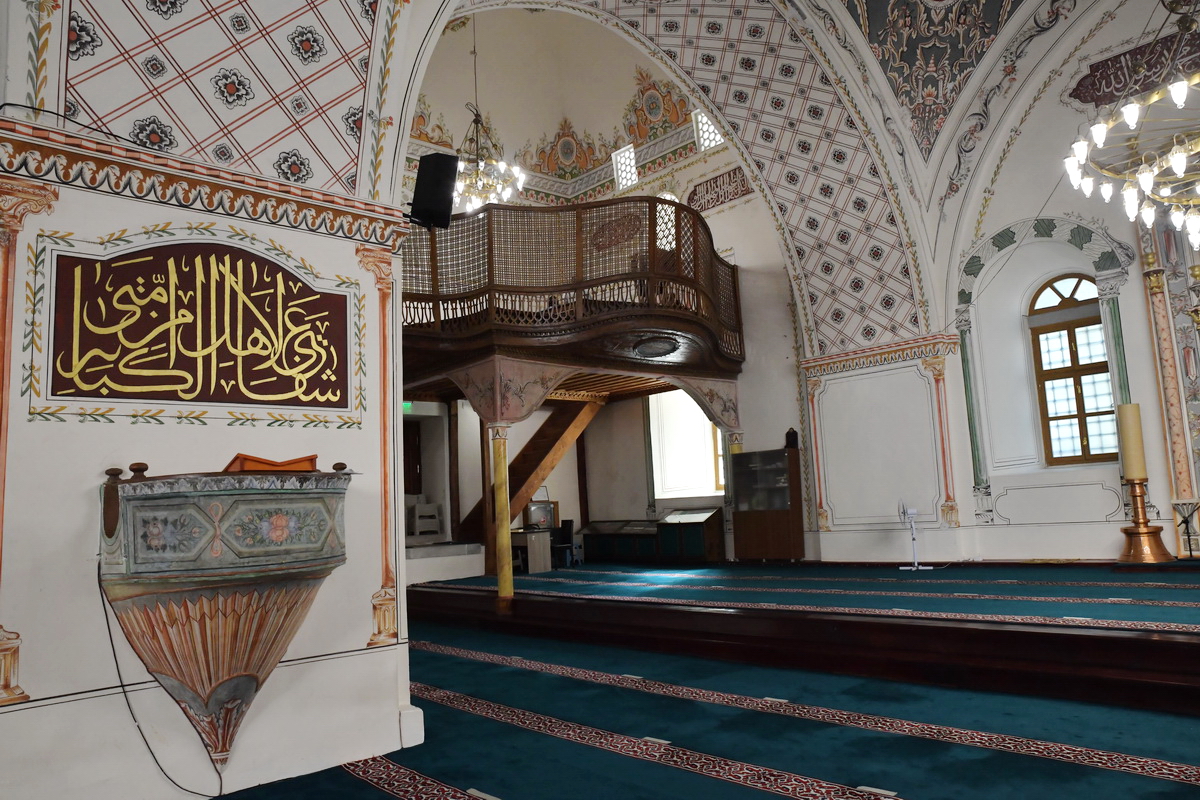
Inside, the architecture becomes quieter and more intimate. Large arches organize the prayer hall beneath the sequence of domes, while windows bring light into the upper walls. Painted decoration—vegetal motifs, branches, flowers and garlands, together with medallions containing Qur’anic inscriptions—softens the weight of the masonry and gives the interior a very different character from the exterior.
For centuries the mosque was not an isolated monument. As the main Friday mosque of Ottoman Filibe, it stood beside the market and the commercial life of the city. The long bazaar and the surrounding inns, baths and shops helped form an Ottoman urban centre around it. Although much of that environment has disappeared or changed, Dzhumaya Square remains one of the busiest meeting places in Plovdiv.
What interested me most photographically was this continuity of place. In one direction I could see the remains of the Roman Stadium; in another, the mosque that has remained part of the city for centuries; around both, contemporary Plovdiv continued its daily life. The mosque is still an active place of worship. For me, these photographs are therefore not only records of an old building. They show how a city can preserve very different historical layers and allow them to remain visible at the same time.