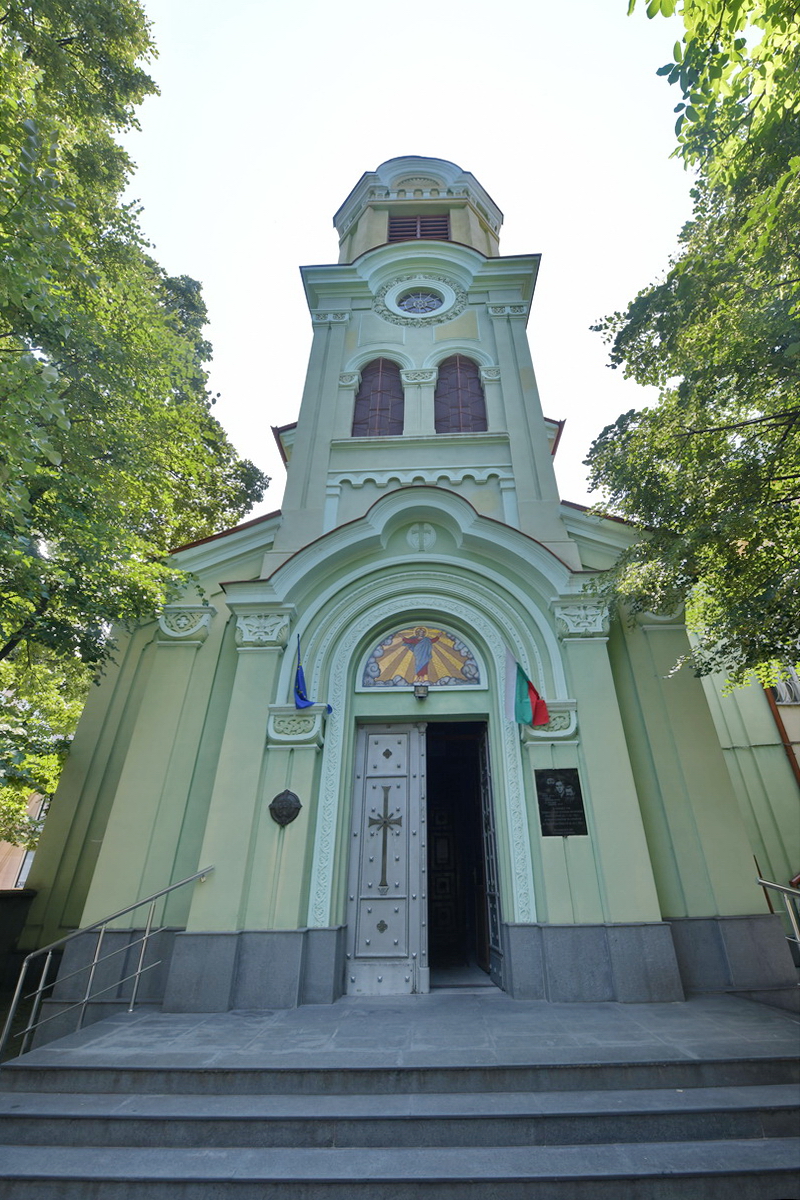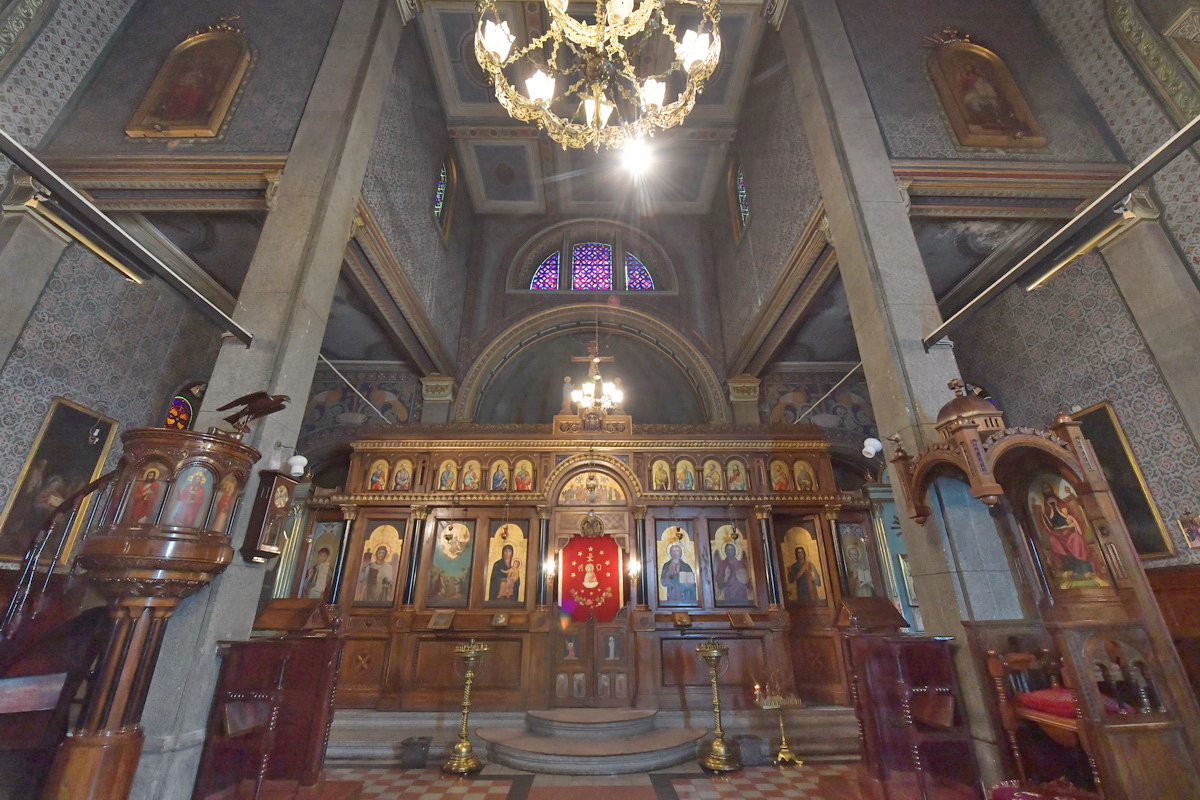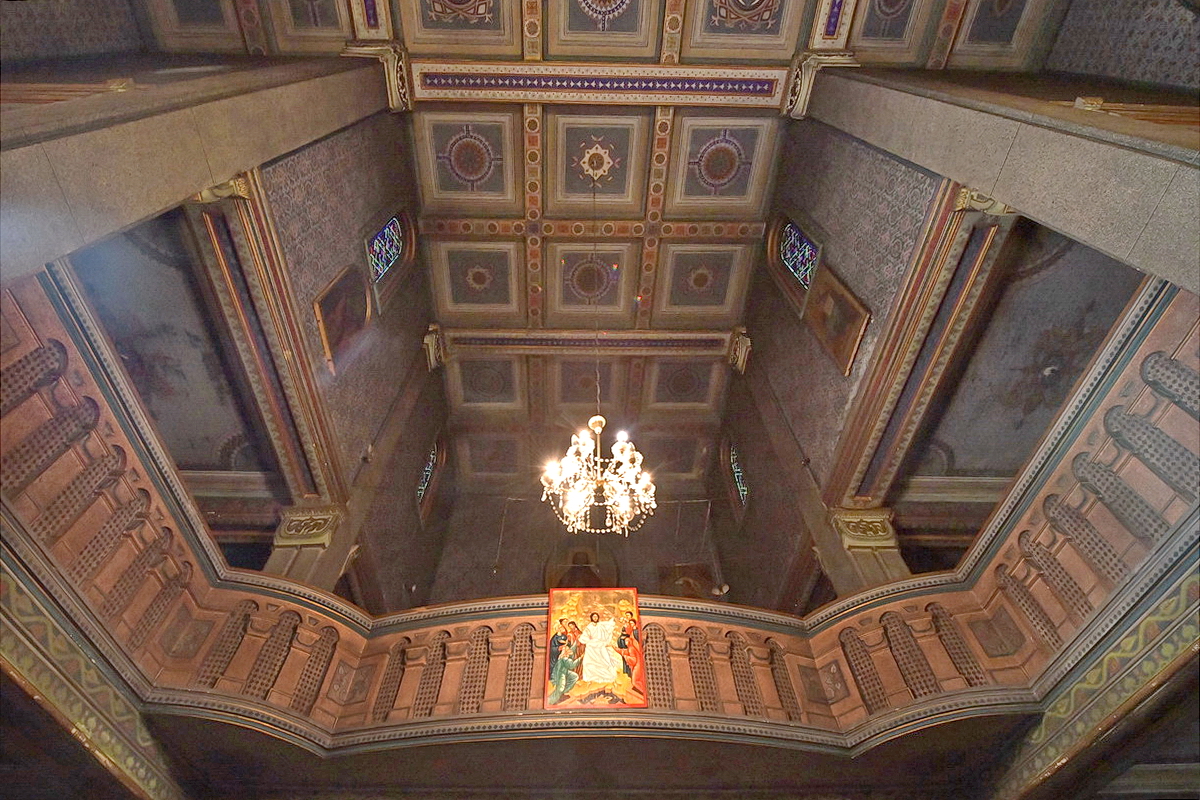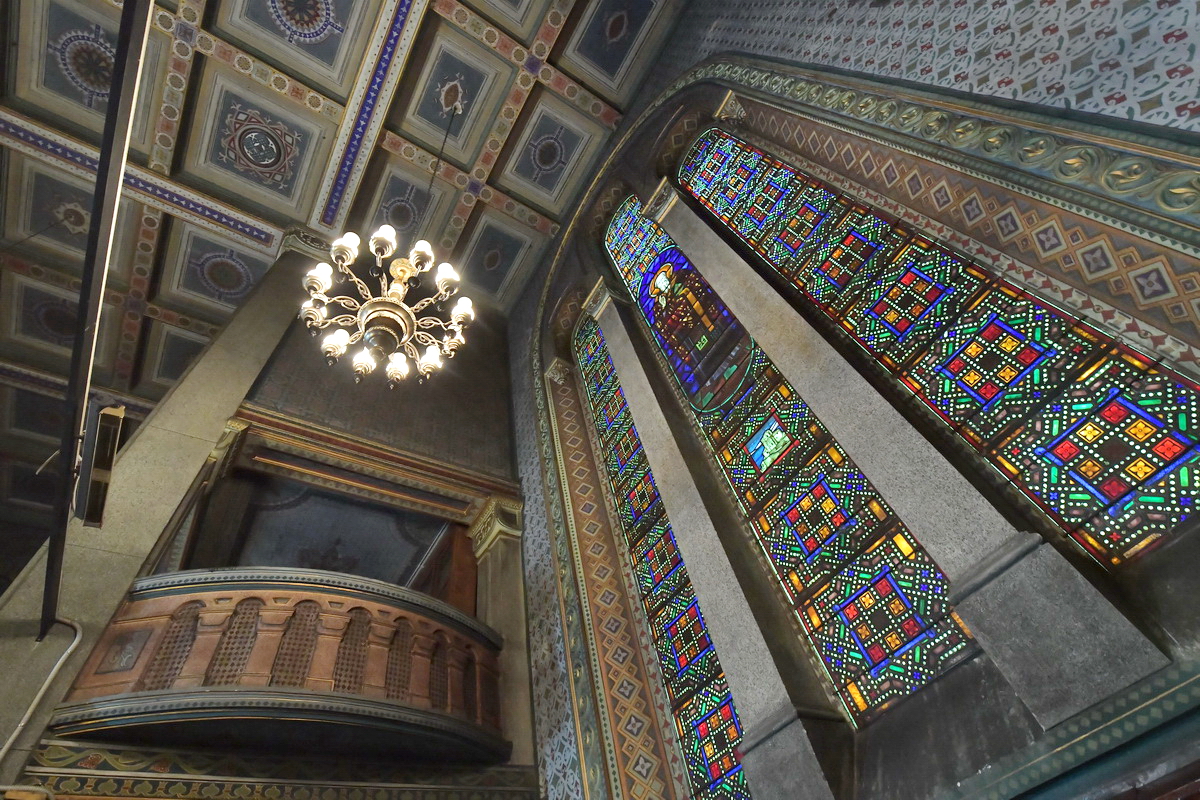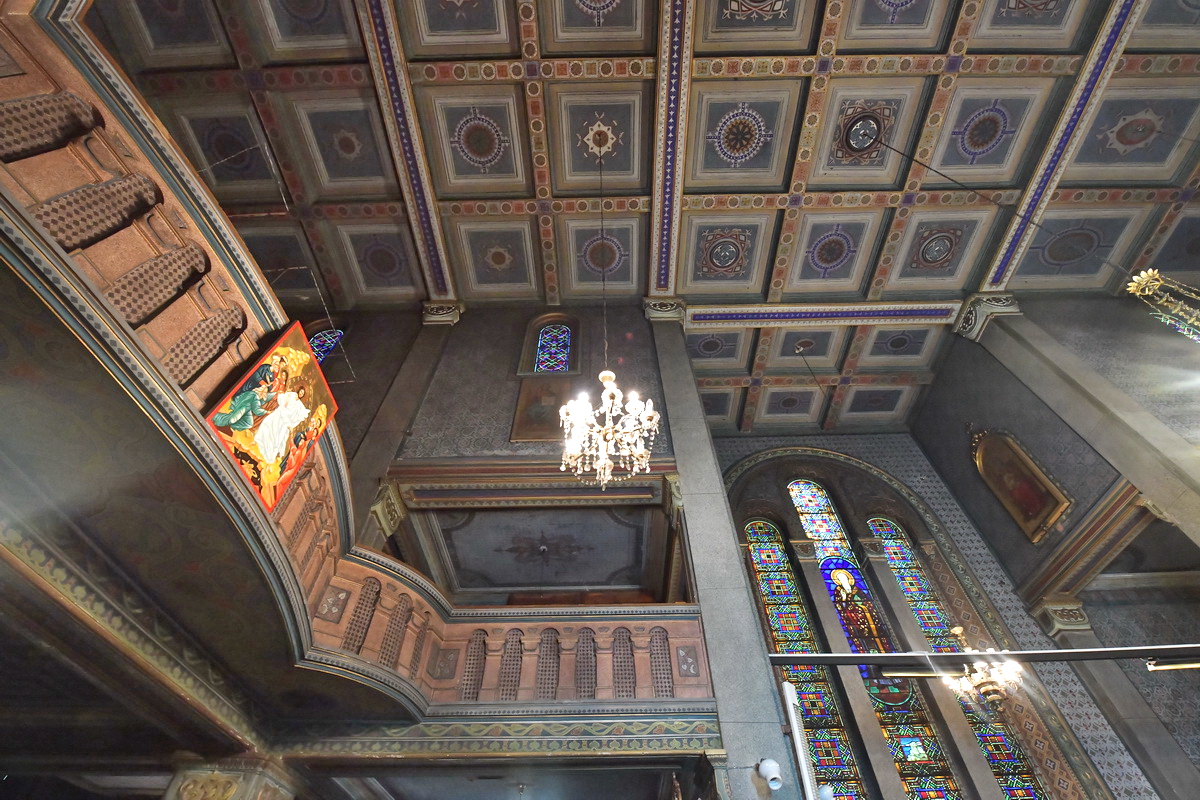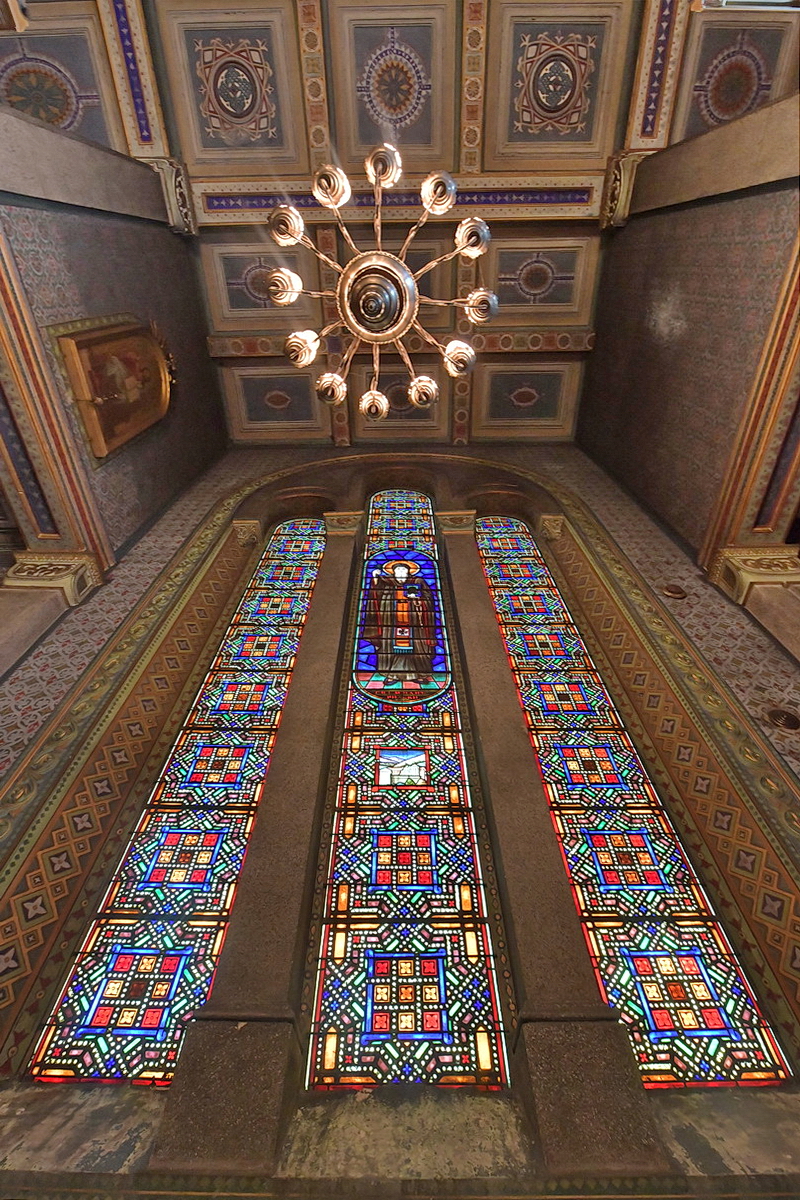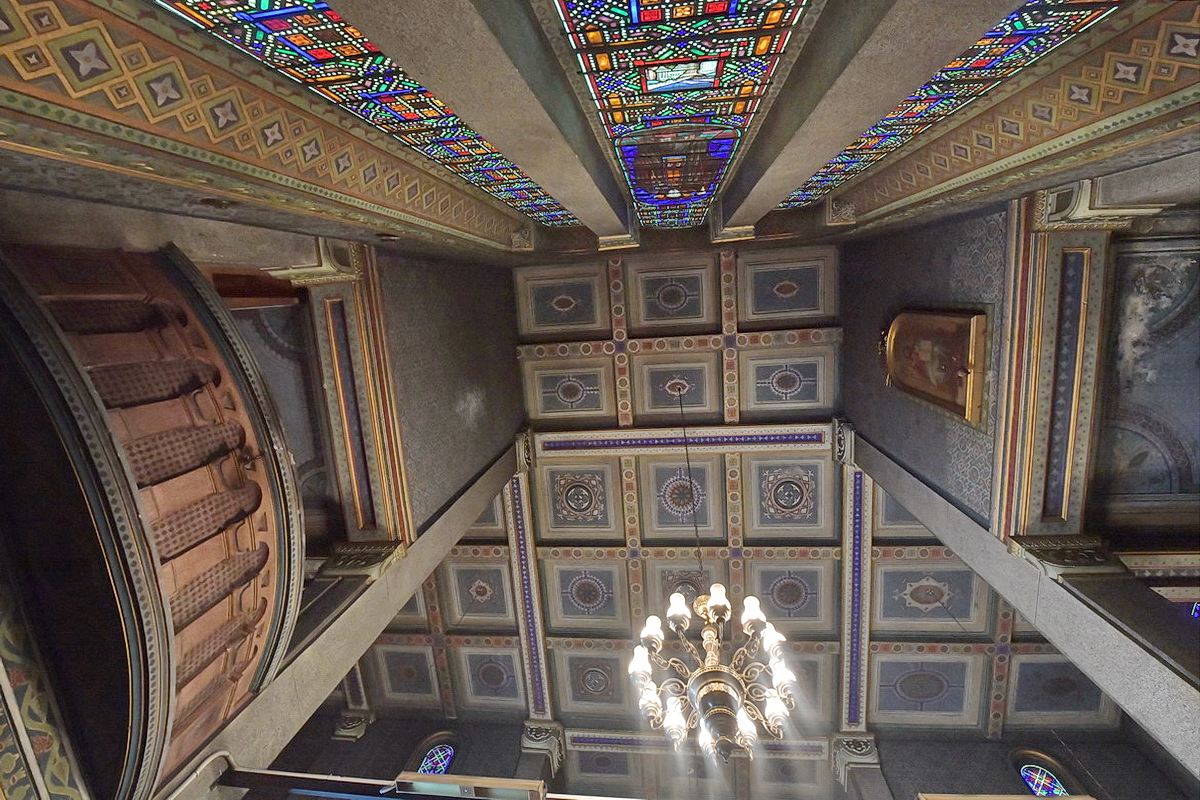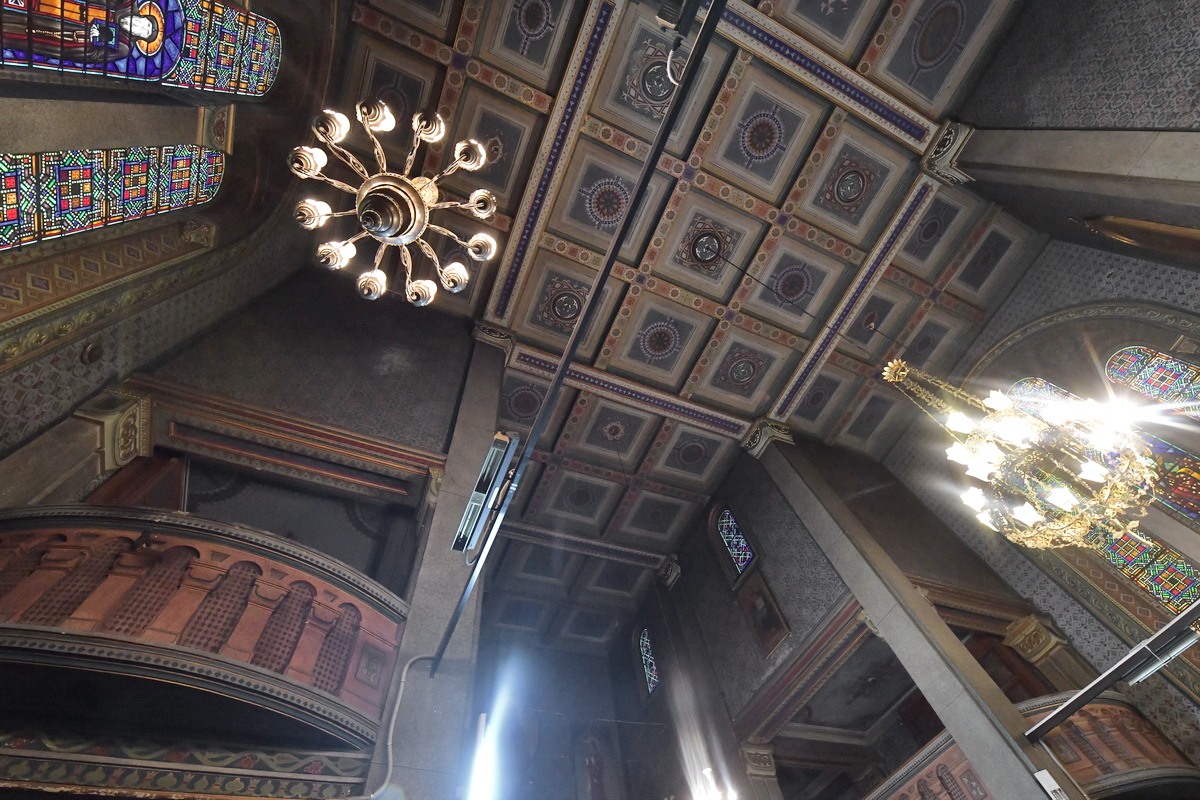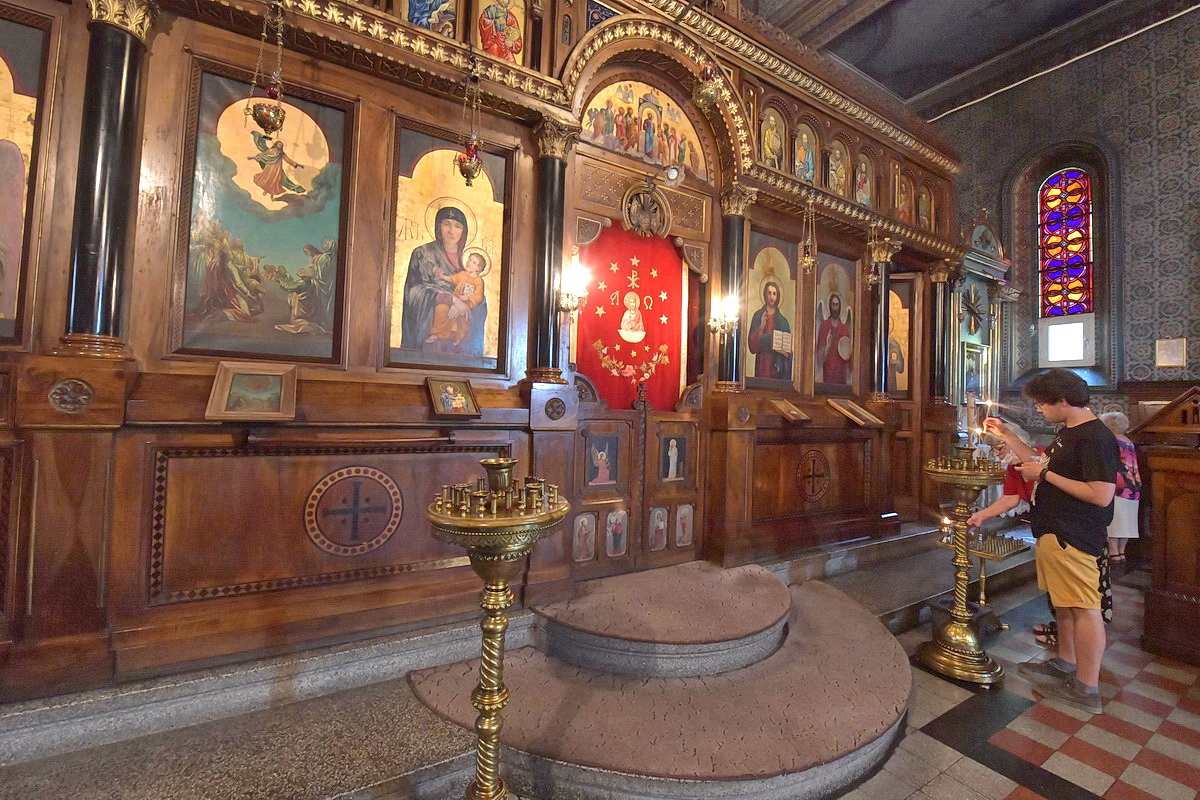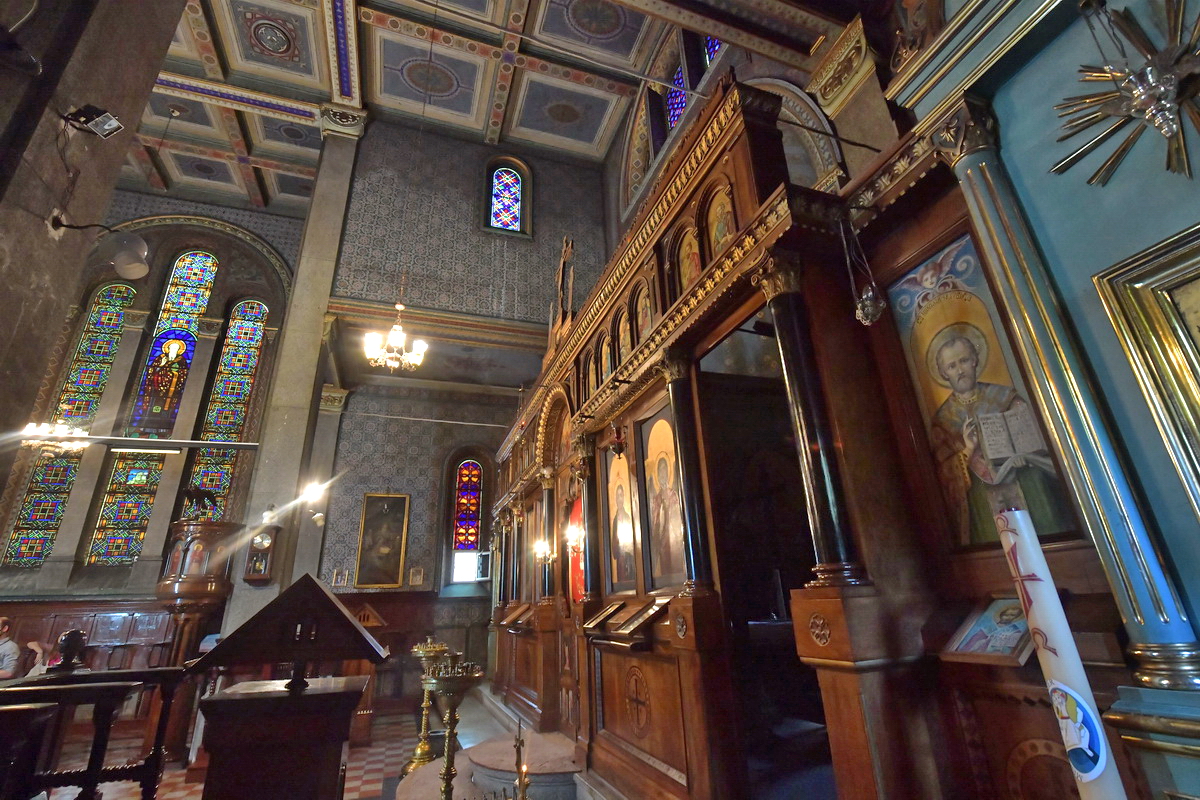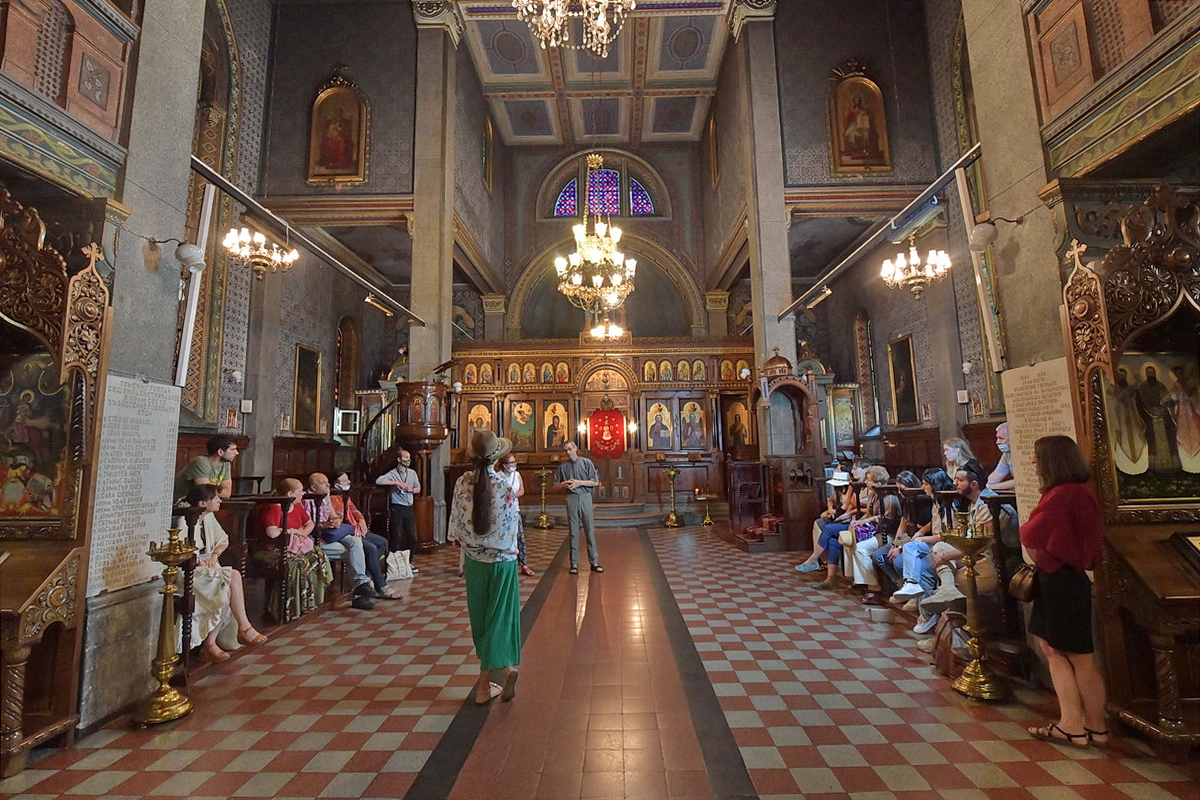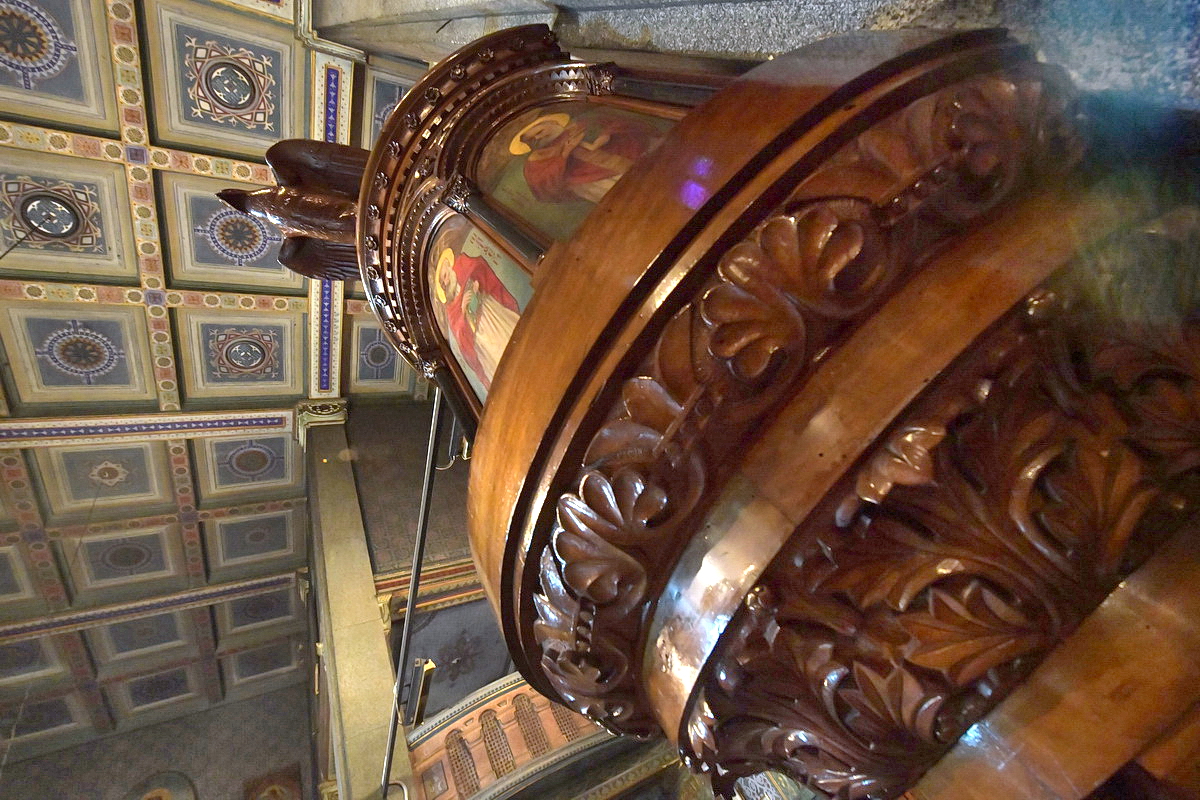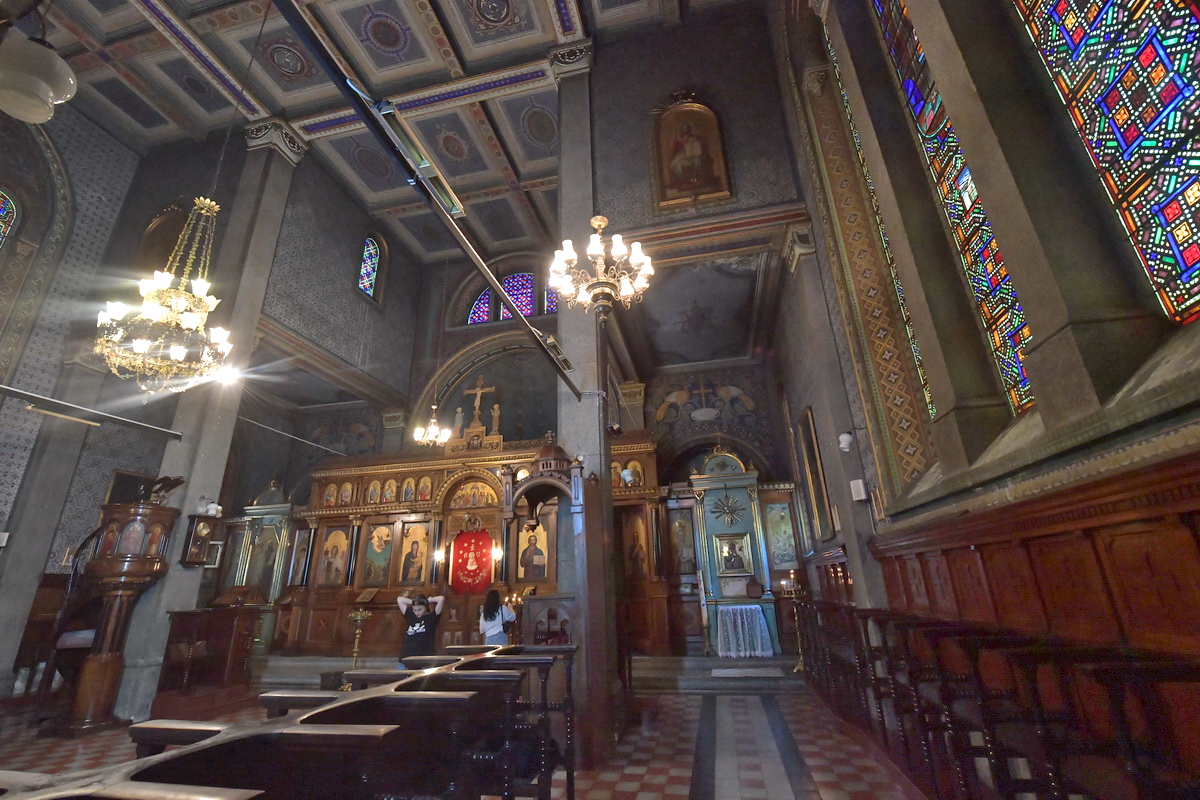
In 2021, during the Balkan Summer School in Plovdiv, I visited the Greek Catholic Church of the Holy Ascension of the Lord. From the street, its narrow green façade and bell tower give only a limited indication of the richness of the interior. Once inside, the character of the building changes completely: the iconostasis, galleries, painted ceiling, carved woodwork and tall stained-glass windows create a space in which Eastern Christian imagery and Catholic tradition meet.
The church belongs to Bulgaria’s Greek Catholic, or Eastern Catholic, community and celebrates according to the Byzantine-Slavic rite while remaining in communion with Rome. This position between Eastern liturgical tradition and the Catholic Church is visible in the building itself. The iconostasis and icons immediately recall an Orthodox interior, while the stained glass and other architectural details introduce elements more commonly associated with Western Catholic churches.
The present church was completed and consecrated in 1931 by Exarch Kiril Kurtev. Its architect was Kamen Petkov. Earlier, the Plovdiv Greek Catholic community had worshipped in another church dating from the nineteenth century; urban changes led to the construction of a new building. Work on the present church was interrupted by the destructive 1928 earthquake in southern Bulgaria before the project was completed. The result is a three-aisled basilica whose façade and spatial language deliberately retain strong references to Eastern Christian church architecture.
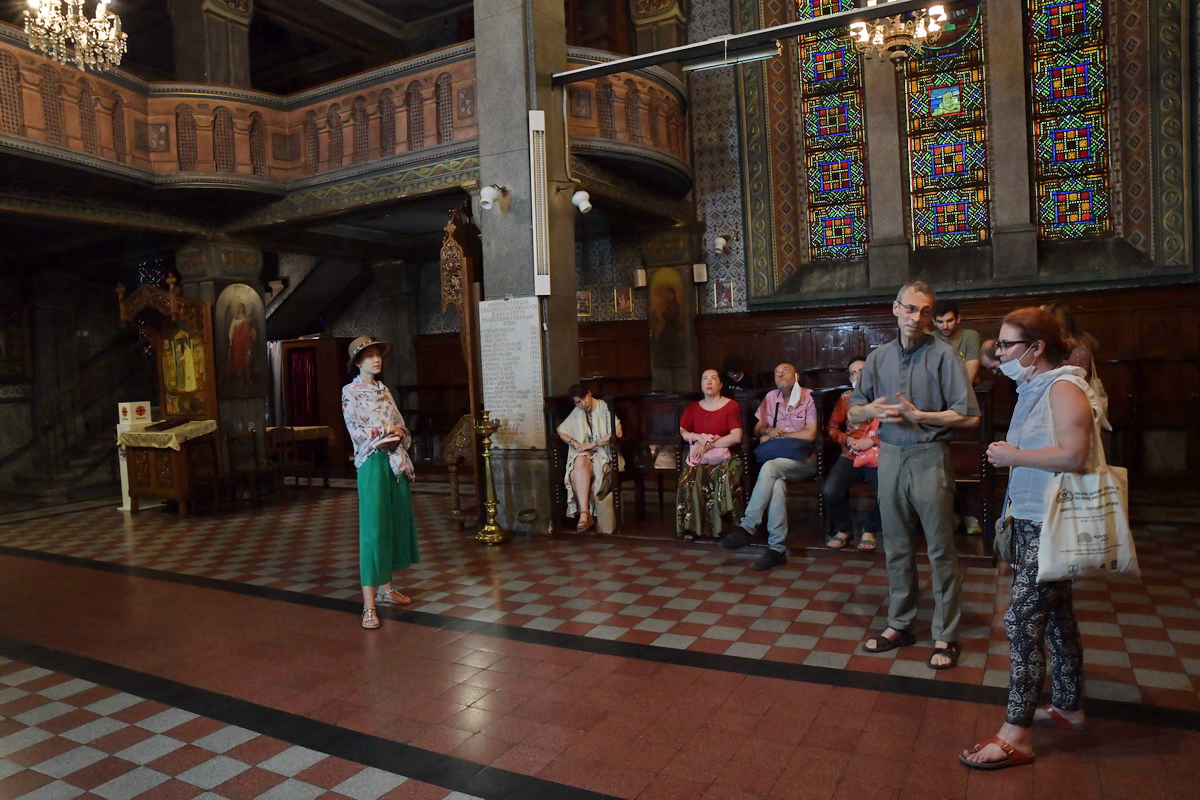
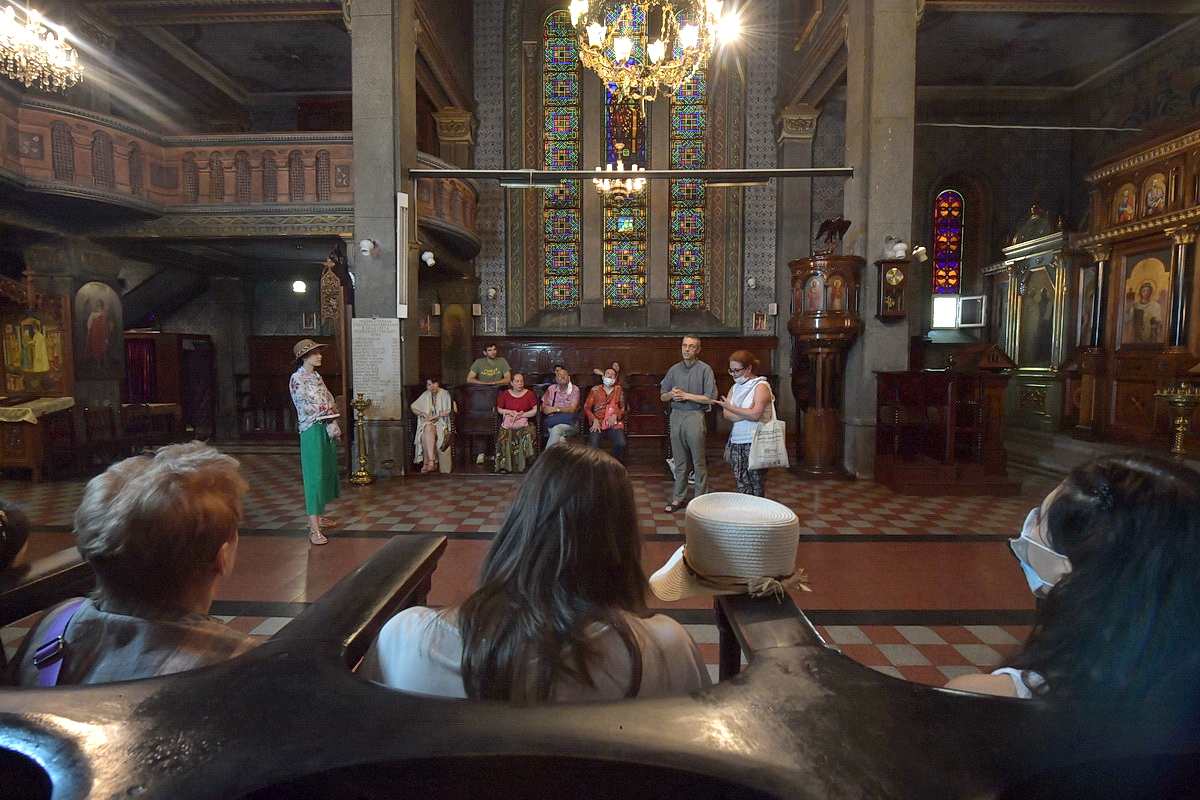
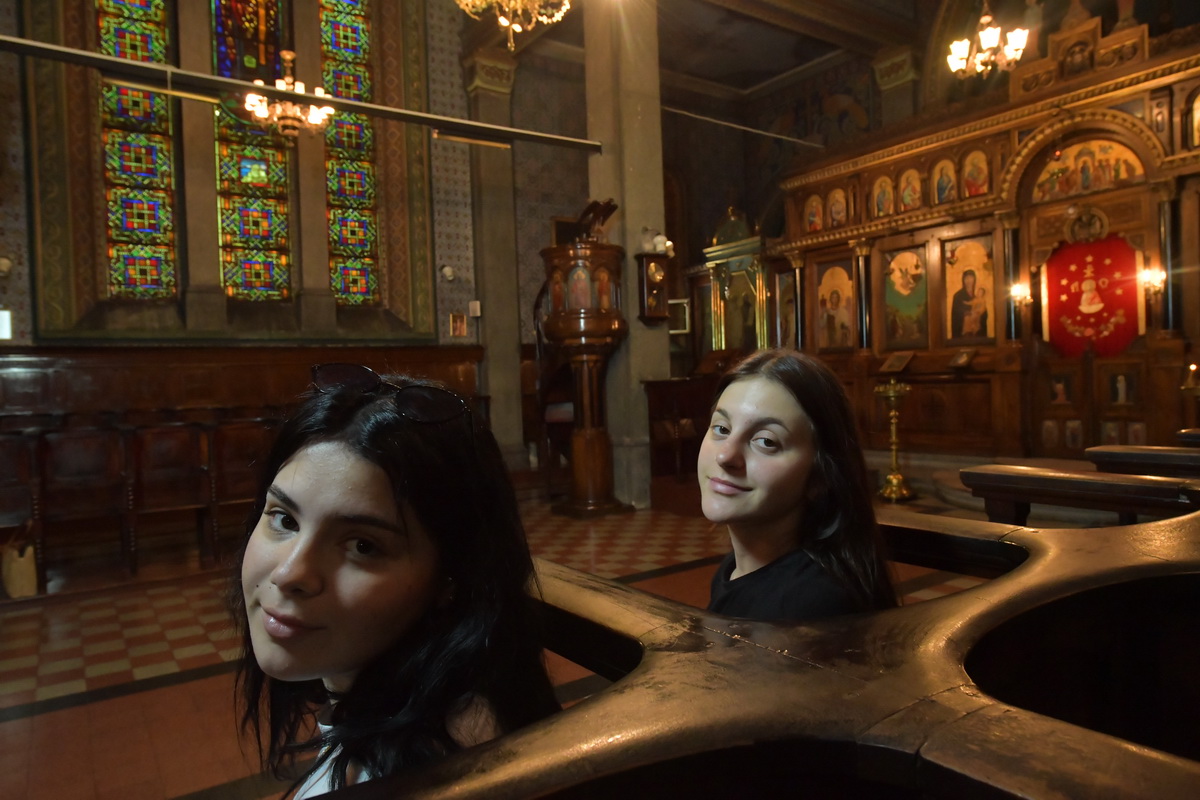
The interior is particularly important. Historical research on the church records that elements of its interior decoration came from Edirne. The stained-glass windows were designed by Bulgarian artist Nedyalko Boyadzhiev and produced in France. In my photographs, these windows become one of the dominant visual elements: their intense colours contrast with the dark carved wood of the iconostasis and galleries, while daylight passing through them changes the atmosphere of the nave.
I was also interested in the people using the church. Some of my photographs include members of our visiting group and others inside the building. They give the architecture a human scale and prevent the series from becoming only a record of decoration. Looking upward at the ceiling, galleries and stained glass, and then back toward the iconostasis, I found myself photographing a religious space whose identity cannot be described simply as either Eastern or Western. That coexistence is precisely what makes the Holy Ascension of the Lord an important part of Plovdiv’s diverse religious landscape.