
For me, the Agora of İzmir is more than an archaeological site surviving from ancient Smyrna. It is part of the neighbourhood where I spent my childhood, of streets I knew well and of a way of life that has largely disappeared.
In the 1960s, we lived on a street that ran down towards the Agora. In the evenings, my grandmother and I would walk hand in hand to the park beside the ancient remains. There we drank plain soda from glass bottles kept cold in buckets filled with ice. I still remember those summer evenings and our walks together. I cannot say how much I understood then about the history of the columns and stones around us. To us, they were simply part of the neighbourhood.
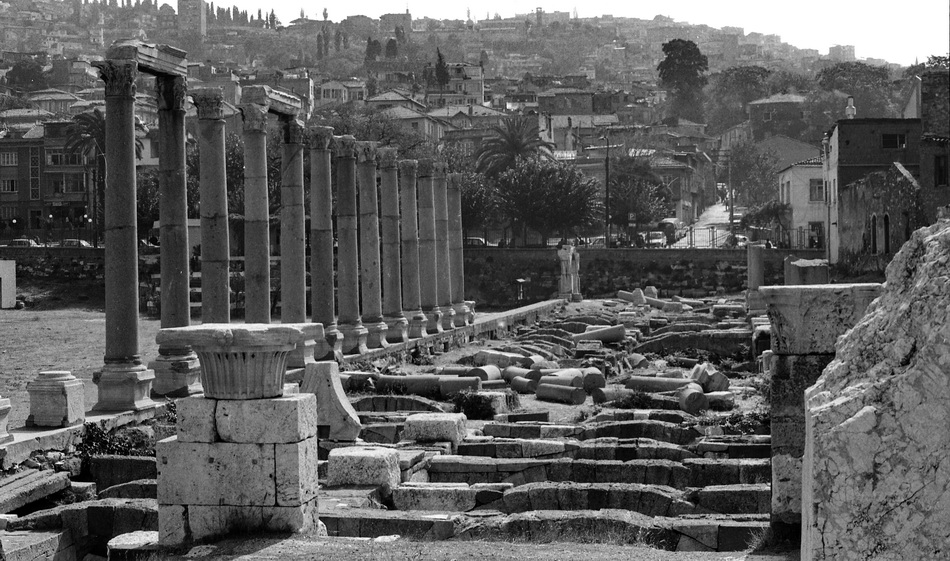
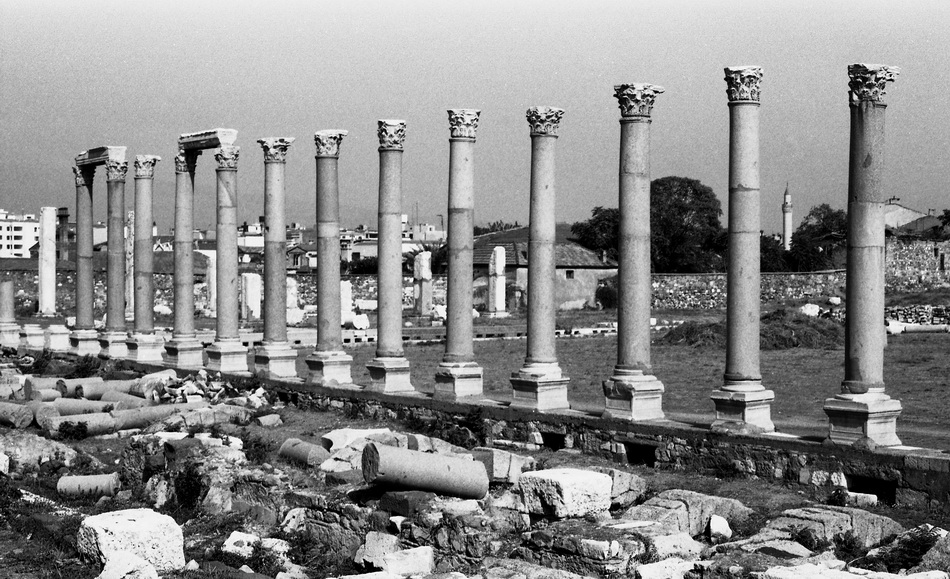
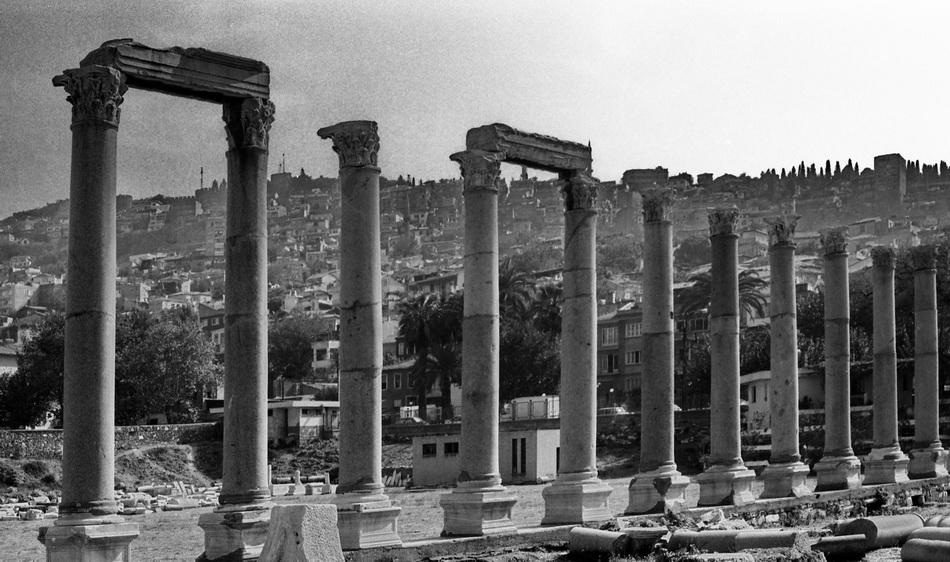
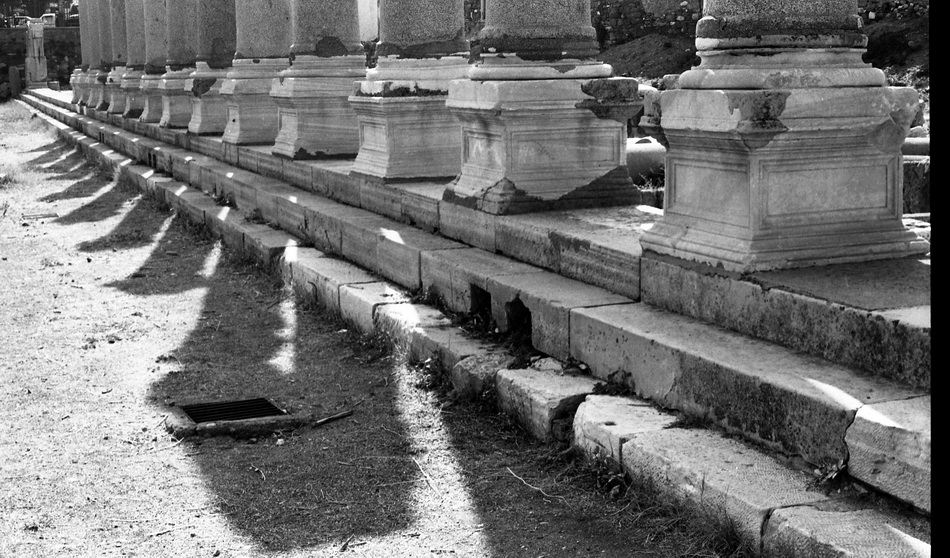
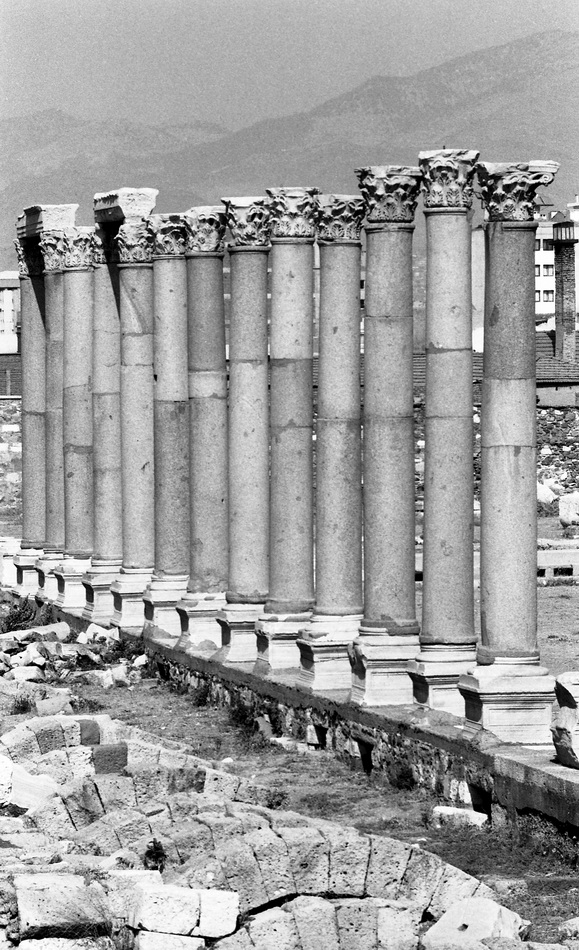
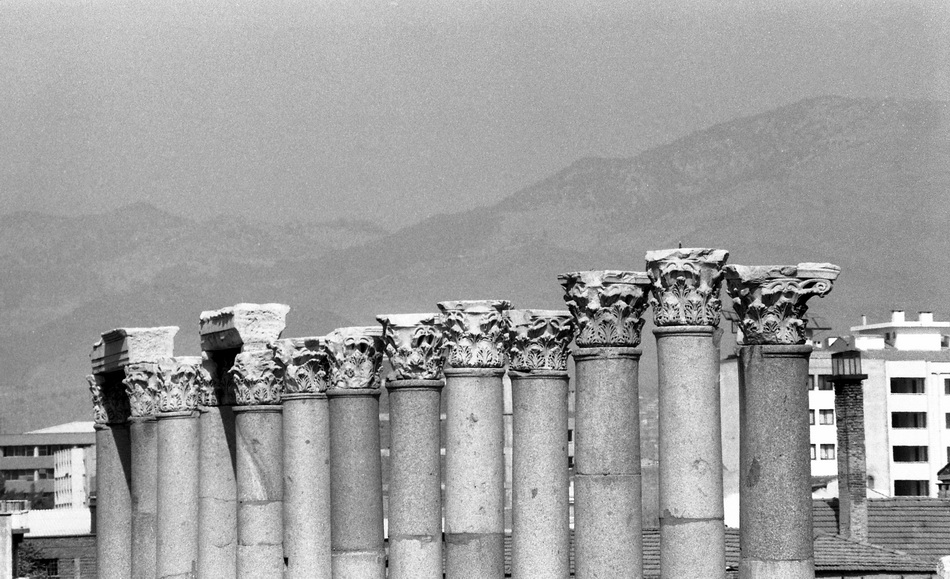
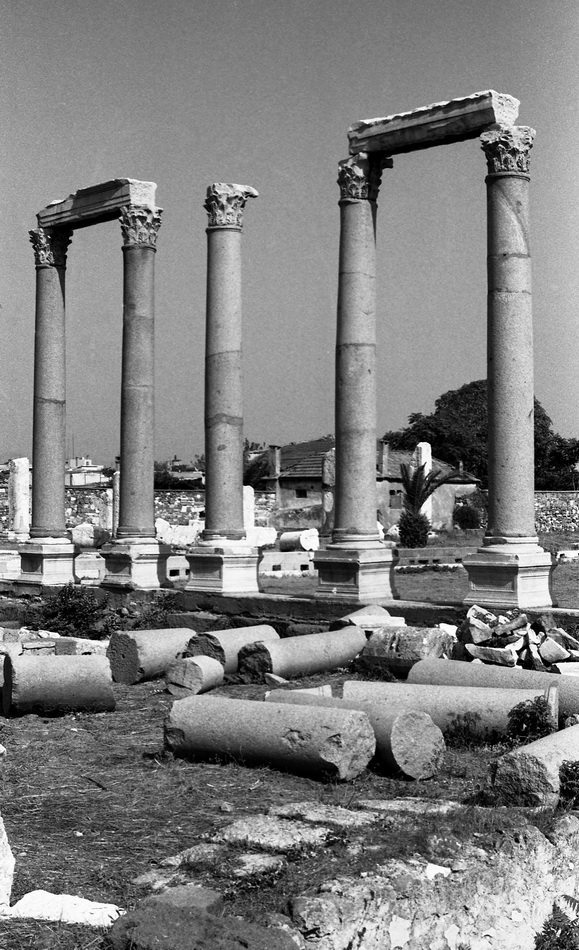
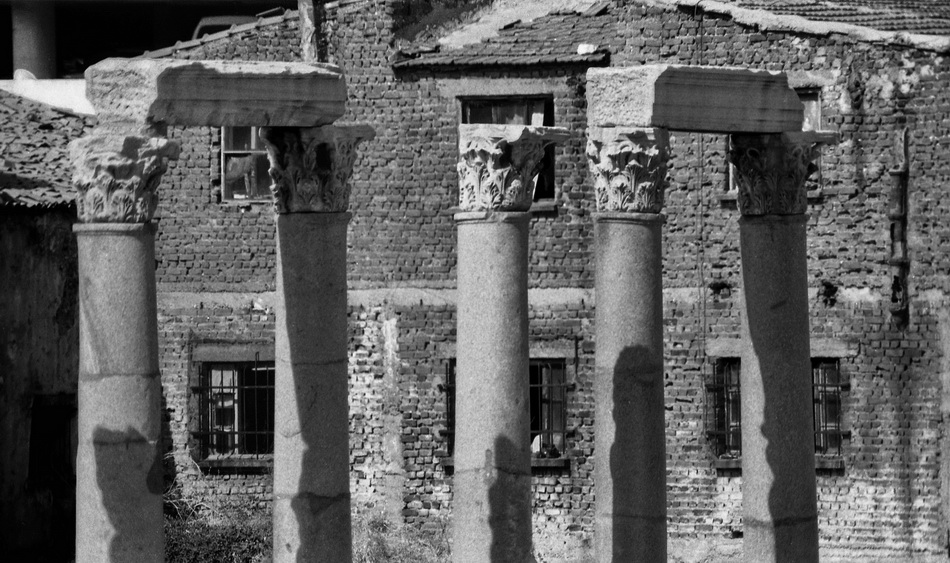
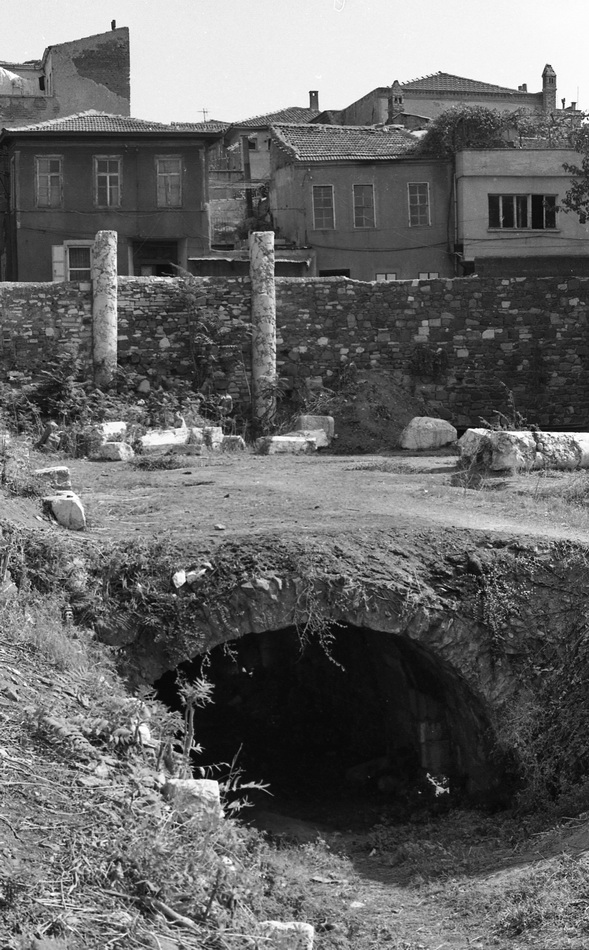
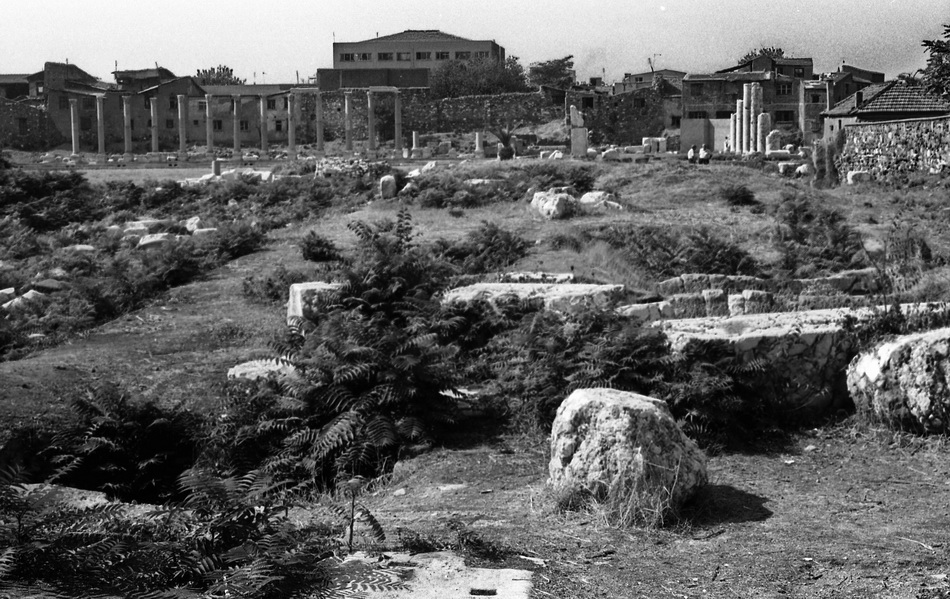
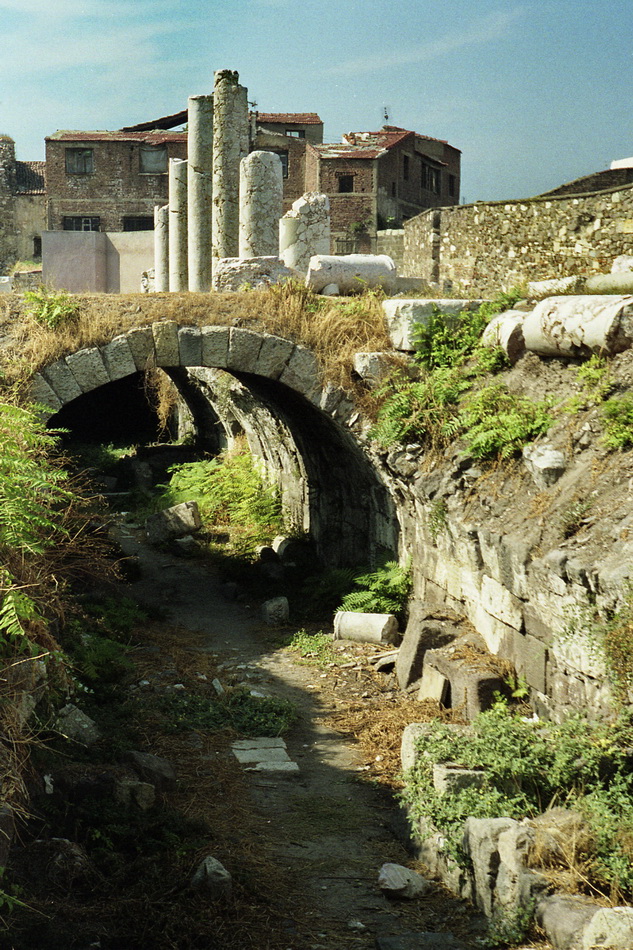
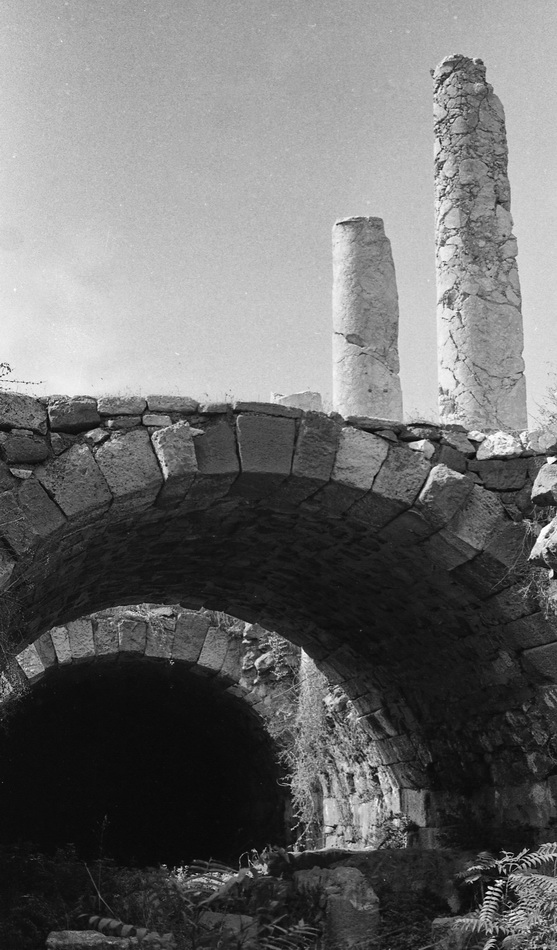
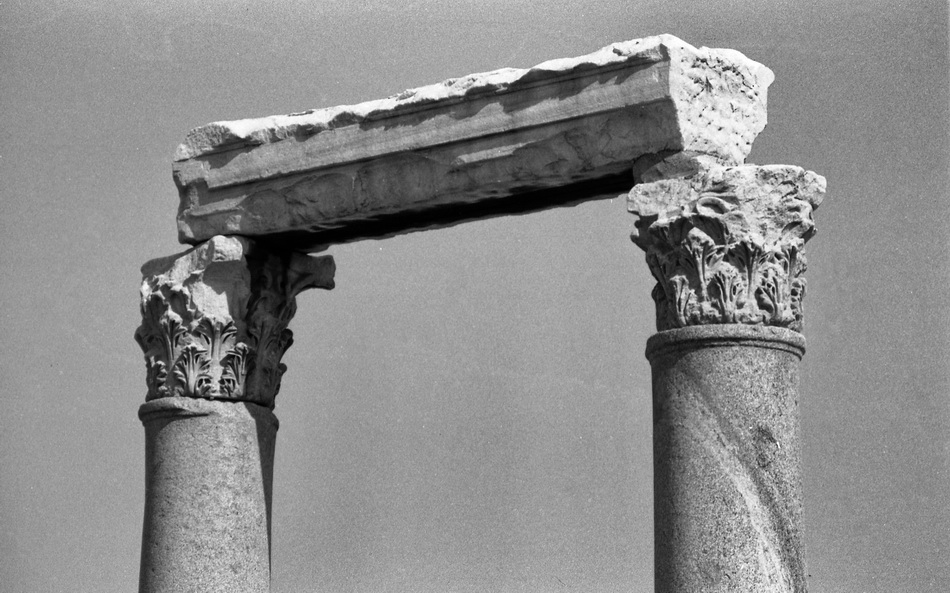
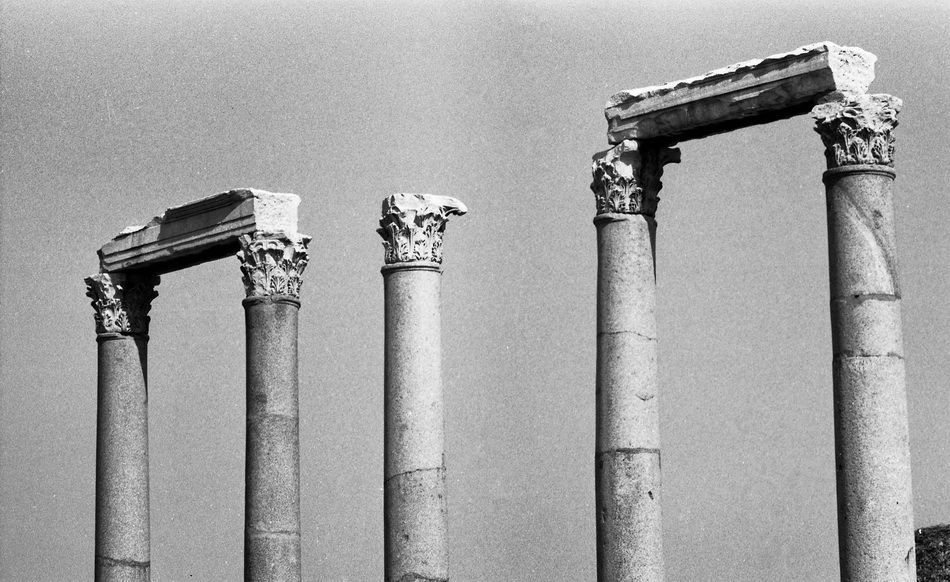
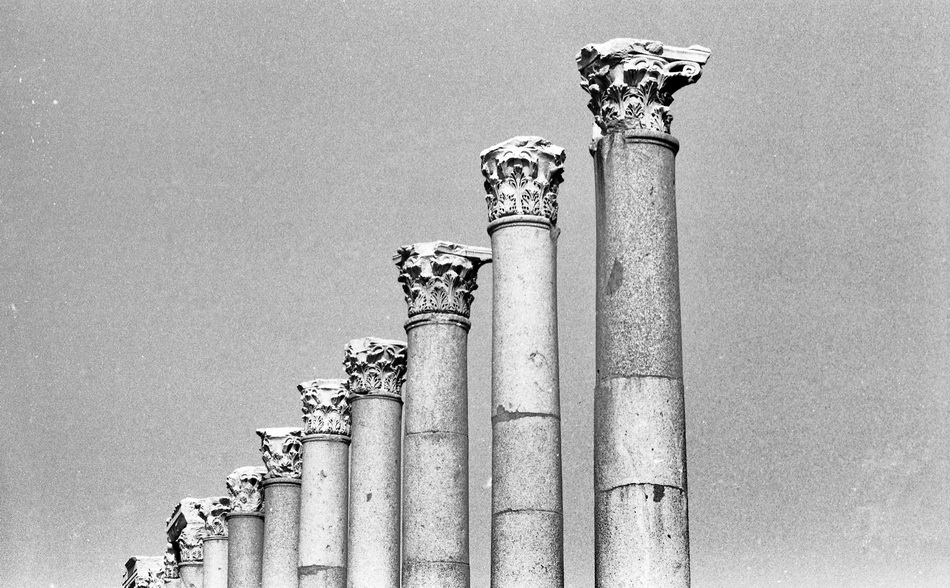
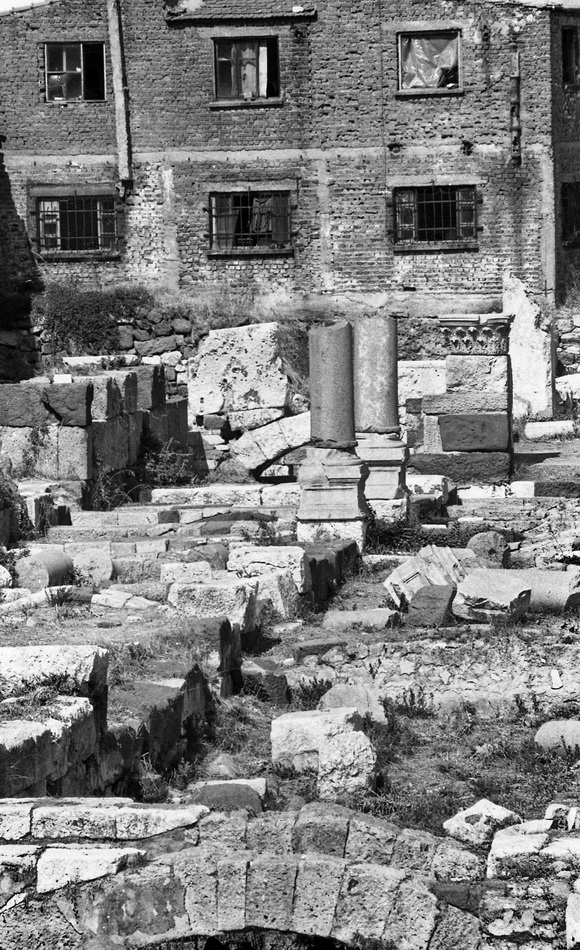
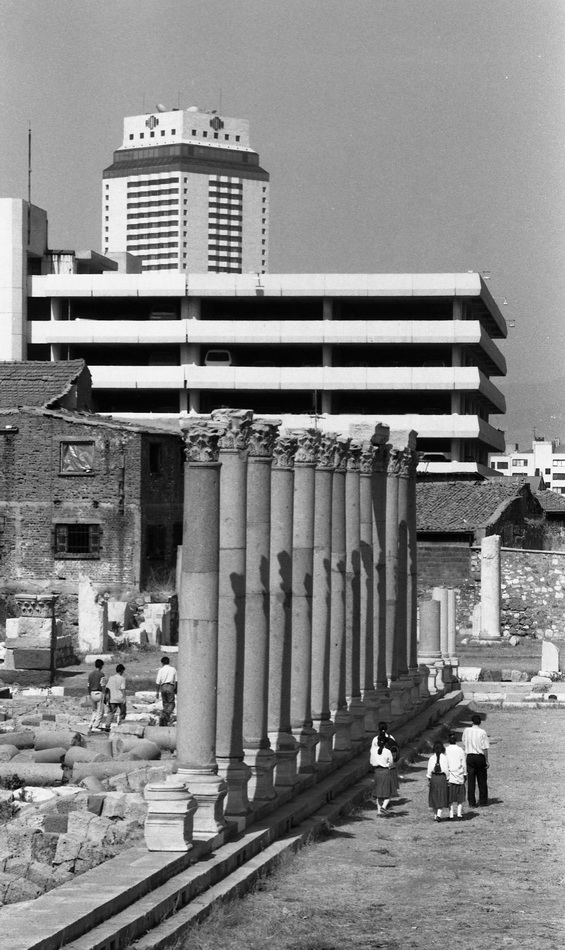
Years later, in 1994, I returned with my camera. I was looking at the familiar surroundings of my childhood with different eyes. Old houses, small workshops and improvised buildings stood immediately behind the ancient columns. The Agora was enclosed by crowded, often unhealthy working spaces, yet it remained a quiet part of the city. Two photographs taken in 1999 record the continuation of that scene.
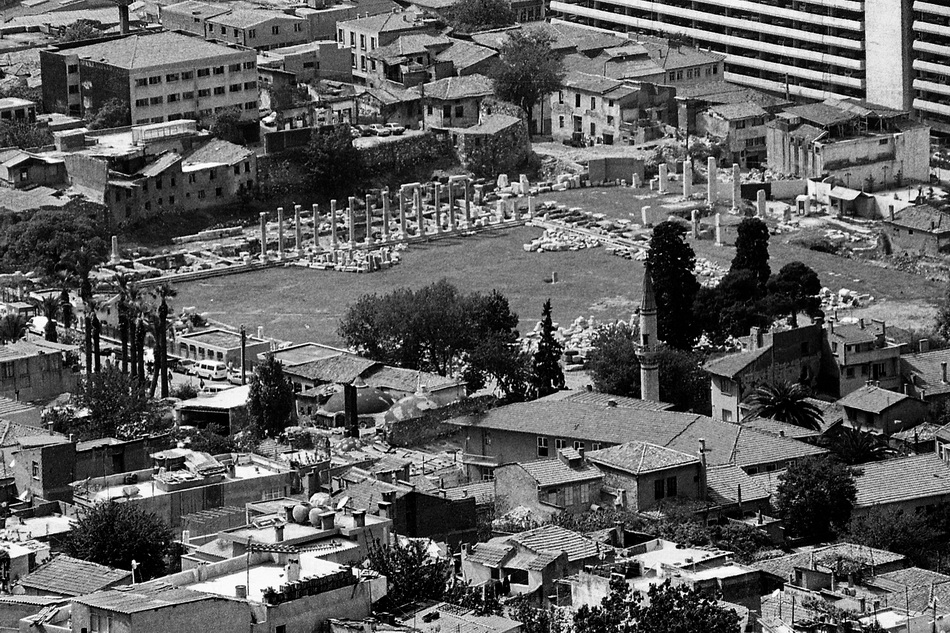
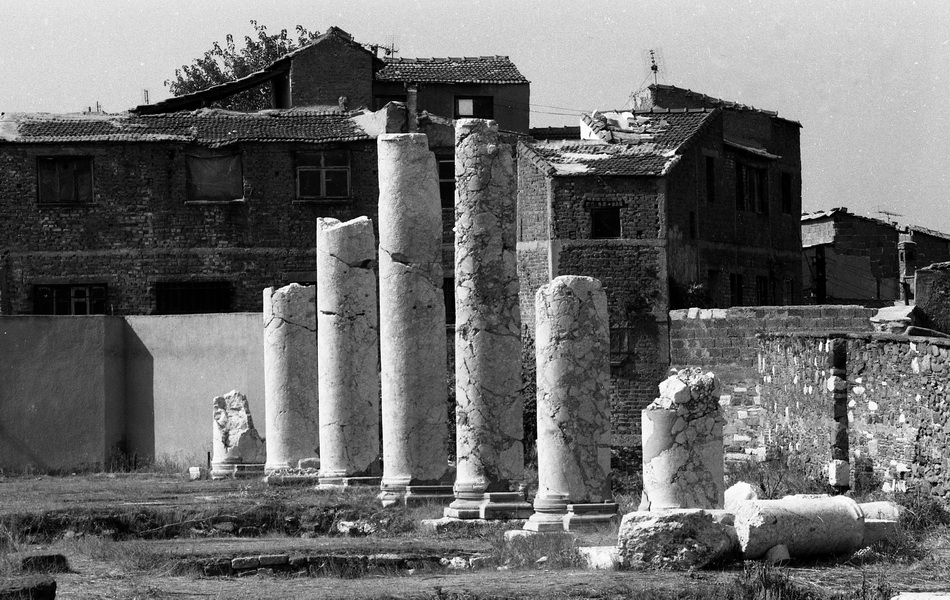
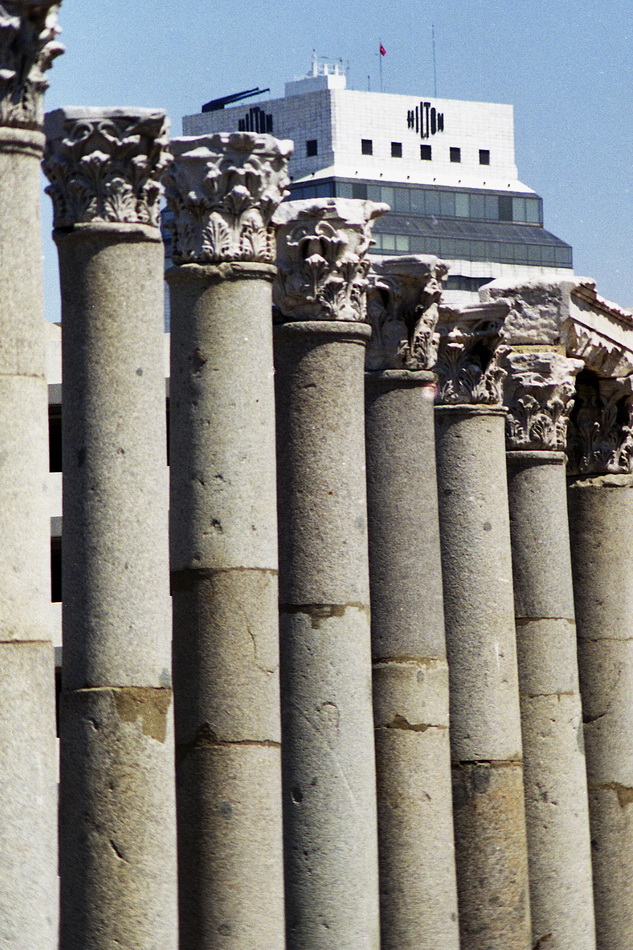
The first photograph in this series was taken from Kadifekale, overlooking the Agora through a telephoto lens. From that elevated viewpoint, the ancient remains appeared closely surrounded by the buildings of the old neighbourhood. The compressed perspective of the telephoto lens brought the archaeological site and the surrounding urban fabric together in a single frame, revealing how deeply the ancient city was embedded in the everyday life of modern İzmir.
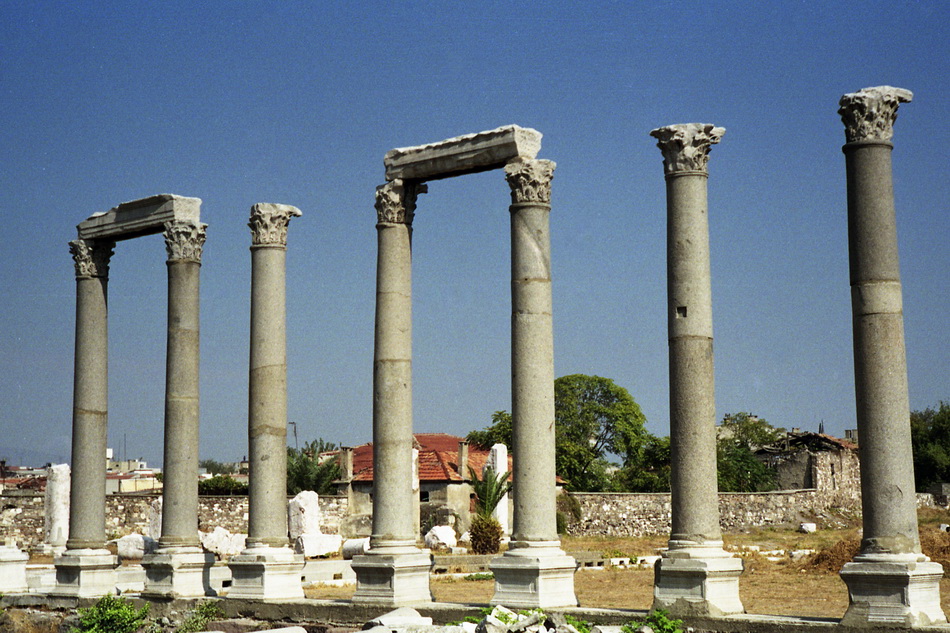
In these photographs, there is hardly any distance between the surviving columns and the buildings behind them. Ancient Smyrna and twentieth-century İzmir share the same frame. For me, these are not only archaeological photographs: they are records of the urban landscape in which I grew up.
The public heart of ancient Smyrna
In the ancient Greek world, an agora was a public gathering place where trade, civic administration and social life came together. The Agora of Smyrna stands in today's Namazgâh district, below Kadifekale, on the site of one of the principal public spaces of the ancient city.
The earlier settlement of Smyrna lay in the area now known as Bayraklı. In the late fourth century BCE, following developments associated with Alexander the Great, a new city developed on the slopes of Mount Pagos, today's Kadifekale. Smyrna prospered in the Hellenistic period and later became an important port city of Roman Asia Minor.
Much of the Agora visible today belongs to the Roman period. Following the destructive earthquake of AD 178, Smyrna underwent extensive reconstruction with support from the emperor Marcus Aurelius. This rebuilding helped shape the monumental remains that survive.
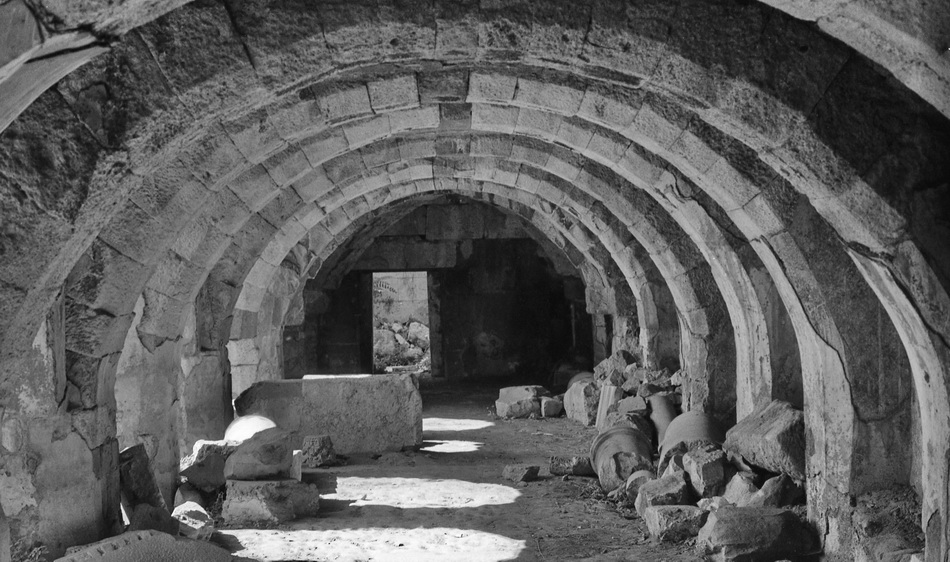
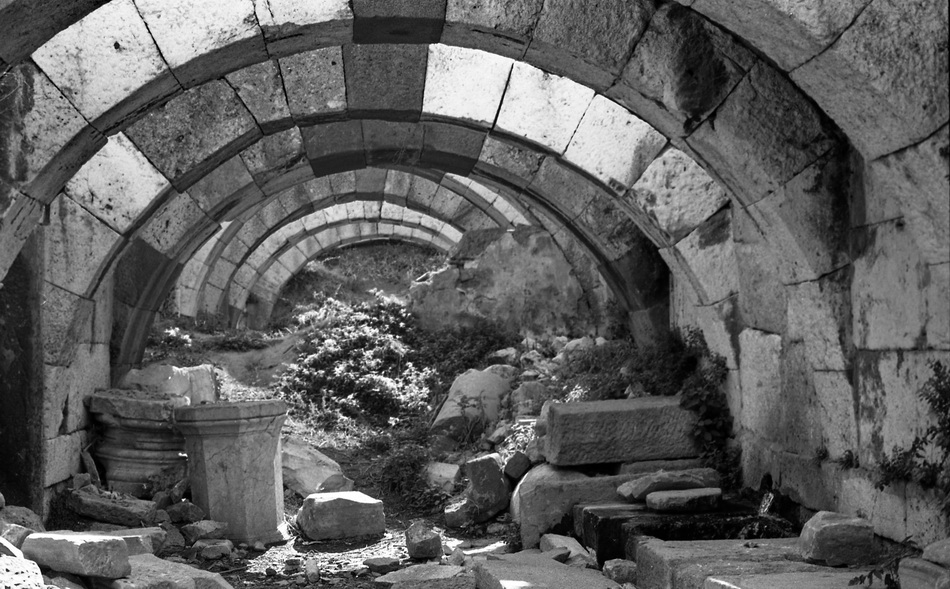
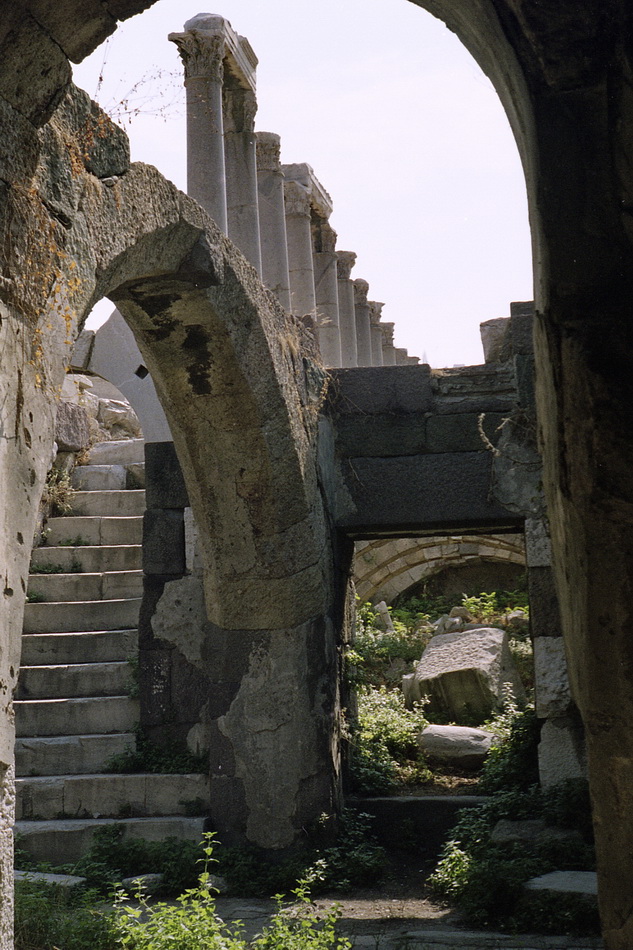
The complex included an open square surrounded by colonnaded galleries. Beneath and around them were vaulted chambers, corridors and other spaces serving the city's public life. The surviving arches, columns, masonry and water channels reveal the sophistication of Roman urban engineering. They also remind us that the Agora was once a place full of people: merchants, officials, craftspeople and ordinary residents.
A city beneath the modern city
Smyrna continued to change through the Byzantine, Turkish and Ottoman periods. New streets and neighbourhoods developed above and around older structures, leaving much of the ancient city beneath modern İzmir.
Scientific excavations at the Agora began in the 1930s, but the densely built surroundings long limited the area that could be explored and made visible. That was the setting I photographed in 1994 and again in 1999: ancient columns surrounded by modest homes, workshops and the everyday life of the neighbourhood.
In more recent years, expropriation, clearance, conservation and further archaeological work have opened up the surroundings of the Agora. The site is far more visible today than it was when I took these photographs. The transformation has helped reveal the ancient city, but it has also changed the more recent urban fabric that once surrounded it.
Traces of history beneath İzmir
Archaeological remains have also come to light during metro construction and other infrastructure work in İzmir. Architectural fragments, including column capitals, are displayed at Çankaya Metro Station, roughly a kilometre from the Agora. These finds should not automatically be attributed to the Agora itself. Rather, they remind us that the ancient city extends beneath many parts of present-day İzmir.
A changing city, enduring memories
When I look at my photographs from 1994 and 1999, I see two different layers of time. The first is ancient Smyrna, represented by its columns, stone blocks and surviving structures. The second is the İzmir of my childhood: its narrow streets, small workshops, houses and ordinary neighbourhood life. Some of those buildings have now disappeared.
Protecting and revealing archaeological heritage matters greatly. Yet photographs can also preserve the appearance of a place before such changes take place. These images show how ancient ruins and the everyday city once stood side by side.
In the 1960s, I walked these streets holding my grandmother's hand. About thirty years later, I returned with a camera and stopped to photograph the ruins beside which we once drank our soda. At the time, I did not know how much the area would change, or that I was recording not only ancient Smyrna but also a disappearing part of the İzmir I had known.
The Agora has changed. The streets around it have changed. But those summer evenings walking hand in hand with my grandmother remain in exactly the same place in my memory.