
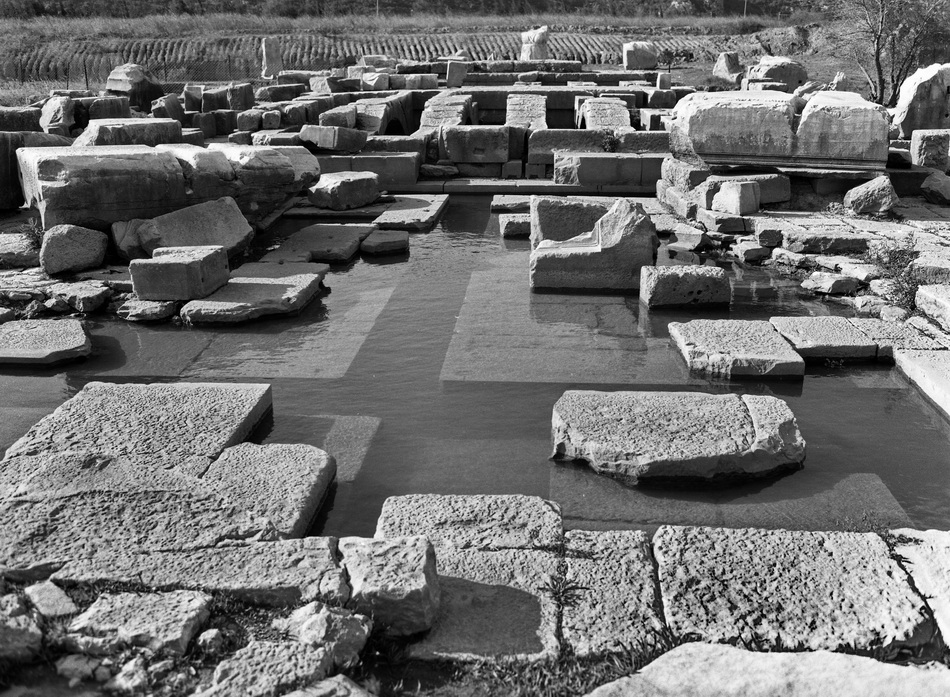
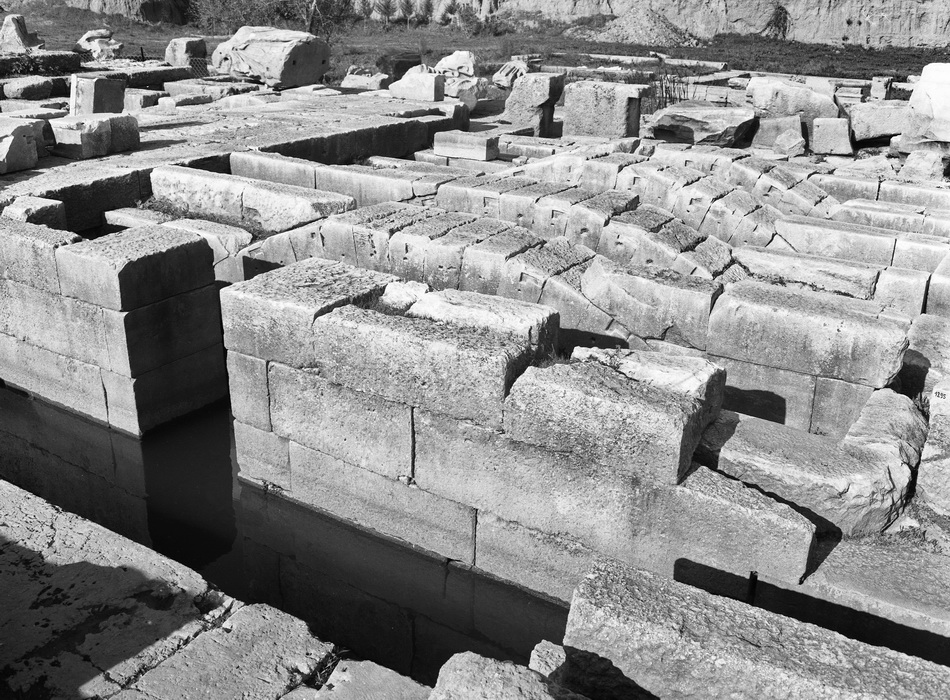
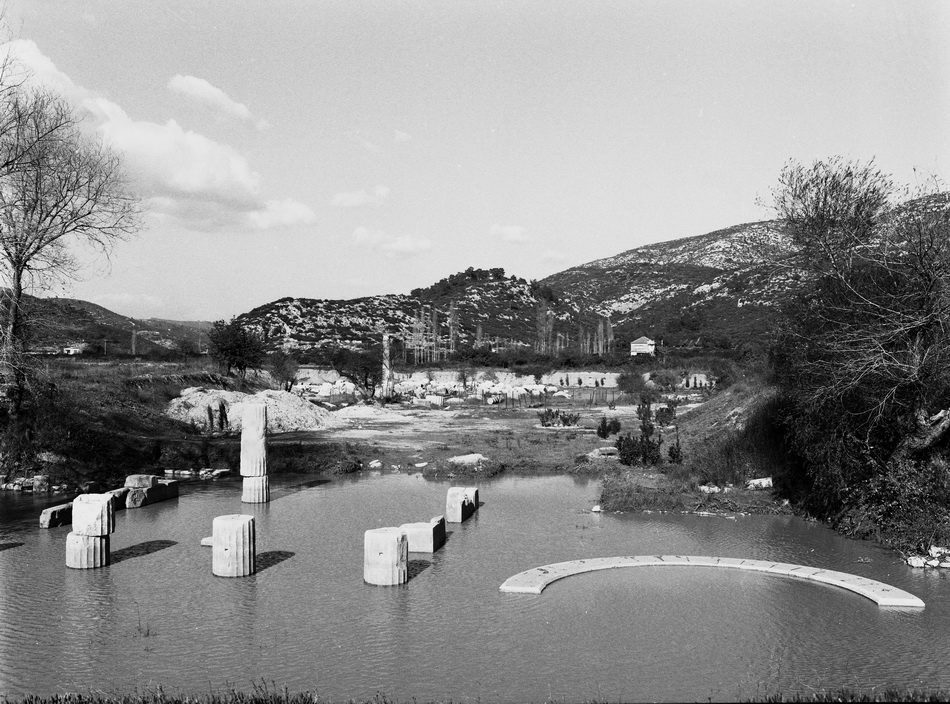
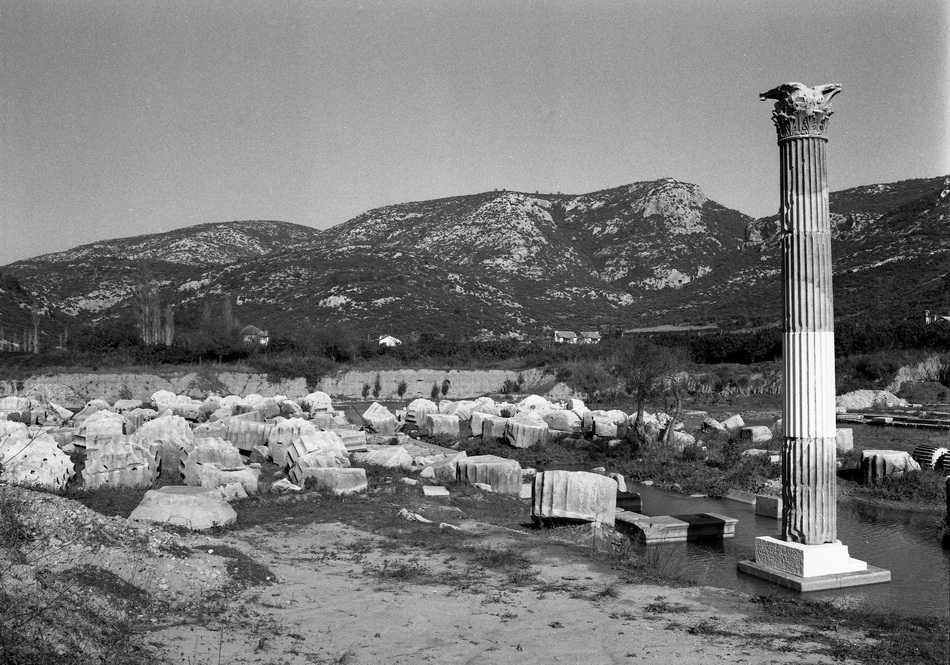
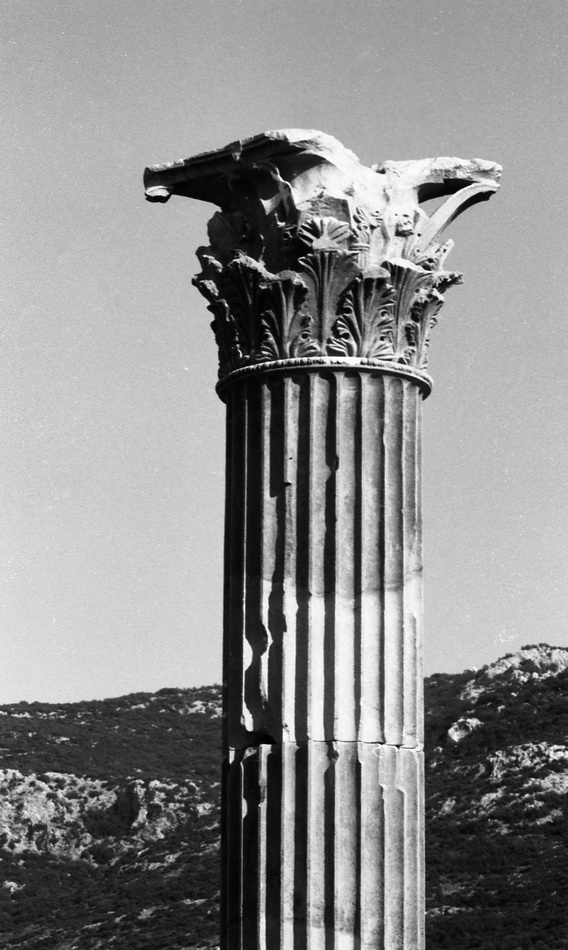
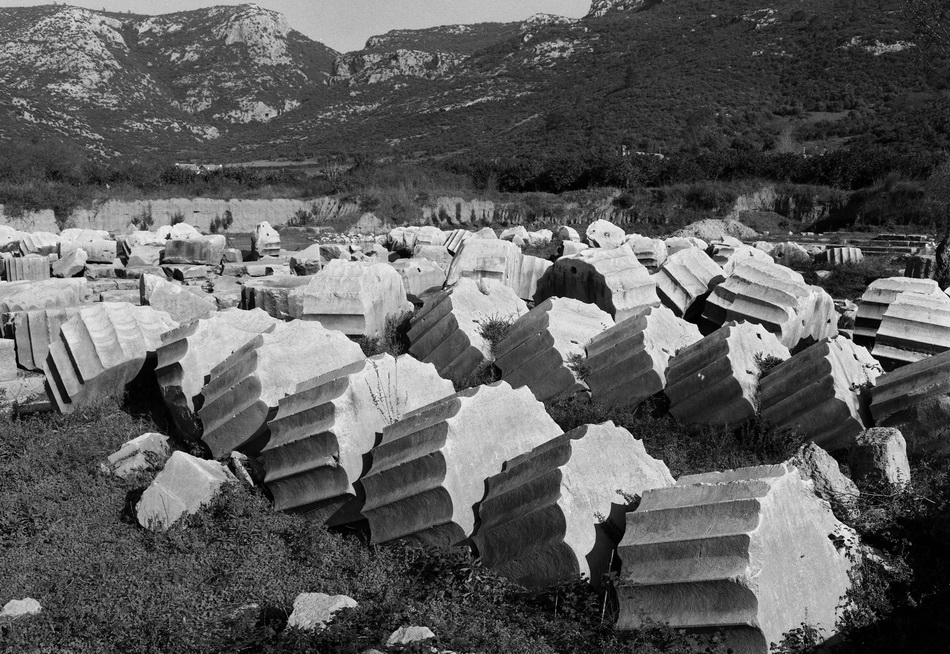
In 1994, when I visited Claros, there was no one there. No attendant, no guide and no other visitors. I walked freely among the ancient remains, across an open archaeological landscape where large stone blocks, fragments of sculpture and partially excavated structures lay exposed to the elements. I photographed what I saw, without imagining how valuable these images might become as a record of the site's appearance at that time.
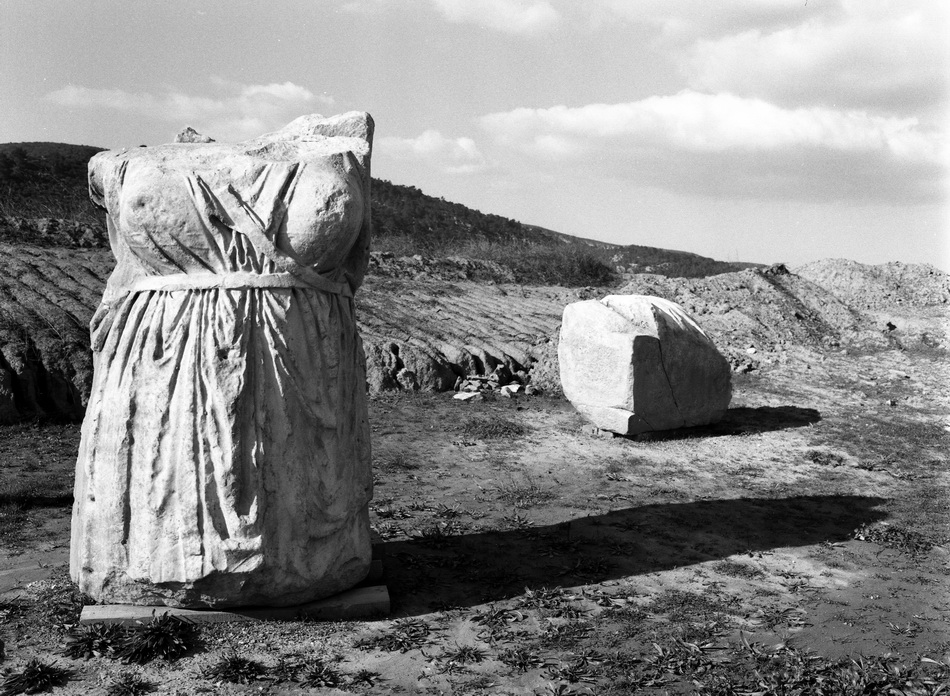
One of the first things to catch my attention was a headless statue of the goddess Artemis. Her arms were missing, but the folds of her long garment remained clearly visible. Lying in the open, with scattered blocks and the bare landscape behind her, the figure seemed both monumental and strangely solitary. This photograph became the cover image of my 1994 Claros series.
Claros lies near present-day Ahmetbeyli, south of İzmir, between the ancient cities of Colophon and Notion. It was not an independent city but a sacred precinct associated with Colophon, one of the twelve Ionian cities of western Anatolia. Ionia was a region where Greek-speaking communities developed a rich urban culture, connected through maritime trade, religious practice, literature and philosophy. Claros occupied a distinctive place in that world as a sanctuary devoted above all to Apollo.
The sacred traditions of Claros may reach back well before the monumental temple whose remains are visible today. The site was associated with a spring and with forms of worship that developed over many centuries. By the Archaic period, the sanctuary had become known for its oracular tradition: people came here to seek divine guidance on matters that troubled individuals and entire communities.
Apollo, the god of prophecy, music and purification, was the principal deity of Claros. His twin sister Artemis and their mother Leto were also honoured here. In antiquity, a monumental sculptural group represented the three deities together. The headless Artemis I photographed in 1994 evokes that sacred family and the scale of the sculpture that once adorned the sanctuary.
Claros was one of the best-known oracular centres of the ancient Mediterranean, alongside Delphi and Didyma. Cities and delegations sought answers to questions involving epidemics, political uncertainty and the future. Unlike the oracle of Delphi, whose best-known prophetic figure was the priestess Pythia, the prophetic office at Claros was held by a male officiant. Ancient accounts describe a ritual connected with water drawn from a sacred source beneath the temple, after which the divine response was conveyed and formulated in verse.
Construction of the great Temple of Apollo began in the Hellenistic period, around the early third century BCE. Although Claros stood in Ionia, the temple employed the Doric architectural order. Its underground chambers, altar and associated ceremonial spaces made the sanctuary more than a collection of impressive buildings: they formed a setting for religious practices that drew visitors from far beyond the immediate region.
The sanctuary remained important under Roman rule. Archaeological discoveries, including architectural fragments, inscriptions and evidence for elaborate sacrificial ceremonies, help reconstruct the religious life of the site. As traditional pagan cults declined in Late Antiquity, Claros eventually lost its former function and fell into abandonment.
Modern investigations began in the early twentieth century, including work by the Ottoman archaeologist Theodor Makridi and Charles Picard. Major excavations followed in the 1950s under Louis and Jeanne Robert. Archaeological research resumed in 1988 under Juliette de La Genière. When I visited in 1994, therefore, Claros was once again an active subject of archaeological investigation, even though on that particular day we encountered nobody at the site.
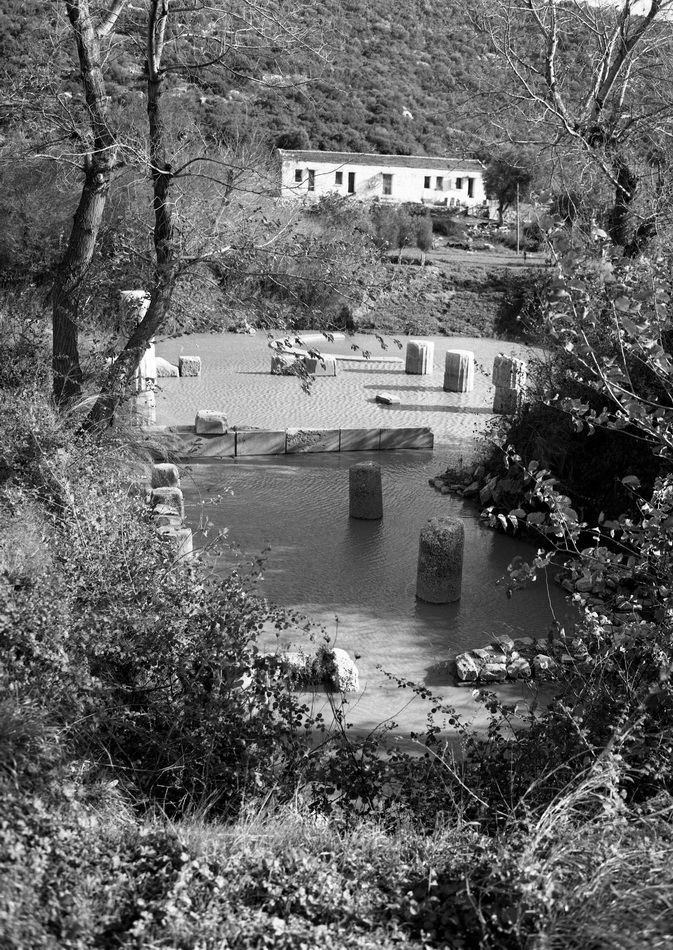
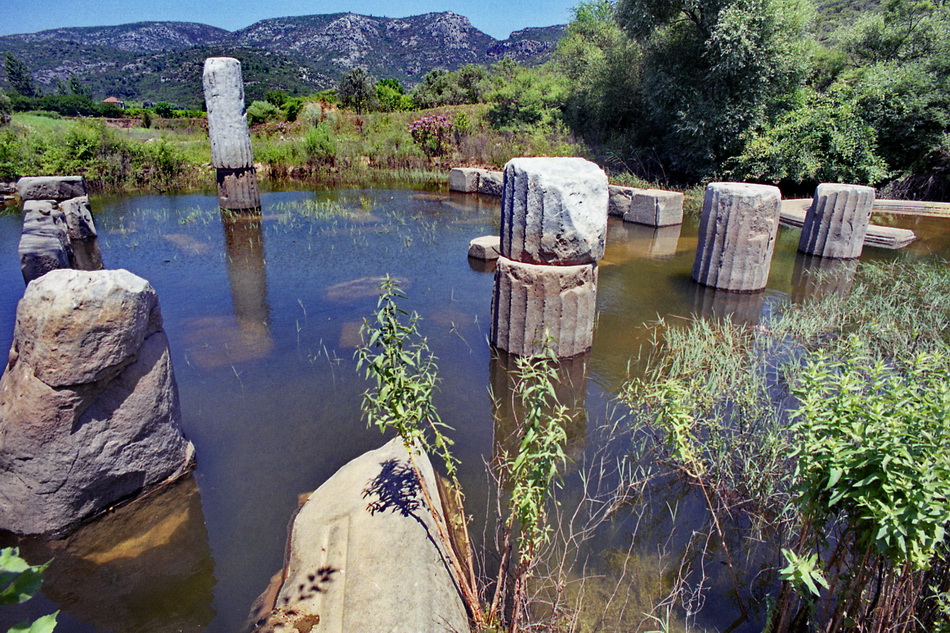
Some of my photographs show standing water among the excavated remains; others show isolated columns, sculptural fragments and blocks scattered across the ground. I did not set out to produce a complete architectural survey. What interested me was the relationship between these ancient objects and the quiet, almost deserted landscape around them. The absence of visitors allowed me to observe the site without interruption.
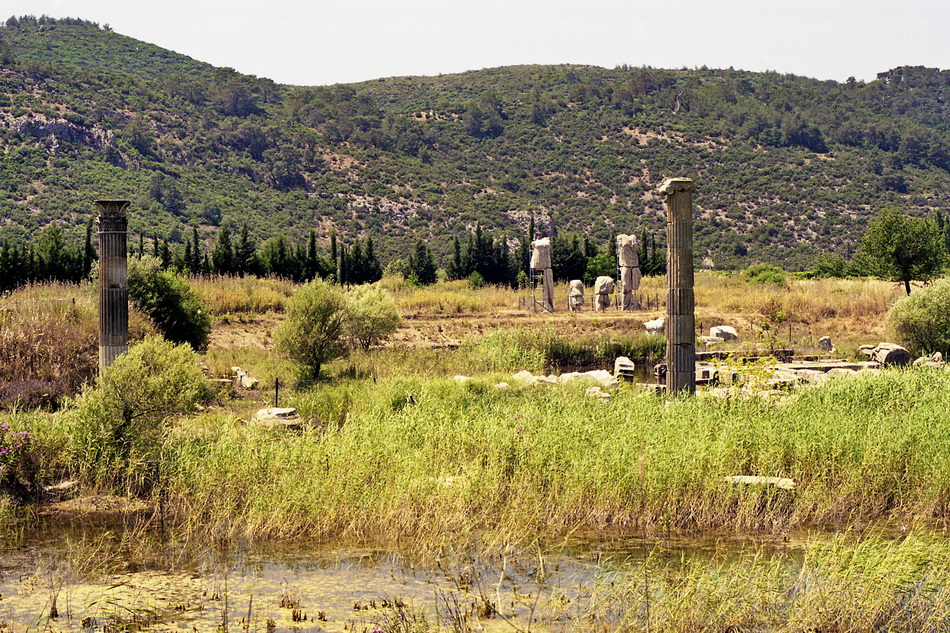
When I returned in 1999, I photographed the sanctuary in colour. In these later images, the headless figure of Artemis that I had recorded on the ground in 1994 can be seen standing upright. The photographs offer a rare personal comparison of the same archaeological setting five years apart. Water still covered parts of the excavated area, while the surrounding landscape remained open and quiet. Seeing the statue in its new position gave me a different sense of the scale and presence of the ancient sculptural remains.
Looking at the photographs more than three decades later, I see them differently. Excavation, conservation and visitor arrangements can change the appearance of an archaeological site considerably. My eight black-and-white frames from 1994 and two colour photographs from 1999 preserve two moments in the modern history of Claros, when the sanctuary of Apollo, Artemis and Leto still appeared as a largely open landscape of stones, statues and traces of a distant civilisation.