
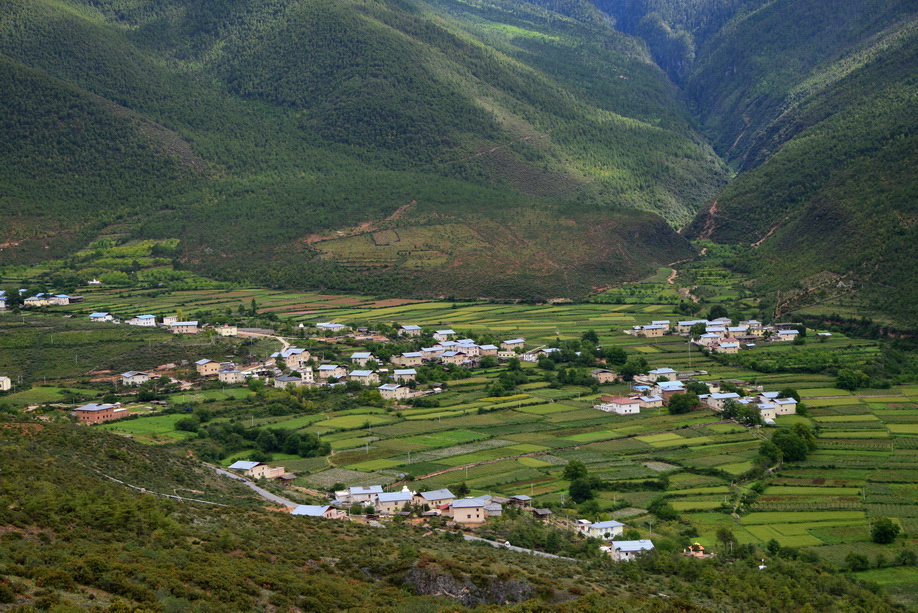
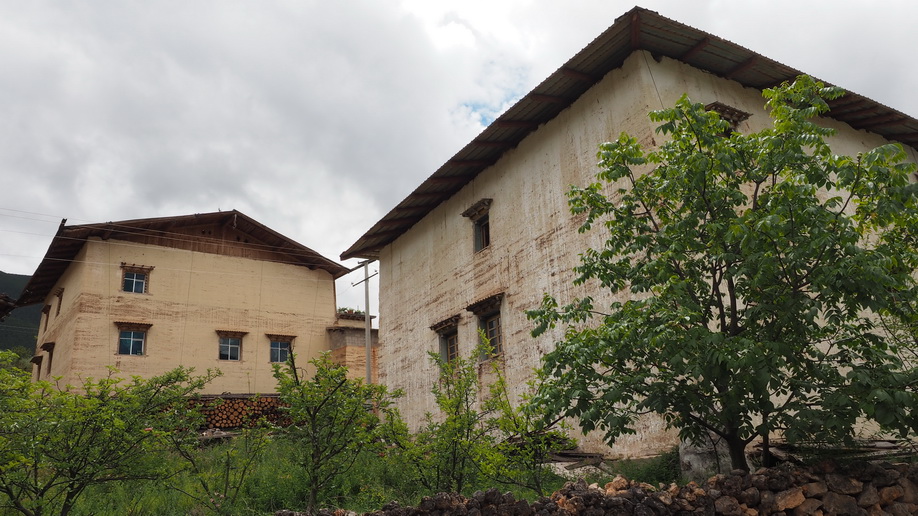
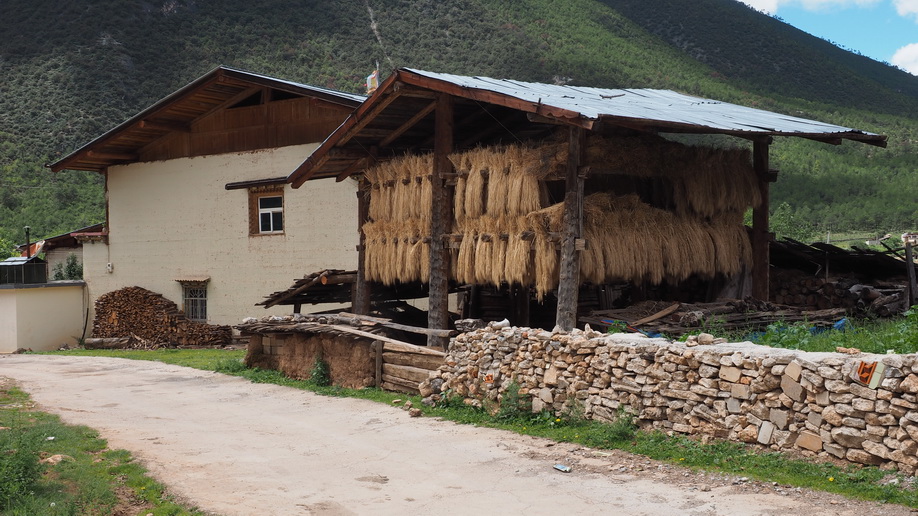
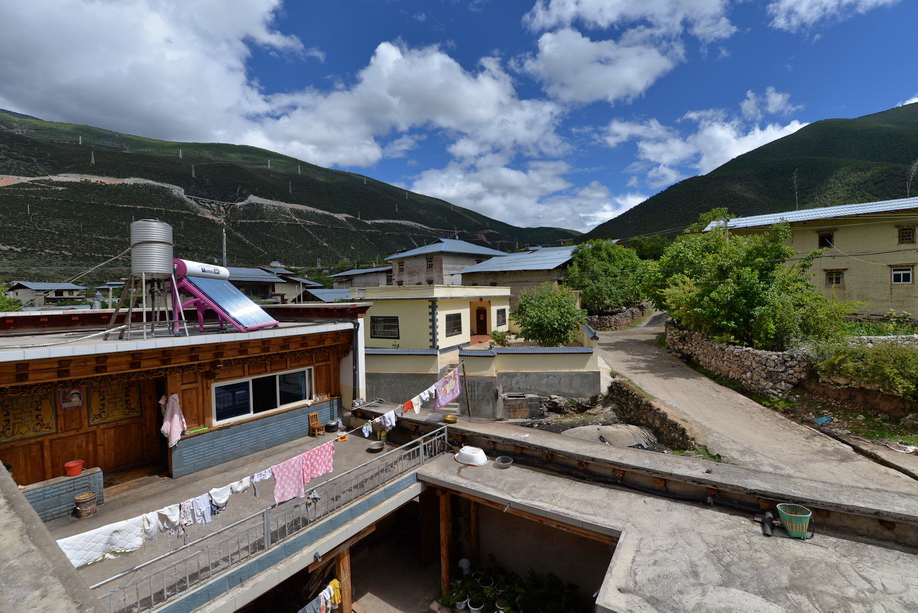
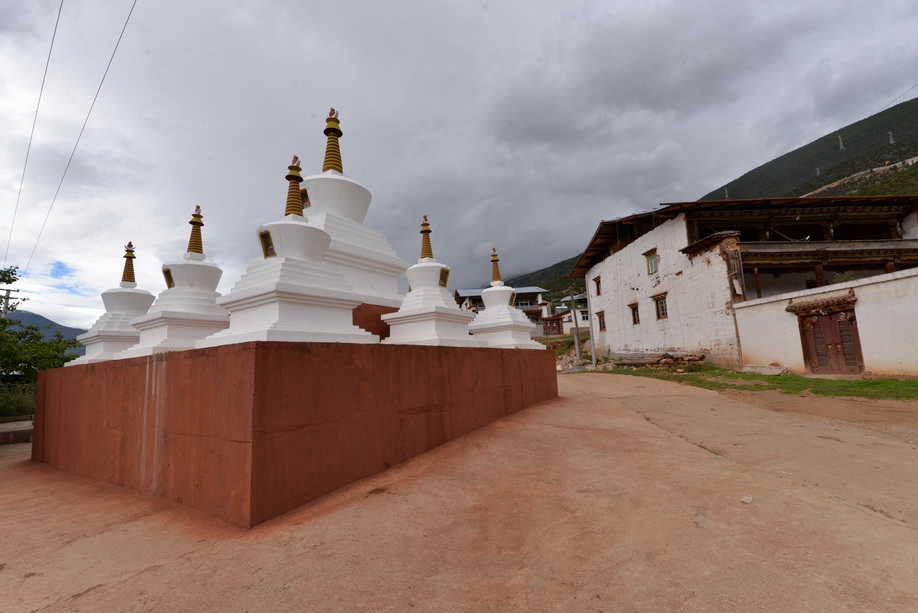
Seen from a distance, the villages seem almost to have grown out of the valley itself. The houses lie among cultivated fields at the foot of immense green mountains, close enough to one another to form a community yet surrounded by the land on which that community depends. My first impression was not of architecture standing apart from nature, but of a settlement that had learned to negotiate with it. Stone, earth and timber are not decorative choices here; they are the vocabulary provided by the landscape.
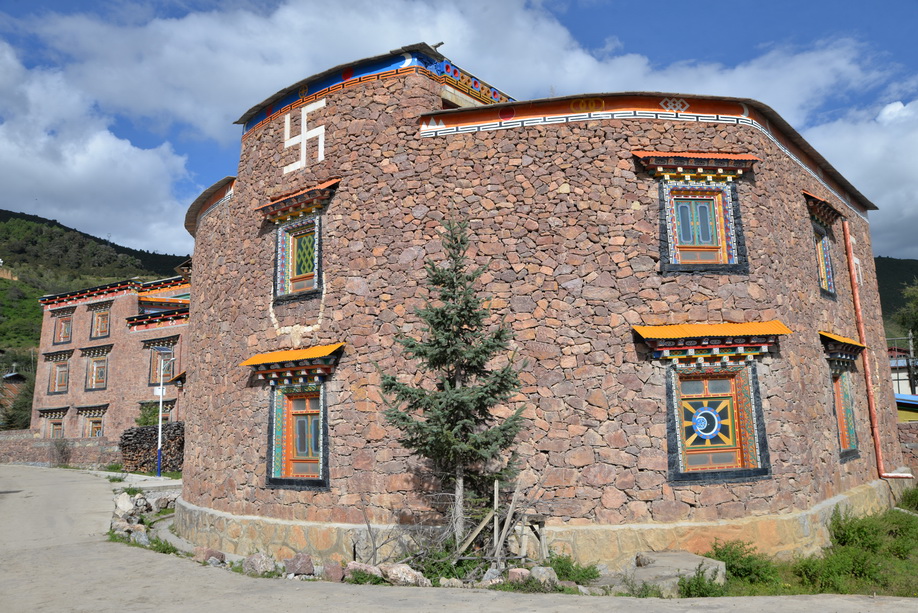
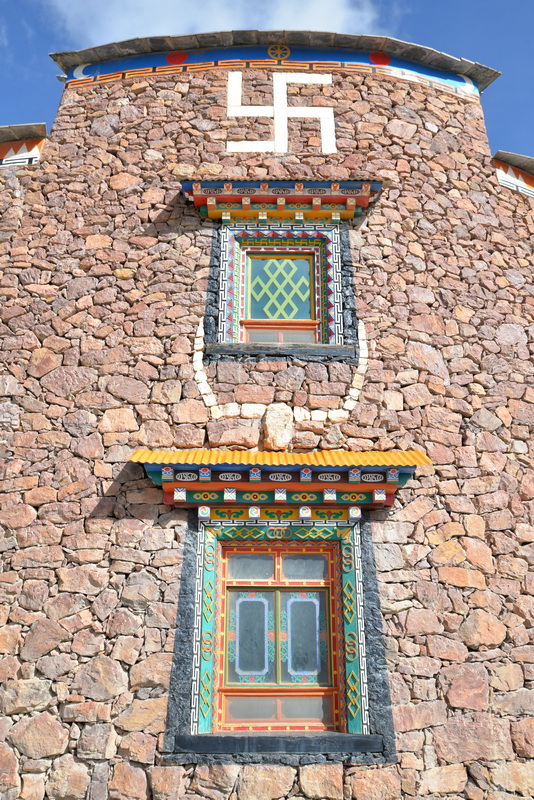
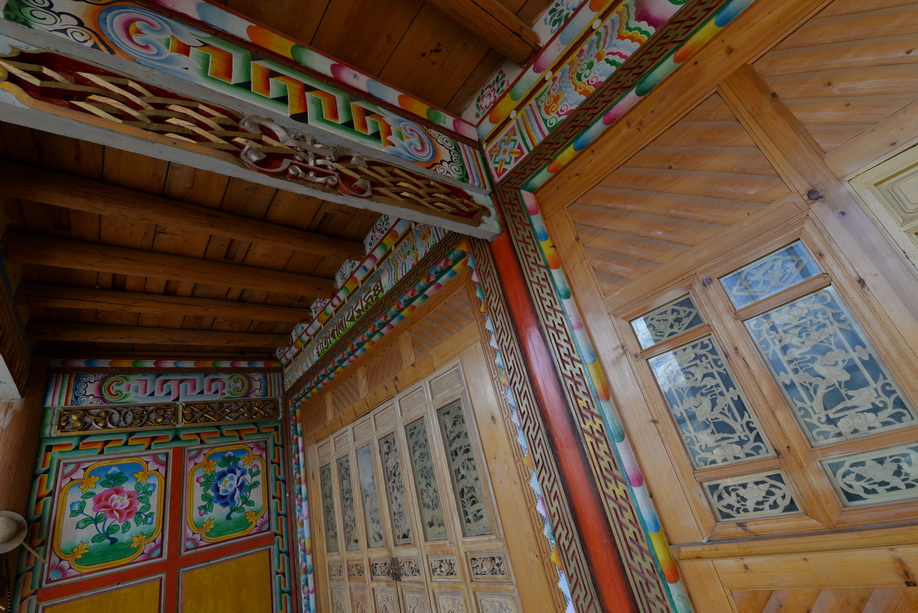
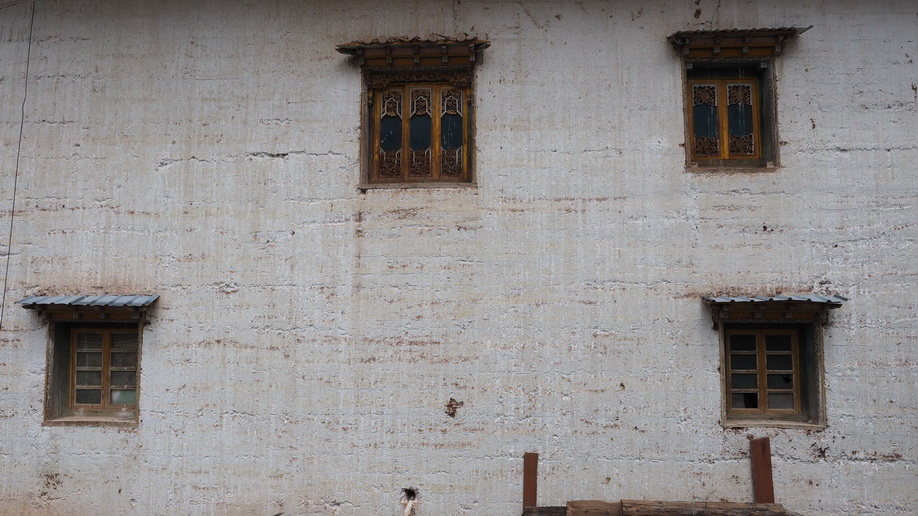
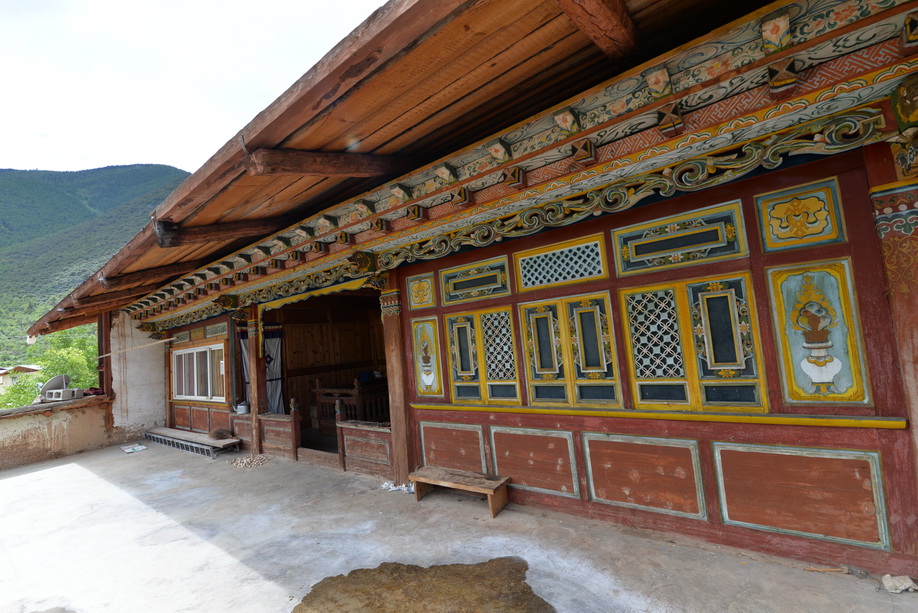
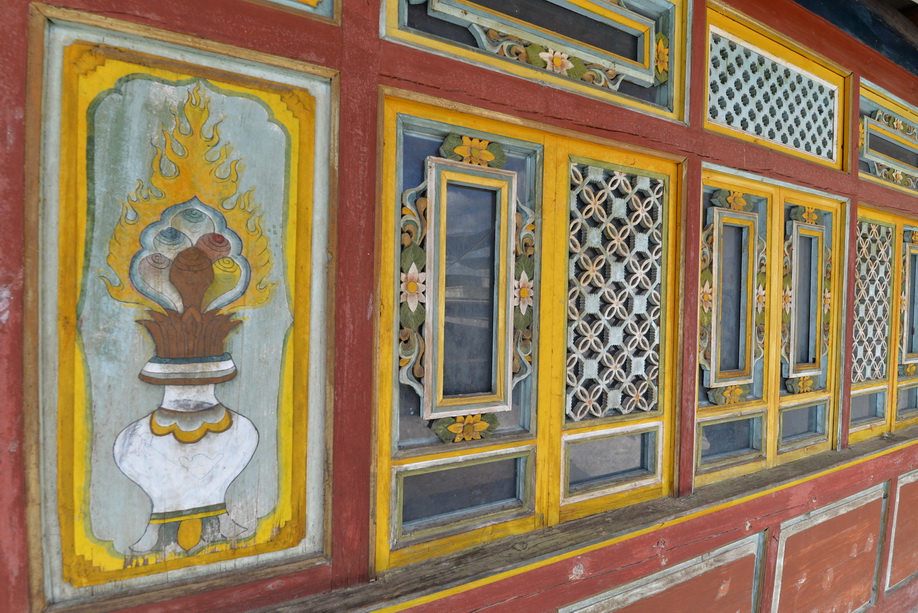
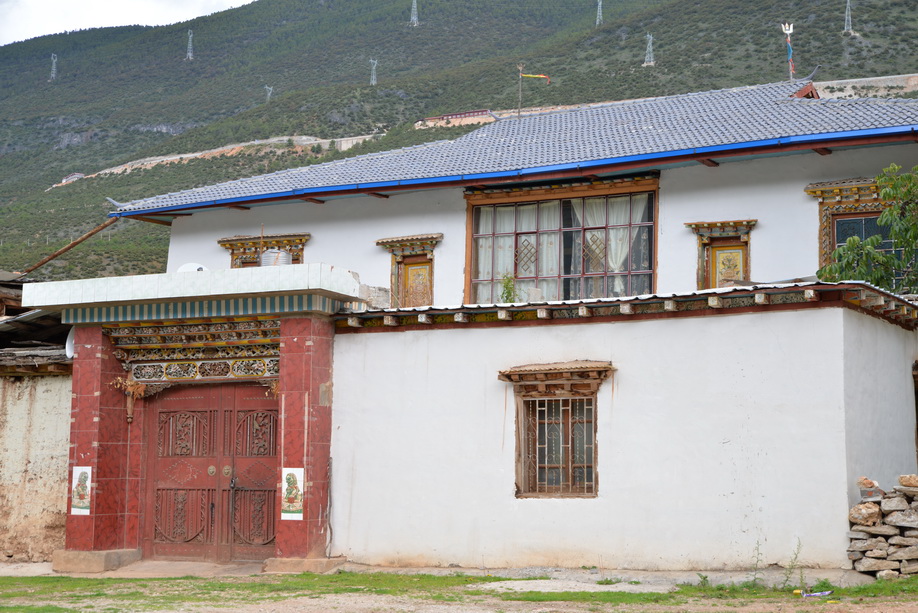
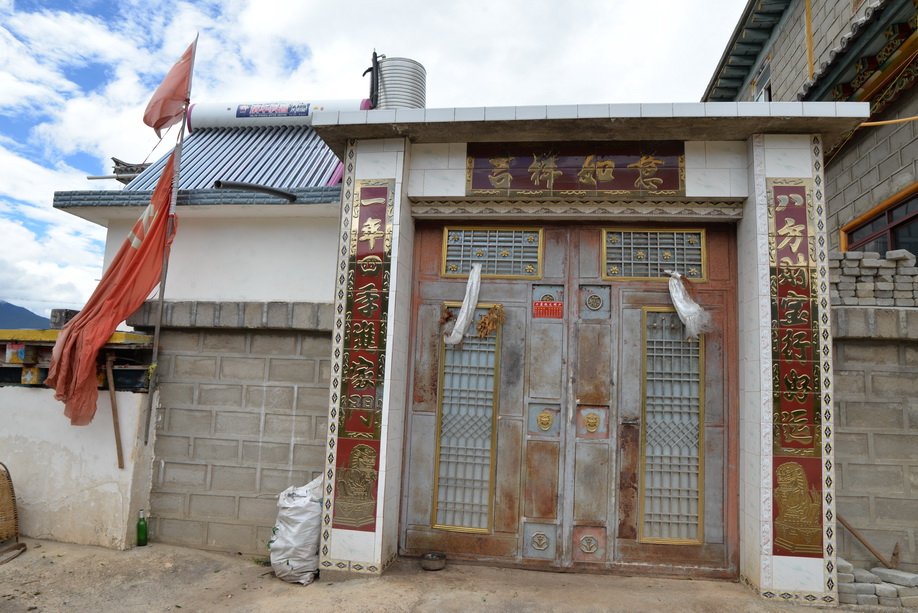
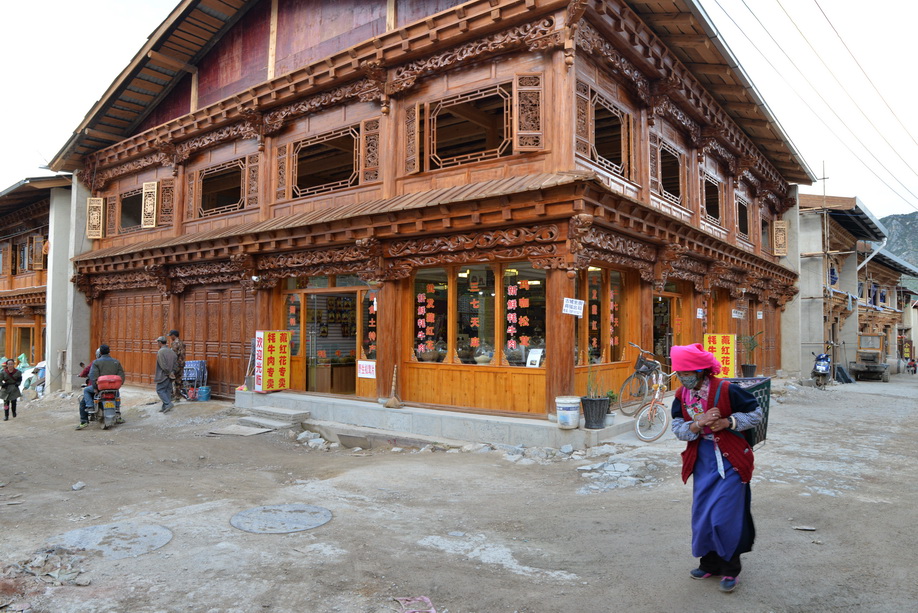
Up close, however, the apparent simplicity changes. Rough stone walls and broad whitewashed surfaces are interrupted by windows and doors framed with astonishing colour and precision. Painted beams, carved timber, geometric patterns and Buddhist symbols turn openings in the wall into small ceremonial compositions. The contrast fascinated me: the mass of the house is restrained and defensive, while its details are exuberant. It is as if the exterior must first answer to climate and geography, but once shelter has been secured, another need emerges — the human desire to give meaning and beauty to the place in which life is lived.
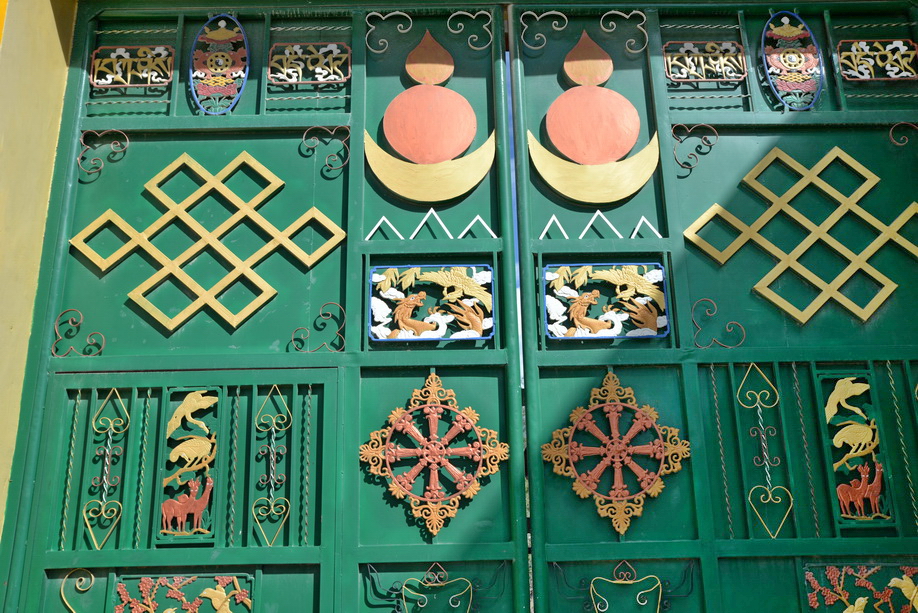
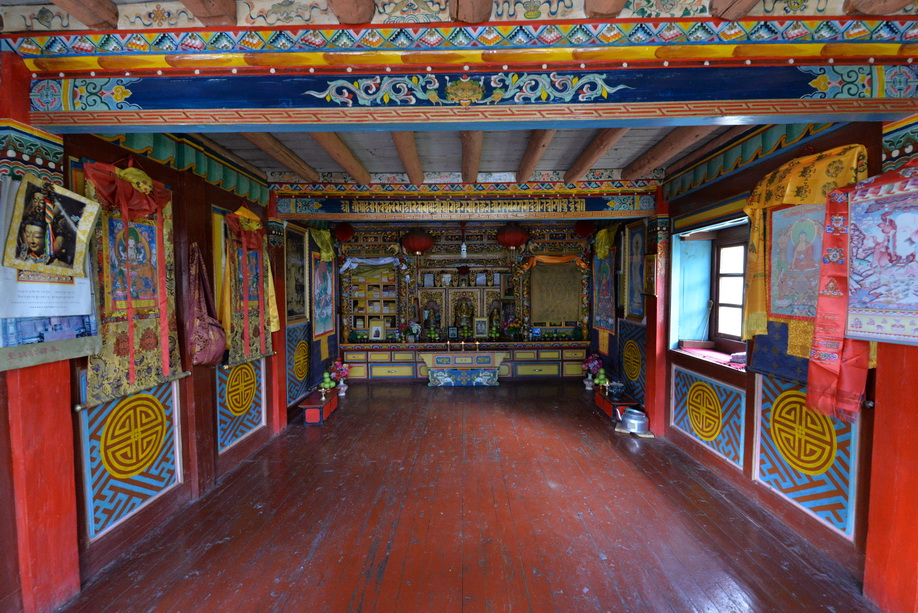
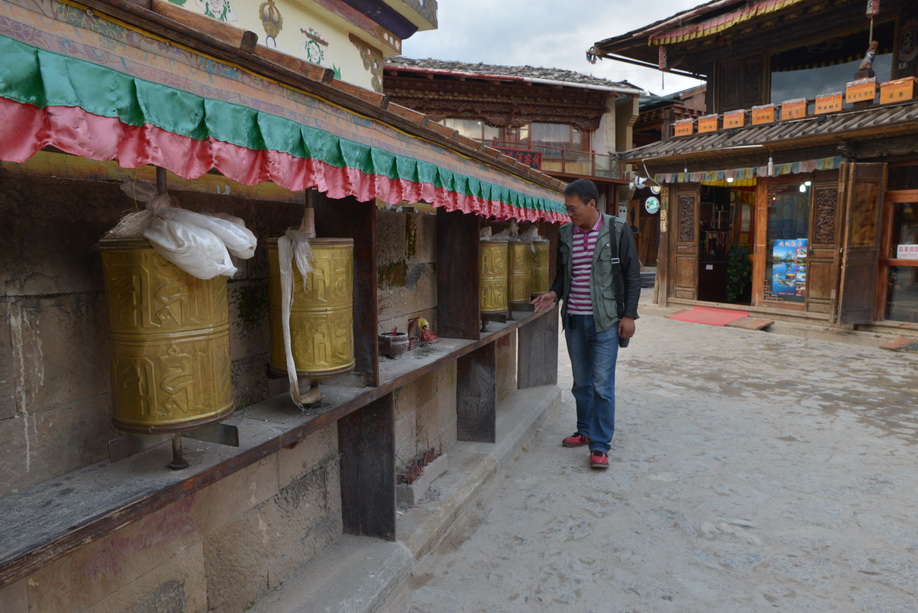
Some symbols return again and again. The Buddhist swastika, an ancient auspicious sign in Asian religious traditions, appears prominently on a stone façade; elsewhere I encountered endless knots, Dharma wheels and other motifs incorporated into gates, windows and painted panels. They are not isolated ornaments added to an otherwise secular building. In these houses belief enters the architecture itself. The boundary between dwelling and sacred space becomes difficult to draw.
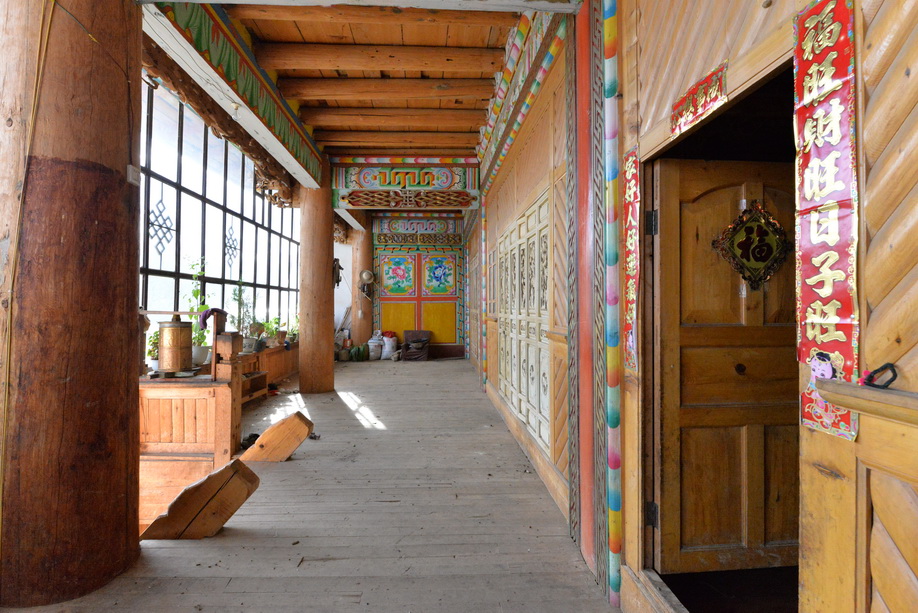
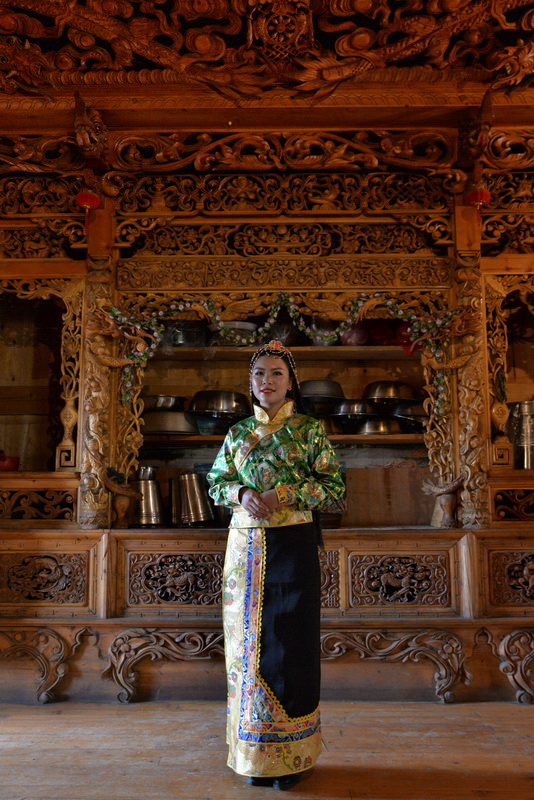
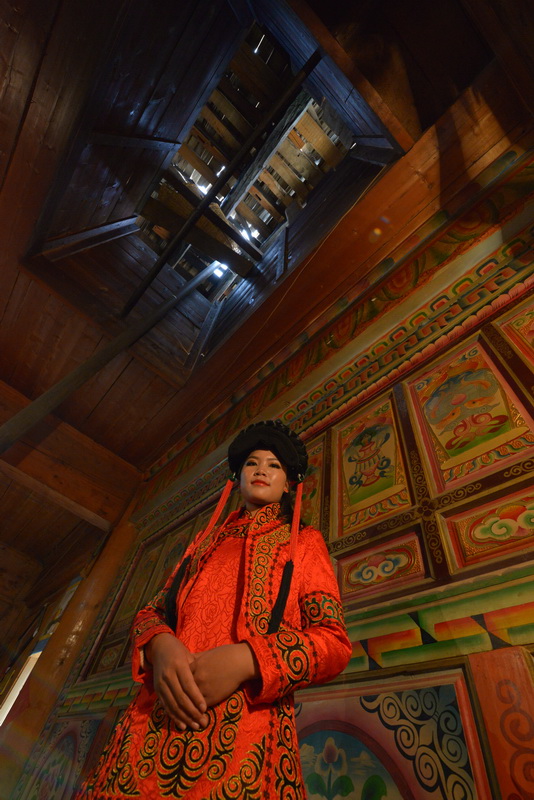
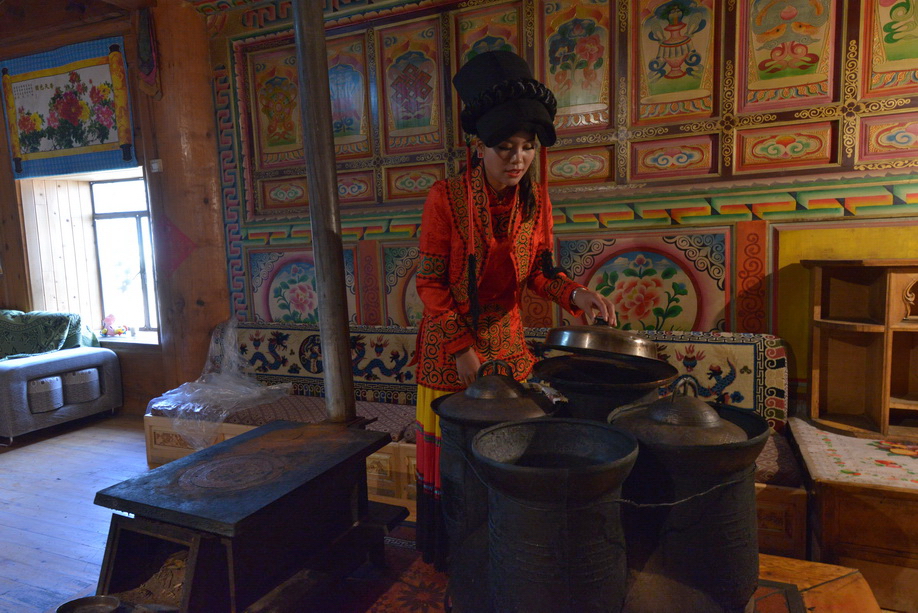
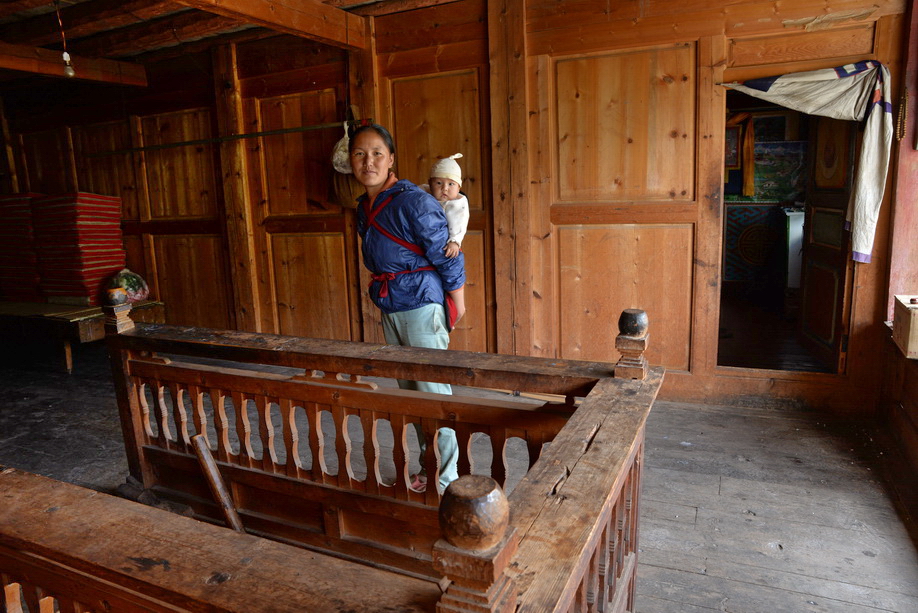
That became clearest when I entered the interiors. Behind the heavy walls were timber galleries and rooms glowing with painted beams, floral panels and intricate carving. In one house an entire room functioned as a shrine, filled with religious images and objects. In another, richly carved wooden cupboards and shelves formed the background to everyday domestic life. The sacred was not hidden away from the ordinary. Cooking vessels, furniture, family belongings and devotional imagery occupied the same architectural world.
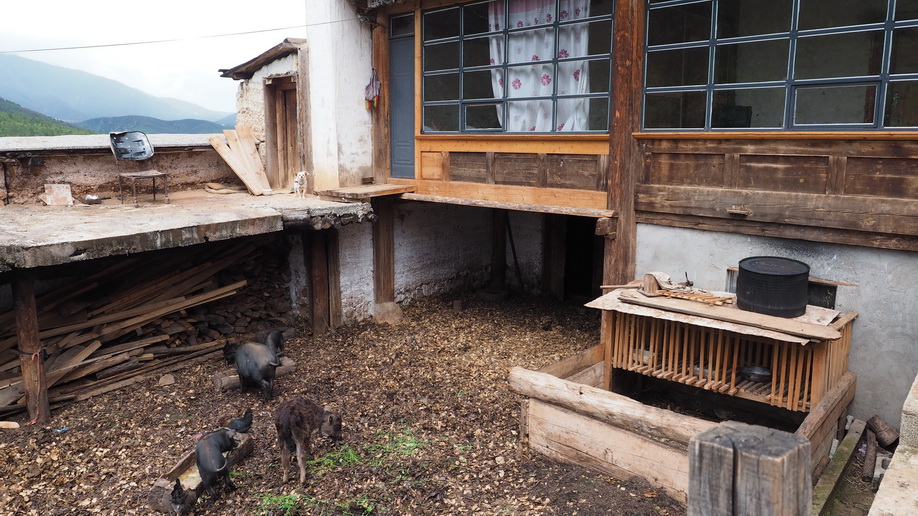
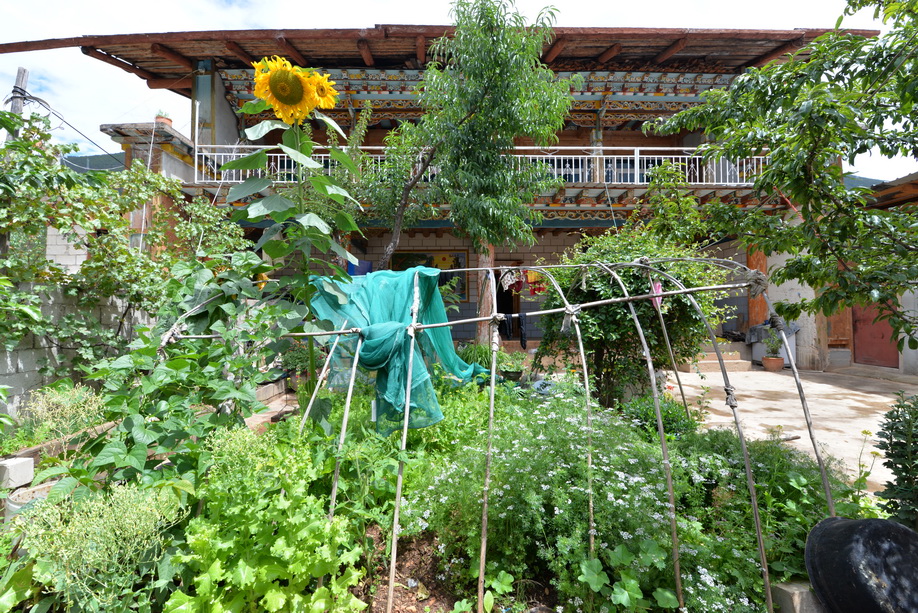
The houses also revealed themselves as places of production rather than simply places of residence. Courtyards contained animals and stored firewood; grain or fodder hung beneath broad roofs; vegetables grew immediately beside the house. The building, courtyard, field and livestock formed a single working system. Here the idea of a home extends beyond rooms and walls. It includes the food stored for winter, the animals below, the garden outside, the timber stacked under shelter and the fields visible from the upper floor.
I was especially interested in the coexistence of continuity and change. Traditional carved façades and old earthen walls stand beside metal roofing, concrete additions, large glazed windows, water tanks and solar heaters. These elements can easily be described as intrusions into an old architectural landscape, but life is more complicated than that. A house is not a museum object. It must remain warm, useful, affordable and habitable for the people who live in it. Tradition survives not by remaining untouched, but by repeatedly negotiating with the present.
The people I photographed inside these houses completed that thought for me. Architecture can be studied through materials, plans and ornament, but a house only becomes intelligible when someone inhabits it. A woman carrying a child across a wooden interior, another standing before a deeply carved domestic cabinet, or someone tending vessels around a stove gives scale and purpose to everything around them. The worn floorboards and darkened timber are records of movement just as surely as a photograph is.
Walking through these villages, I began to see the Tibetan house as a kind of layered memory. Geography determines its mass; climate shapes its shelter; craftsmanship gives it character; belief fills it with symbols; agriculture organizes its surroundings; and generations of inhabitants leave marks that no architect could design in advance. Even the most modest wall contains traces of decisions made over decades — what to preserve, what to repair, what to paint again and what to replace.
Perhaps this is what interested me most as a photographer. Houses are usually photographed as objects, but they are never merely objects. They are containers of time. The stone wall, the painted window, the shrine room, the stove, the courtyard animals, the drying crops and the new solar heater all belong to different rhythms of life, yet they exist within the same frame. In these Tibetan villages I was not only photographing a regional style of architecture. I was photographing the continuing conversation between people, belief, landscape and time — a conversation written quietly into the walls of their homes.