
Velikoy Wooden Mosque — Savsat - Artvin · 2016
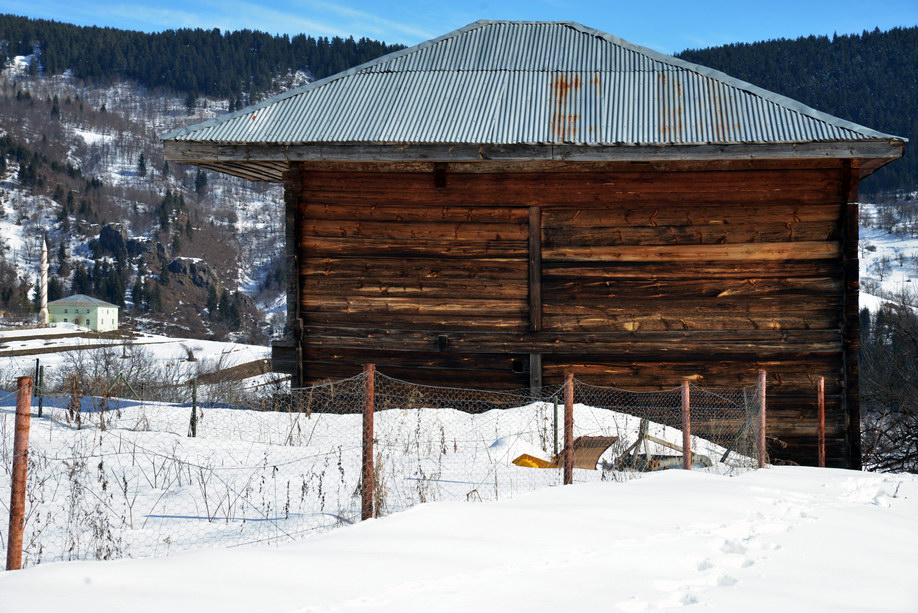
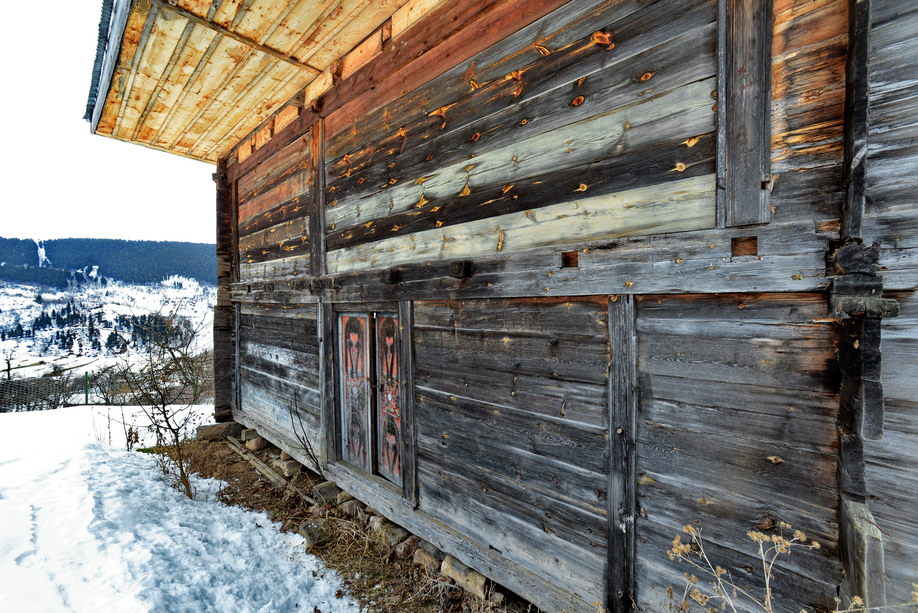
In Velikoy, one of the mountain villages of Savsat, I came across this old mosque, which looked quite modest from the outside. Once I stepped inside, however, I found a completely different world. Here, wood is not merely a building material; it is also a means of decoration and expression. The mosque is one of the remarkable surviving examples of the traditional timber architecture of the Eastern Black Sea region. It was built using a log construction technique in which wooden elements are carefully fitted into one another, a method locally associated with the tradition of so-called “mosques built without nails.”
There is a small difference between the dates given by different sources. The village history states that the first wooden mosque was built in 1879, while an academic study, referring to the inscription on the gallery, dates the present structure to 1882. The same inscription records that the mosque was commissioned from Hasan Usta, son of Mehmet Aga, a craftsman of Laz origin. This suggests that the building was not only a local place of worship, but also part of a wider tradition carried through the Black Sea region by travelling master carpenters in the late nineteenth century.
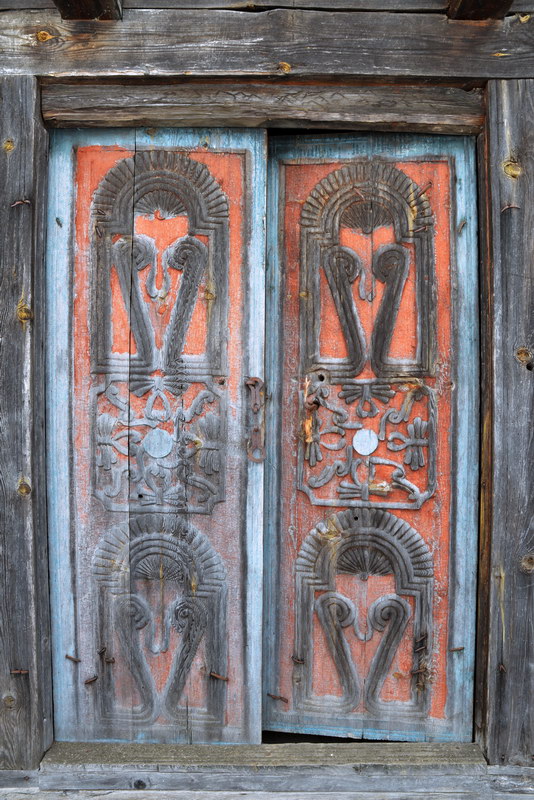
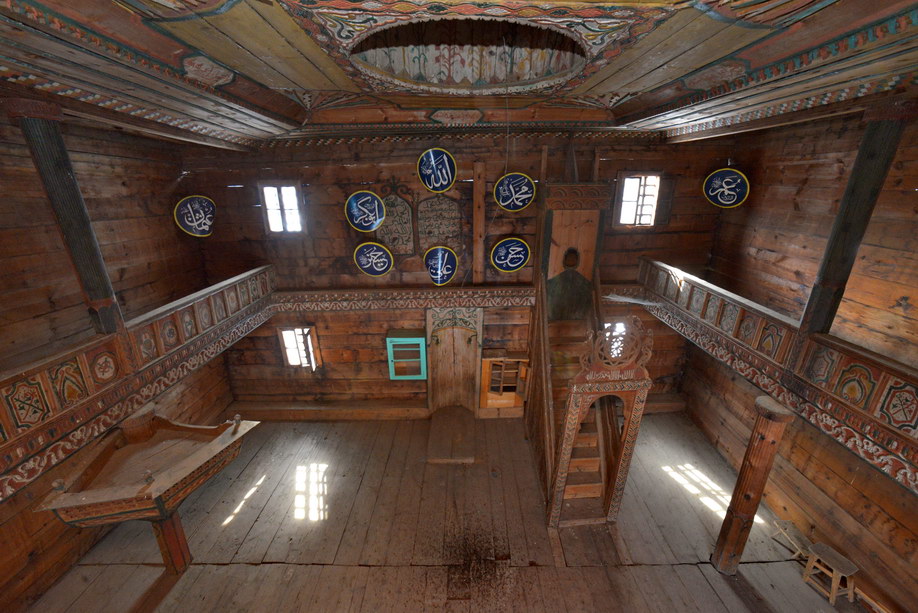
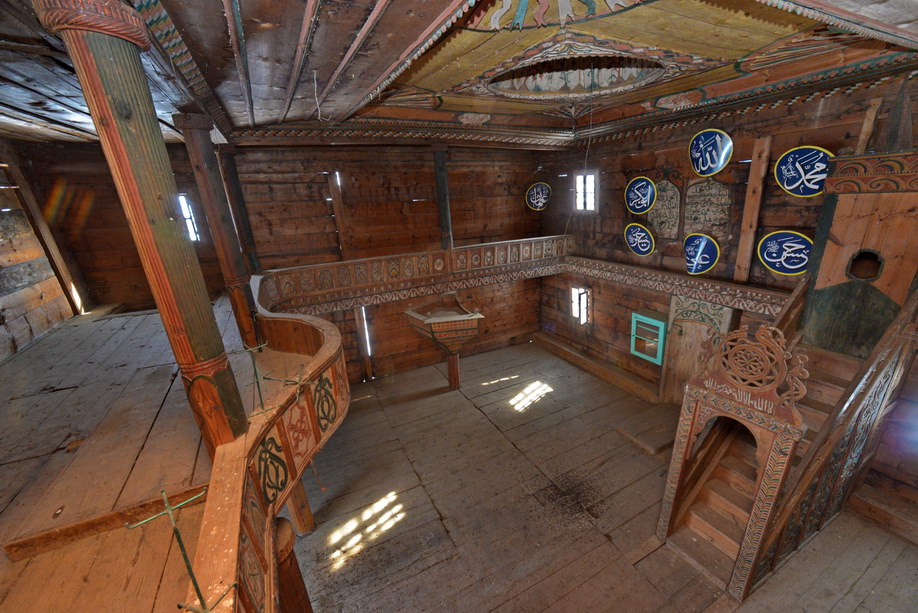
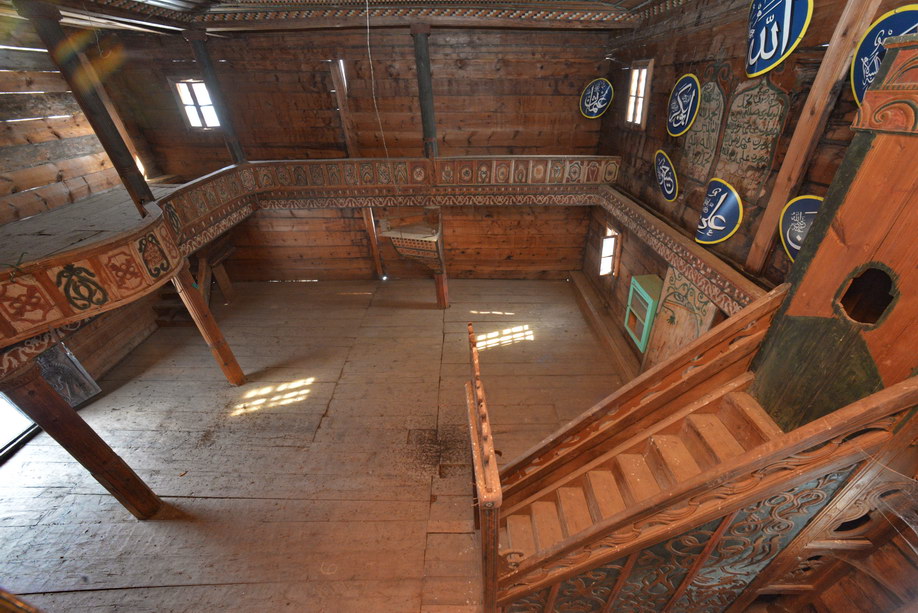
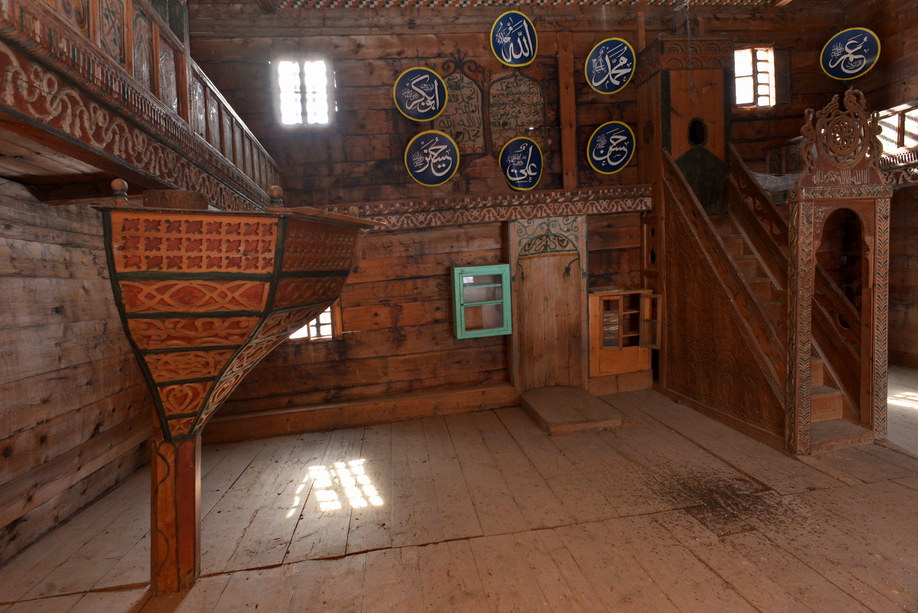
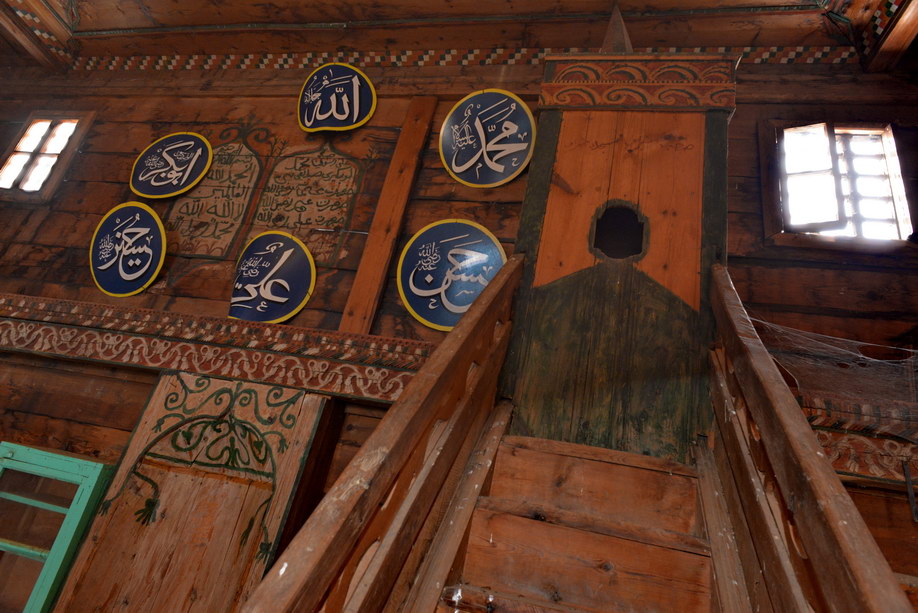
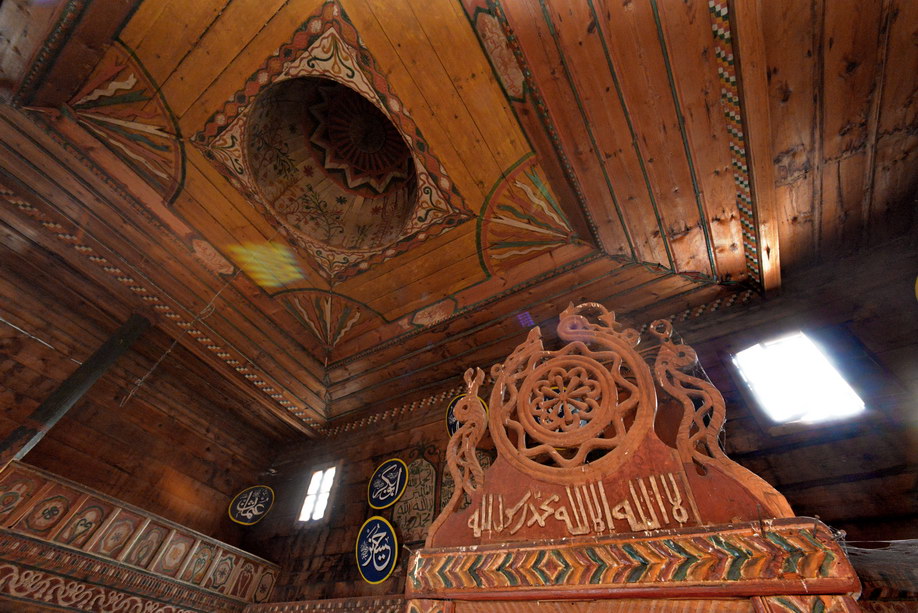
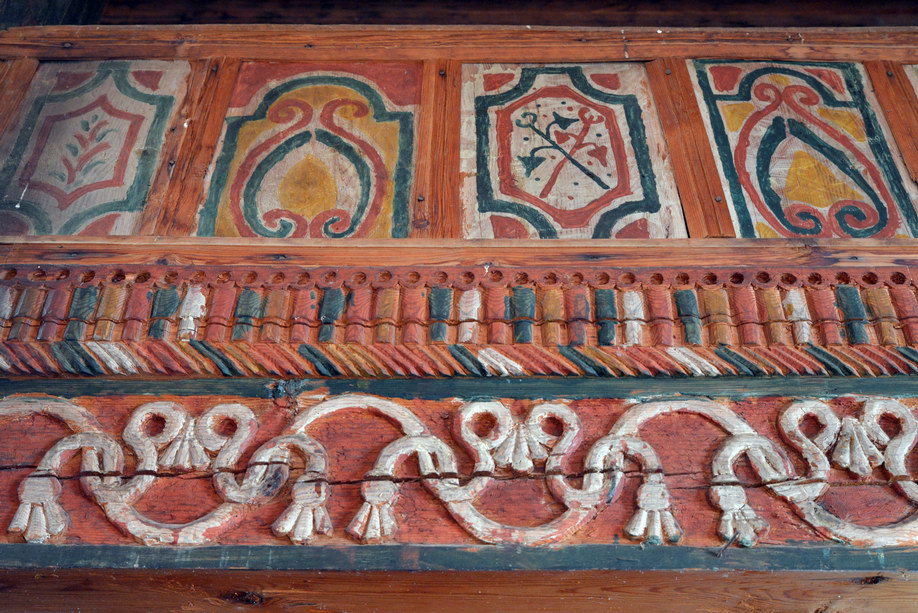
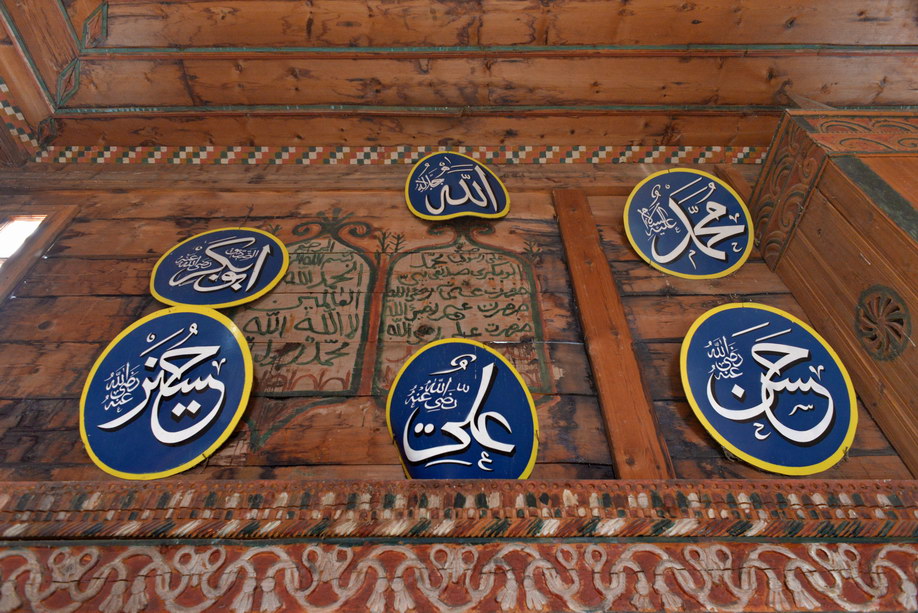
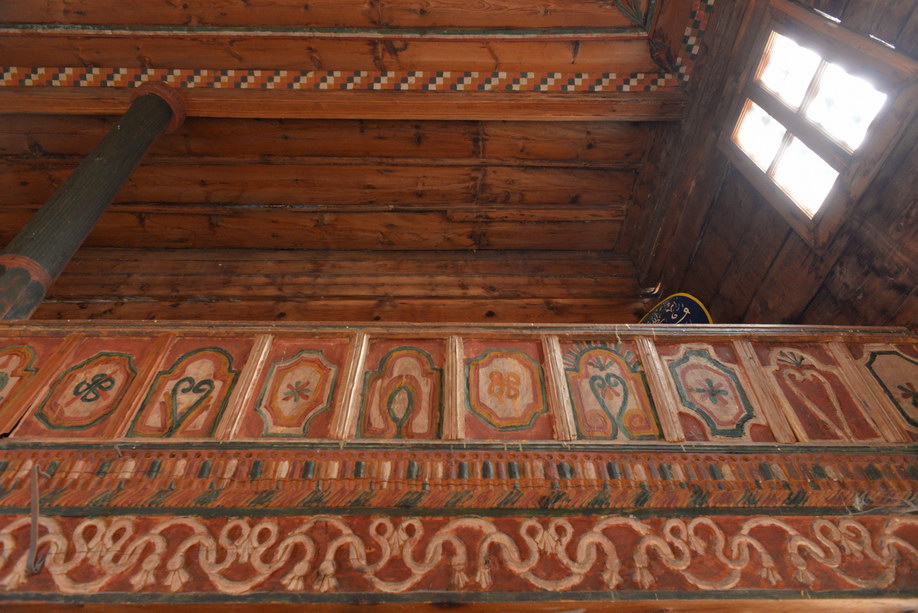
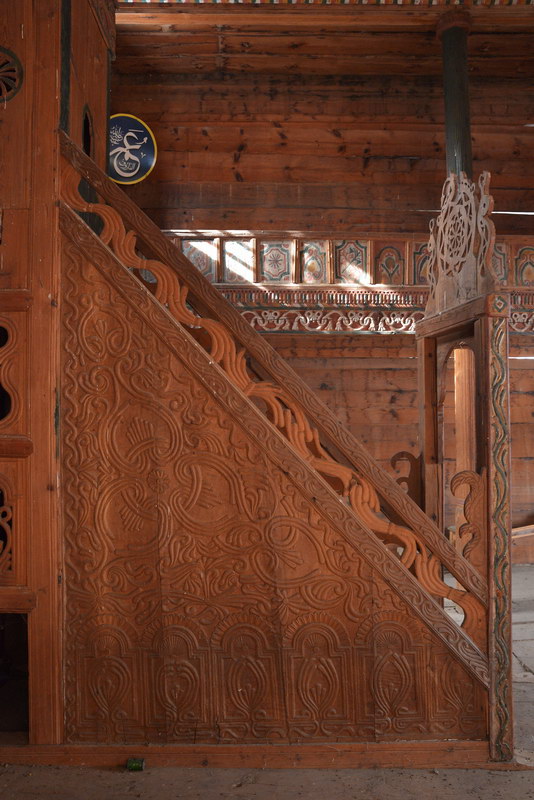
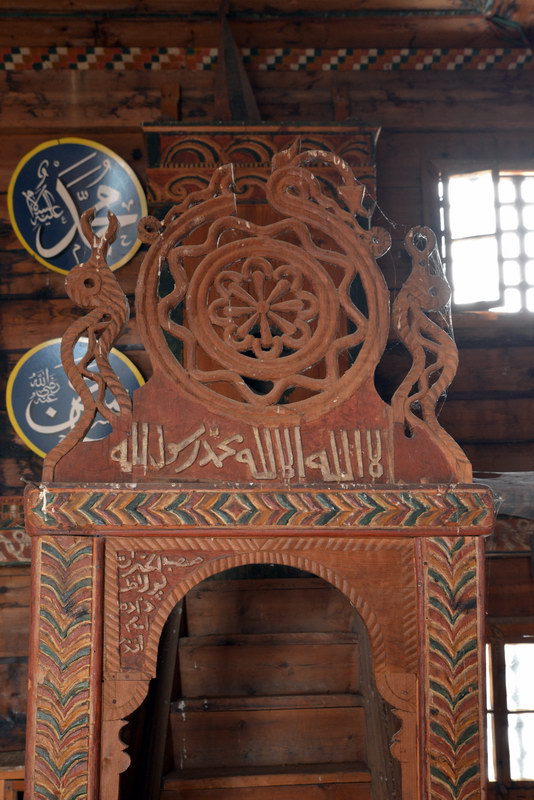
What struck me most inside was the omnipresence of wood. From the columns supporting the prayer hall and gallery to the doors, pulpit, preaching platform, gallery balustrades and ceiling, almost every part bears traces of careful craftsmanship. The women’s gallery is particularly rich, with numerous small decorated panels combining geometric and floral motifs. The pulpit includes carved and openwork details, together with herringbone, rope and wave patterns and eight-petalled flowers. Among the natural tones of the timber, touches of red, yellow and green give the otherwise restrained interior an unexpected liveliness.
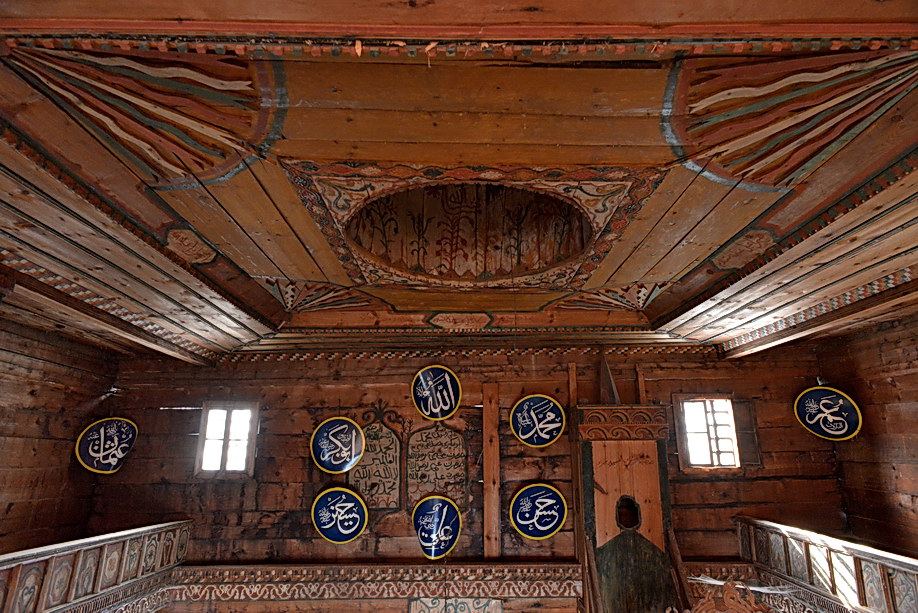
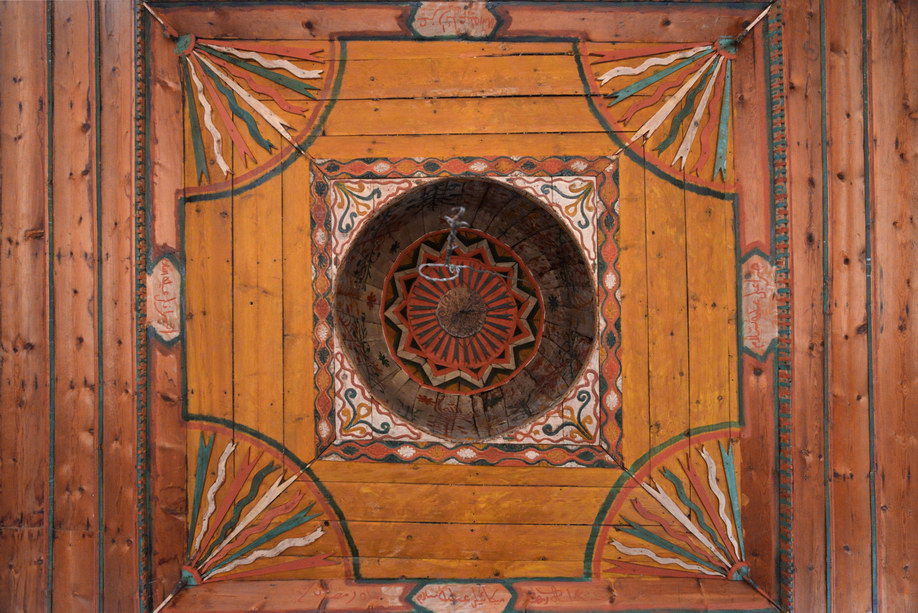
The ceiling is one of the most impressive parts of the mosque. At its centre is a small wooden dome with a motif resembling the sun, surrounded by floral decorations painted in red, green, yellow and white. Here, structure and ornament are inseparable. Rather than hiding the timber construction, the craftsman turned it into part of the decoration itself. As I moved through the interior, my eye was constantly drawn to another detail: a small carving, a balustrade, a column or a painted motif revealing yet another aspect of the building.
The mosque has also suffered losses over time. Its original wooden minaret is said to have deteriorated and was removed in the mid-1980s, after which the old mosque ceased to be used for regular worship. Even so, much of the main structure and, most importantly, its interior woodwork has survived. For me, this makes Velikoy Mosque more than an old village mosque. It is also a record of local woodworking knowledge and of a place that stood at the centre of village life for several generations.
What I photographed in Velikoy was therefore not simply a nineteenth-century wooden mosque. In the chisel marks left on the timber, the faded painted flowers and the steps worn by years of use, I could see traces of a craftsmanship that is becoming increasingly rare. Perhaps this is the building’s most moving quality: without seeking grandeur, it created its own beauty from the material of its landscape and the labour of human hands.