
Six Historic Lighthouses of Istanbul
From the Sea of Marmara to the Black Sea — A Photographer's Eyewitness Account, 2006–2009
Istanbul's lighthouses have stood as silent witnesses for centuries, helping to ensure the safety of navigation through the Bosphorus and its surrounding waters. Stretching from the Sea of Marmara to the Black Sea, these historic structures are more than towers guiding ships with their lights. They are an important part of maritime heritage, preserving traces of technological developments, engineering achievements, and the lives of the people who have maintained them. Considering the hazardous rocks along the coast, narrow passages, unpredictable weather conditions, and heavy maritime traffic, their importance to generations of seafarers becomes even more apparent.
In 2006, with official permission from the Directorate General of Coastal Safety and Salvage Administrations, I had the opportunity to photograph six historic lighthouses in and around Istanbul: Yeşilköy, Ahırkapı, Fenerbahçe, Rumeli, Anadolu, and Şile. My intention was not simply to document their exterior architecture. I wanted to enter the towers and photograph their lighting systems, optical lenses, mechanical equipment, and the technologies that had helped ships navigate safely for generations.
One of the most important characteristics of a lighthouse is its distinctive light signature, known in maritime terminology as its light characteristic. A lighthouse may display a fixed light, a single flash at regular intervals, or groups of two or more flashes. The colour of the light, the number of flashes, their timing, and the interval at which the sequence repeats enable mariners to identify the lighthouse they are observing. For example, a lighthouse displaying two white flashes every twelve seconds is described on nautical charts as Fl (2) W 12s. By comparing the observed light pattern with the information on their nautical charts, officers on a ship's bridge can identify the lighthouse and use its known position to help determine their vessel's location. In this way, lighthouses provide essential visual references, particularly during night navigation.
The ability of lighthouse beams to be seen from considerable distances is made possible by sophisticated optical systems. Large lenses collect and concentrate the light emitted by a source, directing it into powerful beams. The height of the light above sea level, its intensity, and atmospheric conditions all influence the distance from which it can be observed. Lighthouse ranges are expressed in nautical miles. Each lighthouse's distinctive light characteristic and geographical position help mariners distinguish it from other coastal lights. A lighthouse is therefore not merely a structure illuminating the darkness, but an important aid to navigation that provides information about position and coastal geography.
During these visits, I observed how engineering knowledge from earlier generations coexisted with more recent technologies within the same structures. Large optical lenses, weight-driven rotating mechanisms, clockwork systems, and emergency lighting arrangements designed for power failures revealed the surprisingly complex world concealed behind the lighthouses' seemingly simple architecture. The explanations offered by the lighthouse keepers, and their demonstrations of certain mechanisms, transformed my photographic work into a valuable learning experience.
Each lighthouse had its own story. Some stood beside Istanbul's busy shipping routes, while others rose above rocky shores exposed to the strong winds of the Black Sea. While climbing the staircase of Rumeli Lighthouse, I discovered a crow's nest containing eggs and young chicks in a window opening that admitted daylight. It reminded me that these structures could provide shelter not only for people but also for other living creatures. At Anadolu Lighthouse, with the kind assistance of the imam of the nearby mosque, I was able to reach an elevated viewpoint from which I photographed the white tower and the Black Sea coastline within the same frame.
My work did not end with the visits of 2006. In 2009, I photographed Ahırkapı Lighthouse from the Sea of Marmara, bringing the lighthouse and the silhouette of Hagia Sophia together in a single composition. This gave me the opportunity to document the lighthouses not only from within and from the shore, but also from the sea.
These six photographic portfolios document the appearance, technical equipment, and relationship with their surroundings of Istanbul's historic lighthouses between 2006 and 2009. Although maritime technologies have changed over time, the historical and cultural significance of these structures remains. I hope that my photographs will endure as a visual record of a particular period in the history of this remarkable maritime heritage.
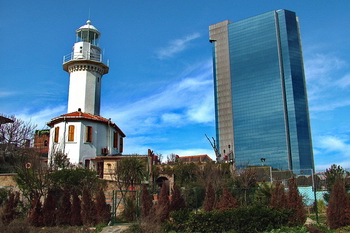
Yeşilköy Lighthouse On the Sea of Marmara, a historic lighthouse marking Istanbul’s western coastal approach.
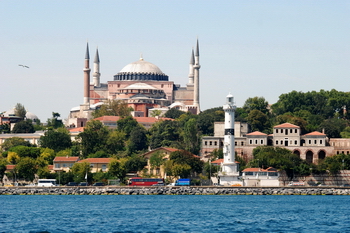
Ahırkapı Lighthouse At the southern entrance to the Bosphorus, where the city meets the Sea of Marmara.
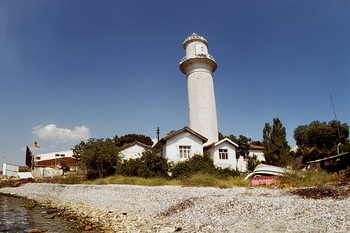
Fenerbahçe Lighthouse A historic beacon on Istanbul’s Asian shore, overlooking the Sea of Marmara.
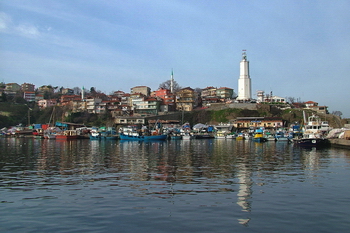
Rumeli Lighthouse On the European shore, marking the northern entrance to the Bosphorus.
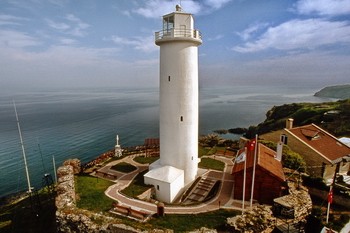
Anadolu Lighthouse A white tower above the Black Sea, standing amid the remains of an older coastal fort.
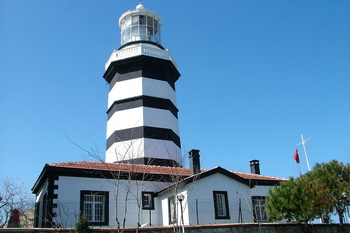
Şile Lighthouse A prominent lighthouse on the Black Sea coast east of the Bosphorus.